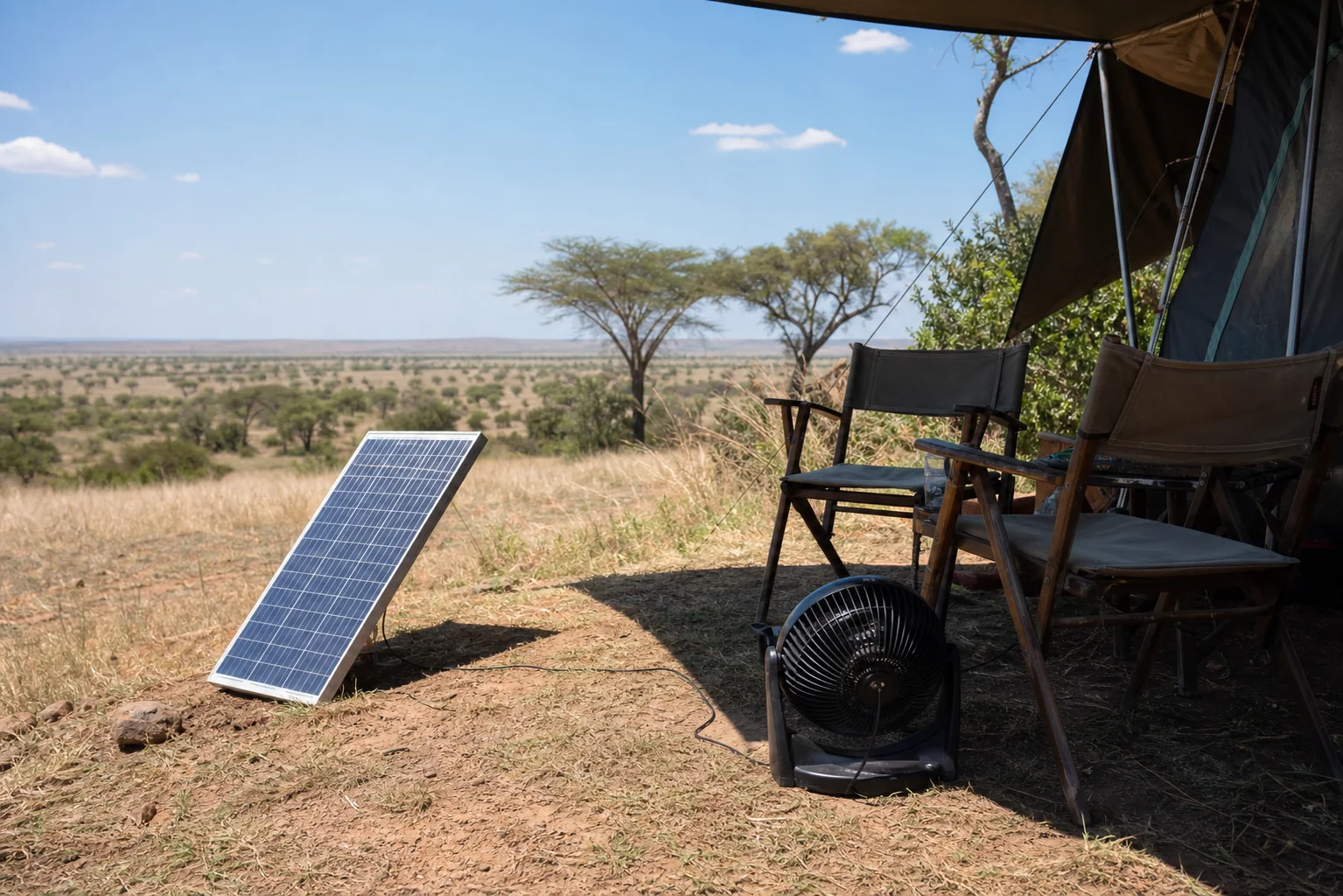
Most solar fans take about 4 to 10 hours of strong sun to recharge, depending on battery size, solar panel wattage, sunlight quality, and whether the fan is running while charging. A small desk fan may refill in an afternoon, while a larger 12V fan battery can need a full sunny day or more.
Is your fan fading right when the porch, greenhouse, RV, or cabin finally starts heating up? In practical off-grid use, recharge time usually comes down to one simple match: how many watt-hours the battery needs versus how many real watt-hours the panel can deliver during the day. Here is how to estimate recharge time, spot weak setups, and choose a solar fan system that keeps air moving when you need it.
The Short Answer: Typical Solar Fan Recharge Times
A solar fan’s recharge time is rarely fixed because solar charging is not like plugging into a wall outlet. A fan with a small built-in battery and a compact panel may recharge in 4 to 6 hours under clear midday sun. A larger solar fan using a 12V battery for overnight or greenhouse ventilation may need 6 to 10 hours, and sometimes longer if the panel is small, dusty, shaded, or poorly angled.
The most useful rule is simple: the bigger the battery and the smaller the panel, the longer the recharge. DIY solar sizing uses the same basic relationship for larger off-grid systems, where solar array size is matched to battery capacity and target recharge hours.
| Solar fan setup | Typical recharge expectation | Best fit |
|---|---|---|
| Small portable fan with built-in battery | 4 to 6 hours of strong sun | Desk, tent, picnic table, backup airflow |
| Medium patio or RV fan with external panel | 6 to 8 hours of good sun | Porch, van, small shed, camping |
| 12V battery-backed fan | 8 to 10+ hours depending on battery size | Greenhouse, coop, cabin, overnight ventilation |
| Hybrid solar/AC fan | Solar varies; wall power can top off faster | Home patio, workshop, outage-prone areas |
What Recharge Time Really Means
Recharge time means how long it takes the solar panel to replace the energy removed from the battery. Watts measure power at a moment, while watt-hours measure stored or consumed energy over time. If a fan uses 10 watts for 5 hours, it has used about 50 watt-hours from the battery.
That matters because solar fans can run directly from a panel, from a battery, or from both. A solar-powered outdoor fan uses a panel to convert sunlight into electricity, and many models include battery backup so stored power can run the fan when sunlight drops. In broader off-grid design, battery storage is what keeps loads running during low-sun and no-sun periods.
A practical field check is to look at the label or manual for three numbers: fan wattage, battery capacity, and solar panel wattage. If the fan has a 60 watt-hour battery and a small panel that realistically contributes about 10 watts in good conditions, expect roughly 6 hours before losses. In real life, add a cushion because heat, angle, haze, and charging electronics all reduce output.
The Simple Calculation You Can Use
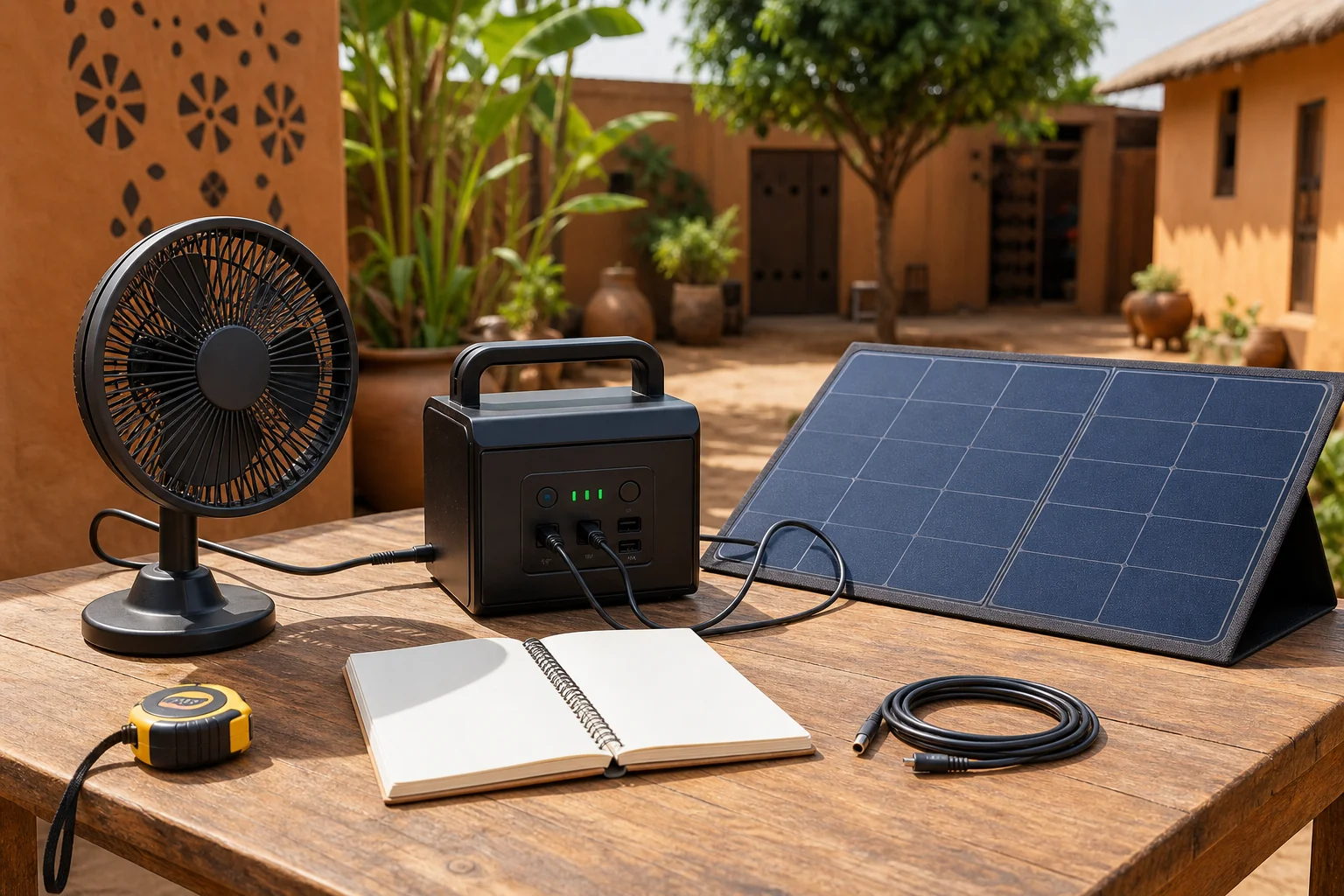
Start with the battery capacity in watt-hours, then divide it by the real solar input in watts. A 100 watt-hour battery charged by a panel that actually averages 20 watts during good sun needs about 5 hours before losses. With charging losses and changing sun angle, planning on 6 to 7 hours is more realistic.
This is the same thinking used for off-grid cabins and RV systems, only scaled down. A small cabin example from solar planning guidance uses daily watt-hour demand to size panels and batteries, and the same method works for a fan because the physics does not change. The daily energy use of each device is still its wattage multiplied by hours of use.
For a real-world porch example, suppose your solar fan draws 12 watts on medium speed and you run it for 6 hours after sunset. That is about 72 watt-hours of energy. If the included solar panel averages 18 watts across the usable part of the day, you are looking at roughly 4 hours in ideal math and closer to 5 or 6 hours once normal losses are included. If clouds cut panel output in half, the same recharge could stretch toward a full day.
Why the Same Fan Recharges Fast One Day and Slowly the Next
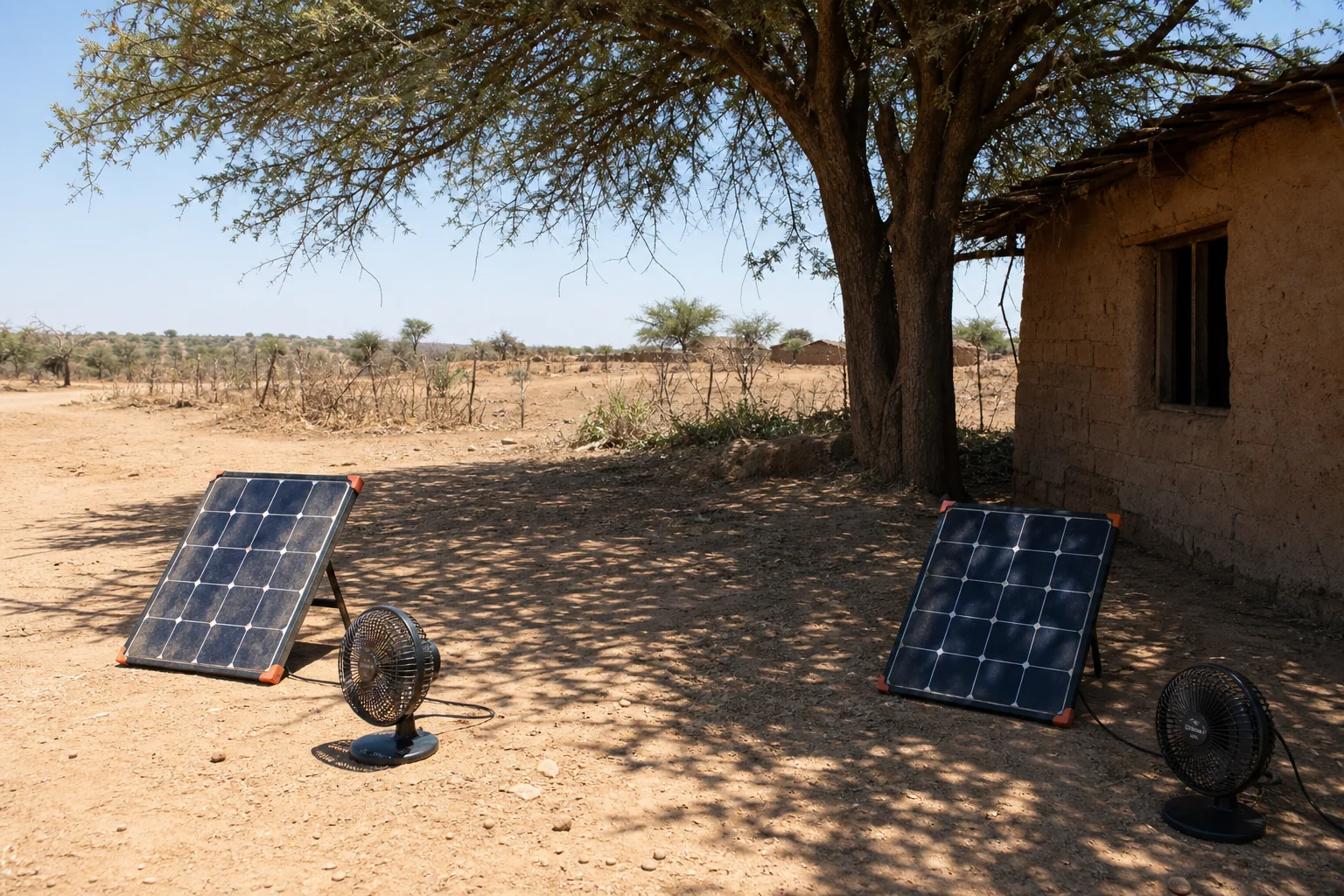
Sunlight is the biggest variable. A solar panel’s rated wattage is measured under lab conditions, not under a hazy afternoon sky with the panel leaning behind a deck rail. In U.S. planning, 6 peak sun hours is often used as a common baseline, while 4 hours gives a more conservative cloudy-day buffer for small systems.
Panel angle and direction are just as important as panel size. In the U.S., south-facing placement with minimal shade is usually the best starting point, and seasonal tilt adjustments can improve output. Off-grid solar guidance repeatedly emphasizes avoiding shade, cleaning panels, and using good placement because solar exposure directly affects whether batteries recover enough for evening use.
Heat also matters. Solar fans are often used during the hottest part of the year, but hot panels can produce less power than their rating. Dust, pollen, and bird droppings can also reduce the charge rate. In daily use, a quick wipe with water and a soft cloth can make more difference than increasing the fan speed.
Battery Size, Battery Type, and Why They Change Recharge Time
Battery capacity decides how much energy you need to refill. Small solar fans may use compact batteries suited to a few hours of airflow. Larger systems may use 12V batteries, where capacity is often listed in amp-hours instead of watt-hours. A 12V 10Ah battery stores roughly 120 watt-hours before real-world limits, while a 12V 50Ah battery stores roughly 600 watt-hours, so the larger battery takes much longer to recharge unless the panel is also larger.
Battery chemistry affects usable energy and charging efficiency. Lithium batteries generally charge and discharge more efficiently than lead-acid batteries, while lead-acid batteries cost less upfront but tolerate deep discharge poorly. For fan systems, 12V solar batteries are commonly paired with panels, charge controllers, and DC motors to support night operation or cloudy-period cooling.
Depth of discharge is the hidden detail many buyers miss. If you drain a battery completely every night, it may technically run the fan longer, but battery life can suffer. Off-grid battery planning often keeps usable discharge within a managed range to preserve cycle life, especially for lead-acid batteries. For a fan that protects pets, seedlings, or sleeping comfort, it is better to size the battery so normal use does not empty it every day.
Can the Fan Recharge While Running?
Yes, many solar fans can charge while running, but the recharge will be slower because some solar power is going straight to the motor. If the panel is producing 20 watts and the fan is using 12 watts, only the leftover power is available for charging. Under weak sun, the battery may not recharge at all while the fan is running; it may simply drain more slowly.
This is why daytime ventilation loads should be matched carefully. In a greenhouse, for example, you may want the fan strongest during peak sun, which is convenient because the panel is also producing its best power. For overnight airflow in an RV or cabin, the battery must store enough extra energy before sunset. Broader off-grid guidance makes the same point: systems work best when high-use loads are shifted into sunny hours, and stored energy is reserved for when solar production is unavailable.
A useful test is to run the fan on your preferred speed for one full afternoon, then check whether the battery indicator is higher, lower, or unchanged by sunset. If it is lower after a sunny day, the panel is undersized for that speed and runtime.
How to Shorten Solar Fan Recharge Time
The fastest improvement is better panel placement. Put the panel where it gets open sun, not partial sun, and adjust it so it faces the sun during the strongest part of the day. If the fan is used at a cabin, RV, shed, or garden workspace, a longer cable can be worth it if it lets the panel stay out of the shade while the fan stays where people or plants need airflow.
The second improvement is lowering the fan speed when full power is not needed. Fan wattage rises with speed, so running on medium often gives a much better balance of comfort and battery life. In off-grid living, reducing demand is usually cheaper than adding more generation, a point reinforced by practical off-grid planning advice that treats load reduction as central to affordability and reliability.
The third improvement is increasing panel wattage, if the fan or charge controller supports it. A battery that takes all day on a 10W panel may recharge in half the time with a properly matched 20W panel. Do not connect a larger panel blindly; voltage and current must match the fan system’s rated input, and a charge controller is important for protecting the battery from overcharging.
Pros and Cons of Battery-Backed Solar Fans
A battery-backed solar fan is useful because it gives cooling after sunset, during outages, and in places where wiring would be expensive or impractical. It can lower grid dependence, reduce operating emissions, and keep small spaces more comfortable without running an extension cord across a yard.
The tradeoff is that batteries add cost, weight, and maintenance. They also create a daily energy budget. If the fan is used harder than the panel can replenish, it will gradually fall behind, especially during cloudy weather. In remote off-grid systems, reliable designs often include extra battery capacity, careful load planning, and backup charging for long poor-weather stretches; a fan system benefits from the same mindset, just at a smaller scale.
A Practical Buying Check Before You Choose One
Before buying, decide when the fan must run. If you only need midday airflow, a direct-solar fan or small battery model may be enough. If you need evening porch comfort, overnight RV airflow, greenhouse humidity control, or livestock-area ventilation, choose a model with a battery sized for the required hours after sunset.
Then check whether the panel can realistically refill that battery in your location. A fan advertised with a large battery but a tiny panel may run a long time once charged, then take too long to recover. A balanced system pairs battery capacity, panel wattage, and fan draw so one normal sunny day can replace one normal day of use.
For most households, patios, RVs, and small off-grid buildings, the sweet spot is a fan that can recharge in one sunny day while running part of that day. If the fan protects something temperature-sensitive, size up the panel and battery rather than counting on perfect weather.
FAQ
How long will a solar fan run after charging?
Runtime depends on battery capacity and fan speed. A small fan may run 2 to 6 hours, while a larger battery-backed 12V setup may run overnight. The quickest estimate is battery watt-hours divided by fan watts, then reduced slightly for real-world losses.
Why is my solar fan not fully charging?
The usual causes are shade, weak sun, dirty panels, poor panel angle, a loose cable, an aging battery, or running the fan at high speed while charging. If the battery never reaches full charge after a clear day, the panel may be too small for your usage pattern.
Is a solar fan worth it for off-grid living?
Yes, when the load is modest and the system is sized honestly. Solar fans are especially useful for RVs, sheds, greenhouses, porches, campsites, and small cabins because airflow is valuable and fan wattage is usually manageable compared with air conditioning.
A solar fan is not just a fan with a panel attached; it is a tiny off-grid power system. Match the battery to your nighttime runtime, match the panel to a one-day recharge target, keep the panel clean and unshaded, and you will get far more reliable cooling from the same equipment.

Maya Chen
Maya Chen is part of the Farseen editorial team.