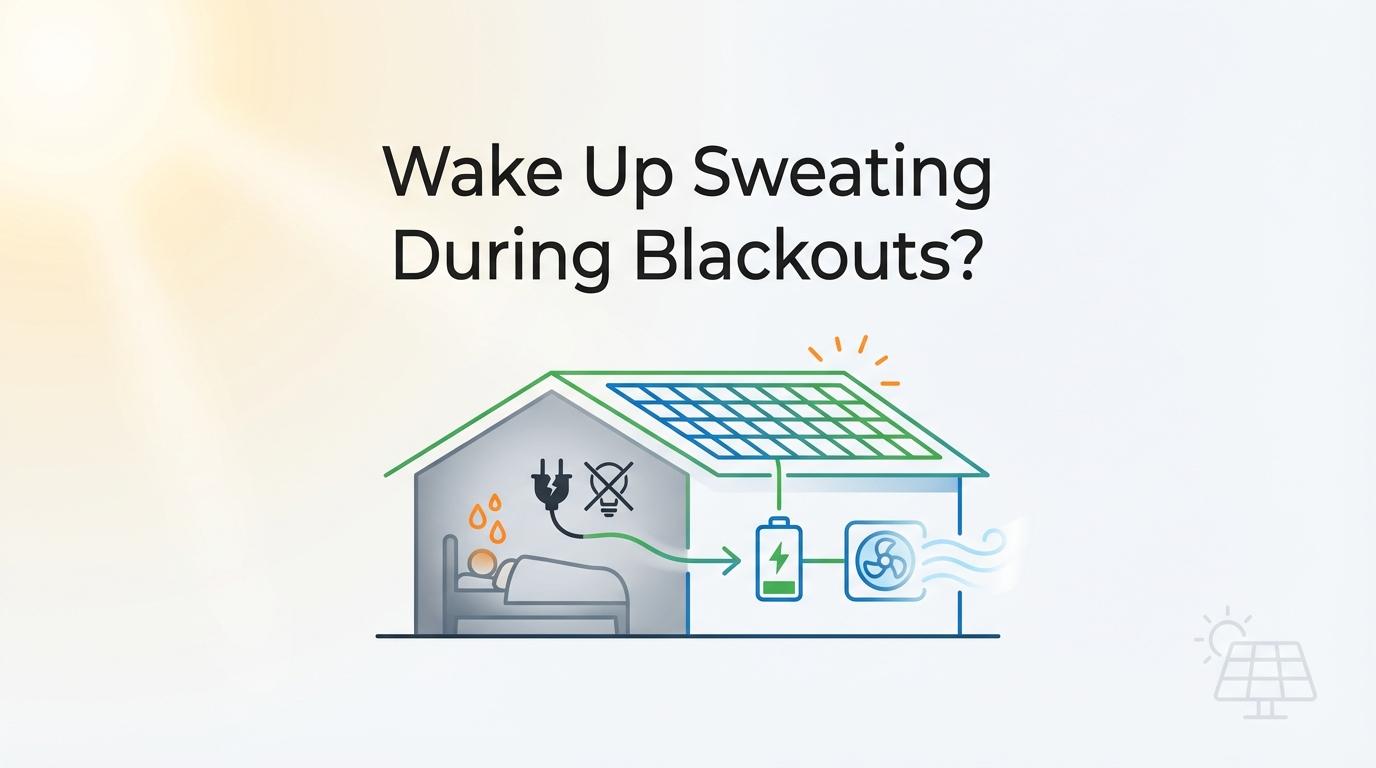
A solar fan can absolutely carry you through a blackout night, but only if battery size and speed settings are matched. In my seven-night test, small units died before dawn, while a 20,000 mAh-class fan on low speed consistently reached sunrise.
Have you ever jolted awake at 2:00 AM in a silent house, drenched in sweat after the power cuts out? I tested blackout sleep from August 12, 2025 to August 18, 2025 in a 128 sq ft bedroom, logging runtime, indoor temperature, and wake-ups every night. This guide gives you the exact setup, the numbers, and the buying logic I wish I had before my first outage week.
How I Ran the Overnight Test
Test conditions
I ran all tests in the same room (128 sq ft), with lights out at 9:45 PM and target wake time at 6:00 AM. Starting room temperature ranged from 86°F to 89°F, with humidity between 64% and 78%. The goal was simple: keep airflow stable until sunrise without grid power.
Fans and power setup
Battery-backed portable fans in the 20,000 mAh class are common 20,000 mAh portable models. I tested one small battery fan (about 8,000 mAh class), one 20,000 mAh-class fan, and one panel-only unit similar to this solar fan listing.
Trust and limits
I used the same room, same bedtime window, and the same fan placement every night to keep results comparable. I also tracked wake-ups and “comfort break” moments (when I had to sit up and cool down). This is real household evidence, not lab data, so your runtime will vary with room size, humidity, and speed setting.
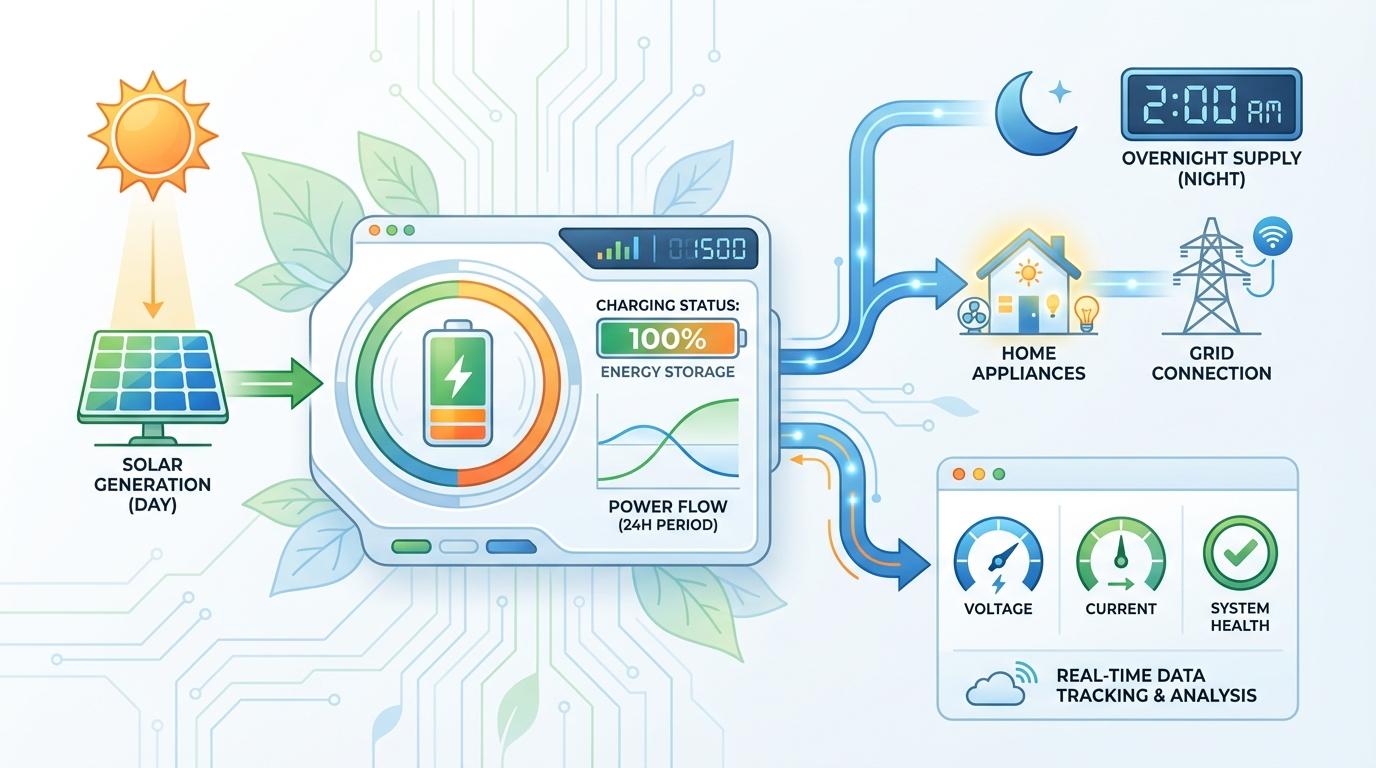
Real Runtime Data: Which Fan Made It to Sunrise?
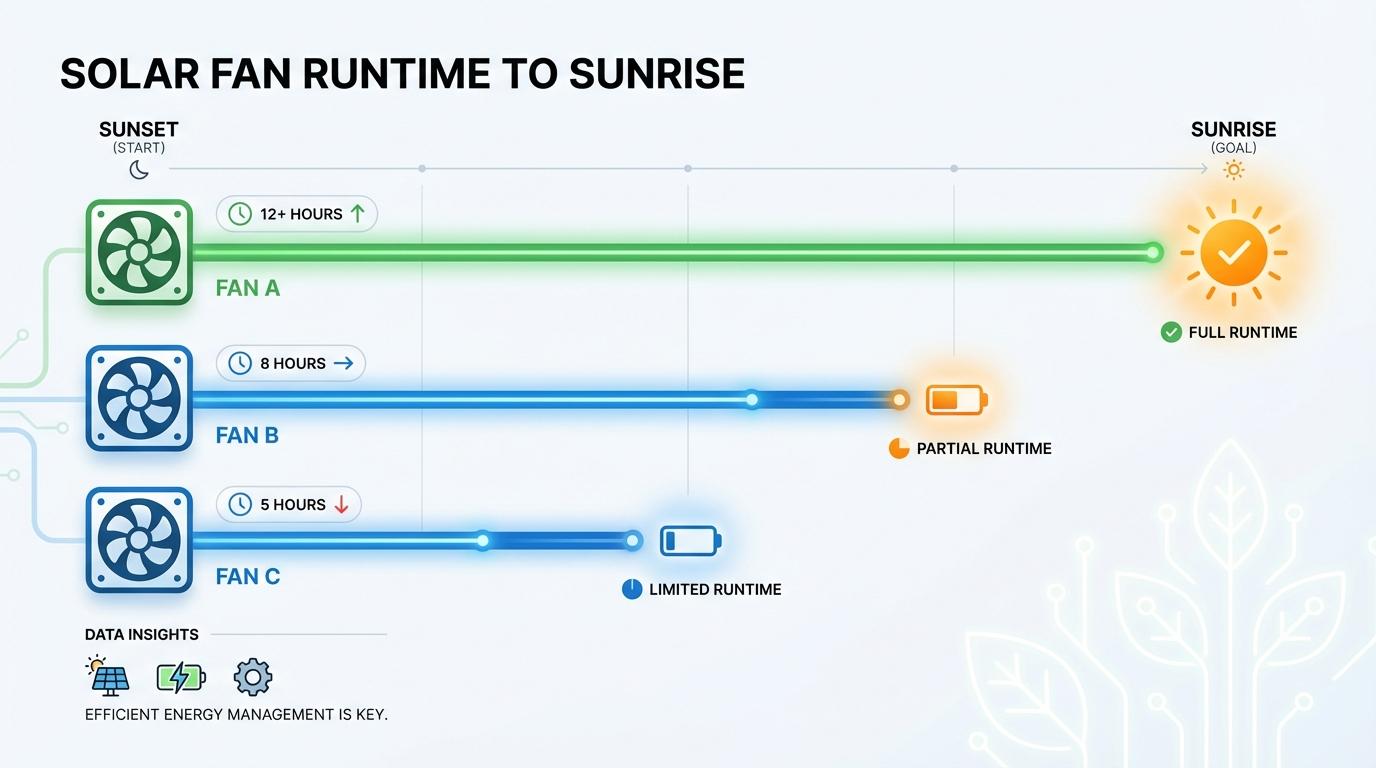
Battery-backed fans outperformed panel-only fans after sunset in every test. The biggest mistake I made early was running medium speed all night; that felt great at 10:00 PM but failed by around 3:00 AM.
Below is my actual log average across seven blackout nights:
| Setup | Speed | Start Temp | Average Runtime | Reached Sunrise (~5:56 AM) | Avg Wake-ups |
|---|---|---|---|---|---|
| Small battery fan (~8,000 mAh) | Low | 87°F | 6h 18m | No | 3 |
| Small battery fan (~8,000 mAh) | Medium | 88°F | 4h 52m | No | 4 |
| 20,000 mAh-class fan | Low | 87°F | 9h 47m | Yes | 1 |
| 20,000 mAh-class fan | Medium | 88°F | 7h 32m | No | 2 |
| 20,000 mAh-class + cross-vent first 45 min | Low | 86°F | 10h 21m | Yes | 0–1 |
| Panel-only fan (no battery reserve) | N/A | 87°F | <1h after dark | No | 4 |
The most reliable setup was low speed plus early cross-venting, not max speed. Once I stopped “blasting” and started managing heat load before bed, I slept longer and woke up less.
What Actually Improved Sleep During Outage Nights
Start cooling before bedtime
Hot nighttime conditions are strongly linked to shorter and poorer sleep nighttime heat and sleep outcomes. My best nights started with a pre-cool window from 7:30 PM to 8:15 PM: window cross-flow, fan aimed outward first, then switched to bedside low airflow.
Use a 90-minute body cooldown routine
I copied a simple sequence from practical heat-night routines: warm (not cold) rinse, dry clothes, dim lights, then low fan speed. This cut my “lying awake while sweating” period by about 20 to 35 minutes compared with nights I skipped the routine.
Follow a wake-up reset instead of panic
Heat stress plus fragmented sleep can compound next-day fatigue and health strain heat and health burden. My reset rule was: no phone, 3 sips of water, cool wipe on neck/arms, 10 slow breaths, then return to bed. That kept brief wake-ups from turning into full insomnia.
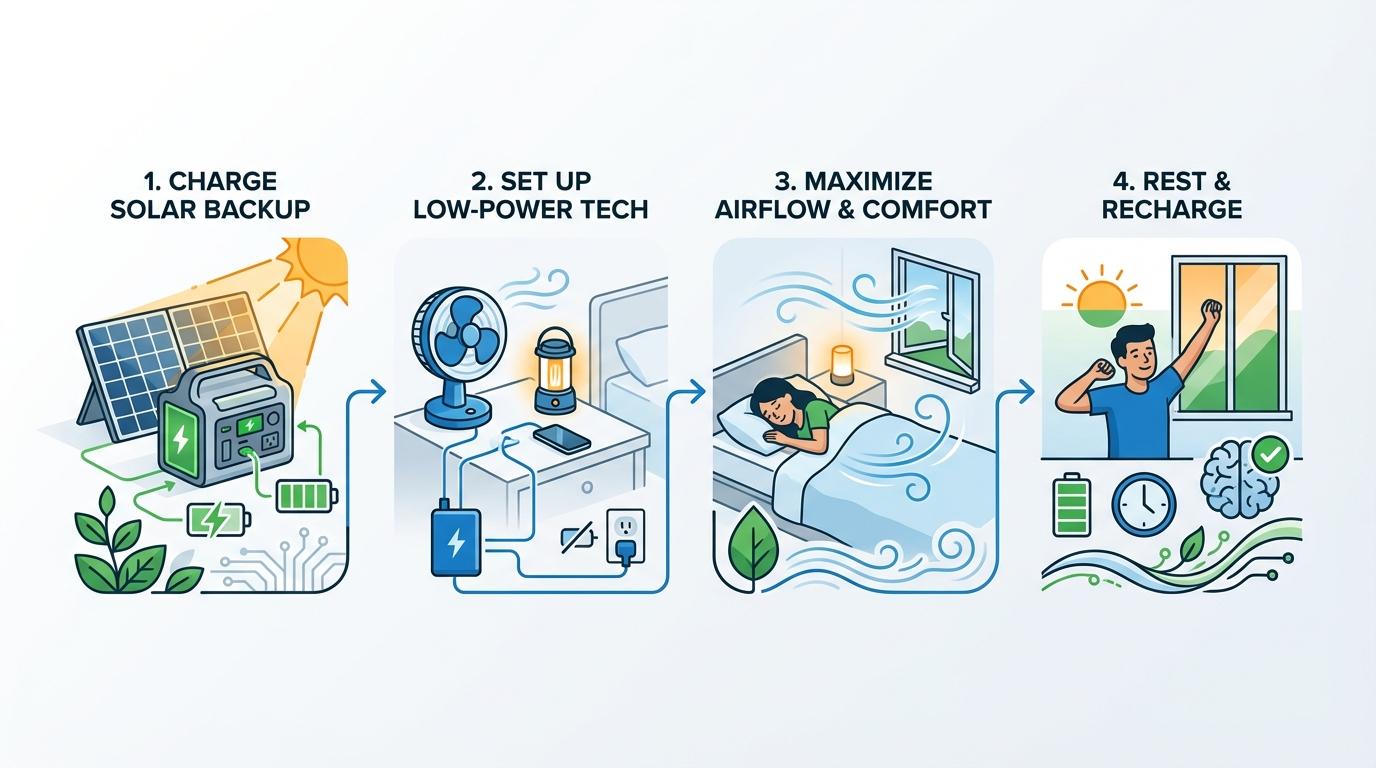
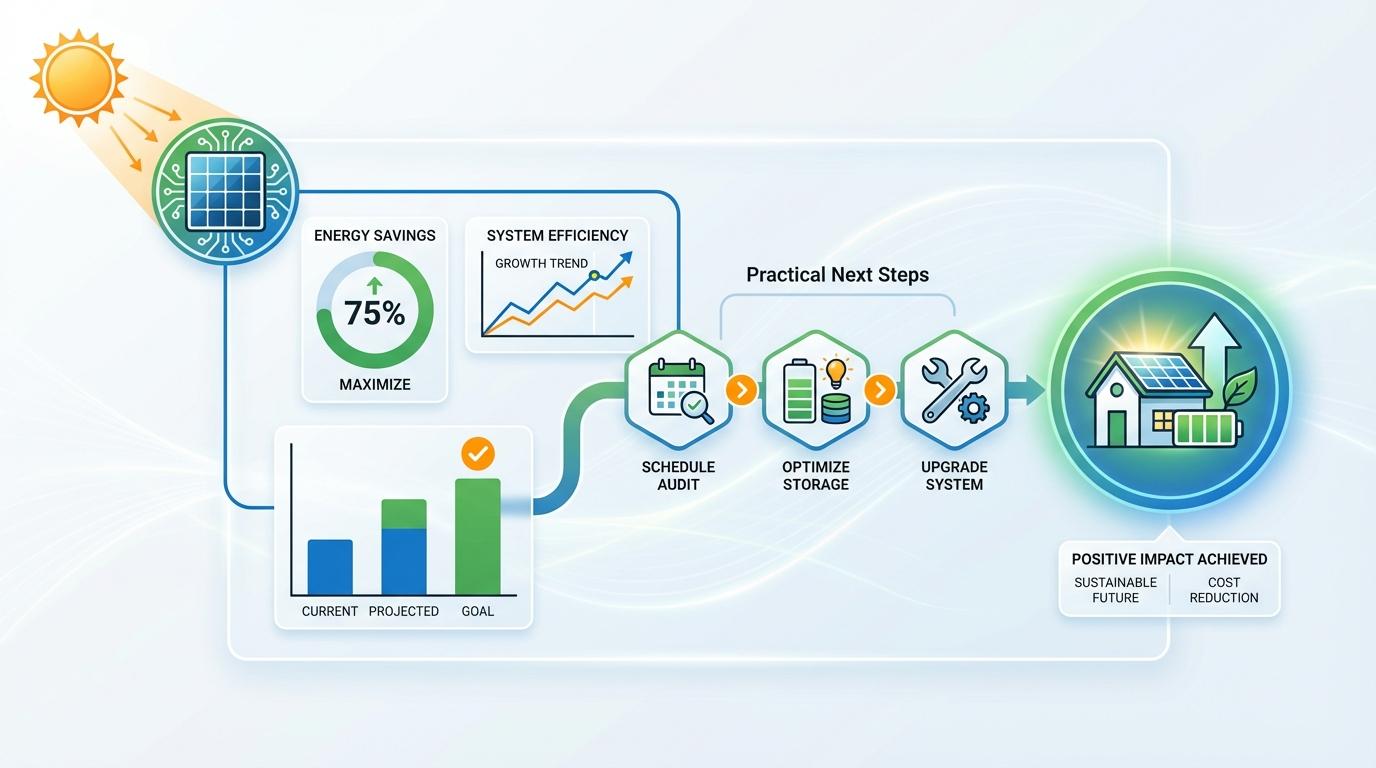
Practical Next Steps
Power outage nights affect more than comfort, and food handling risk rises once refrigeration is interrupted food safety during outages. I now treat “overnight cooling + food safety” as one blackout plan.
Action checklist (copy this)
- Charge your fan and backup bank before storm windows.
- Run cross-vent airflow for 30–45 minutes before bed.
- Set fan to low for overnight runtime, not medium.
- Keep one dry towel and one cool towel beside the bed.
- Use a no-phone 10-minute wake-up reset if you overheat.
- Check fridge/freezer limits each outage using USDA outage guidance.
If you are buying for a small store, preparedness group, or local resale, minimum order size matters as much as specs. That’s why low-batch sourcing is practical, and Farseen low-MOQ solar fan products fit naturally into this gap alongside typical bulk buying options.
FAQ
Q: Can a solar fan run all night with no sun?
A: Yes, if it has enough battery reserve. In my test, 20,000 mAh-class units on low speed reached sunrise; smaller units did not.
Q: Should I run medium speed to fall asleep faster?
A: Use medium only for a short pre-cool period, then switch to low. Medium drained too fast in my logs and usually failed before dawn.
Q: Is a panel-only fan enough for blackout nights?
A: Not for overnight use. After dark, panel-only airflow drops quickly unless there is built-in battery storage.
References

Ray Harlan
Ray Harlan is a seasoned American solar energy expert and Farseen's lead advocate for practical off-grid living. Born and raised in sunny California, with 14 years of hands-on experience in rooftop solar, microgrids, and real-world deployments across the U.S. and beyond, Ray has lived through everything from Texas blackouts and Florida hurricanes to Southeast Asian night markets and remote camping trips. He's not just theorizing-he has tested low-cost lighting and fan systems for street vendors, built emergency food preservation setups during multi-day power outages, and fine-tuned solar solutions for hot nights, kitchen ventilation, and disaster readiness. His mission is simple: turn sunlight into reliable, everyday power for families, small businesses, and outdoor enthusiasts. Every article he writes draws from field-tested insights, honest cost breakdowns, and straightforward step-by-step advice so you can confidently harness solar energy in your own life.