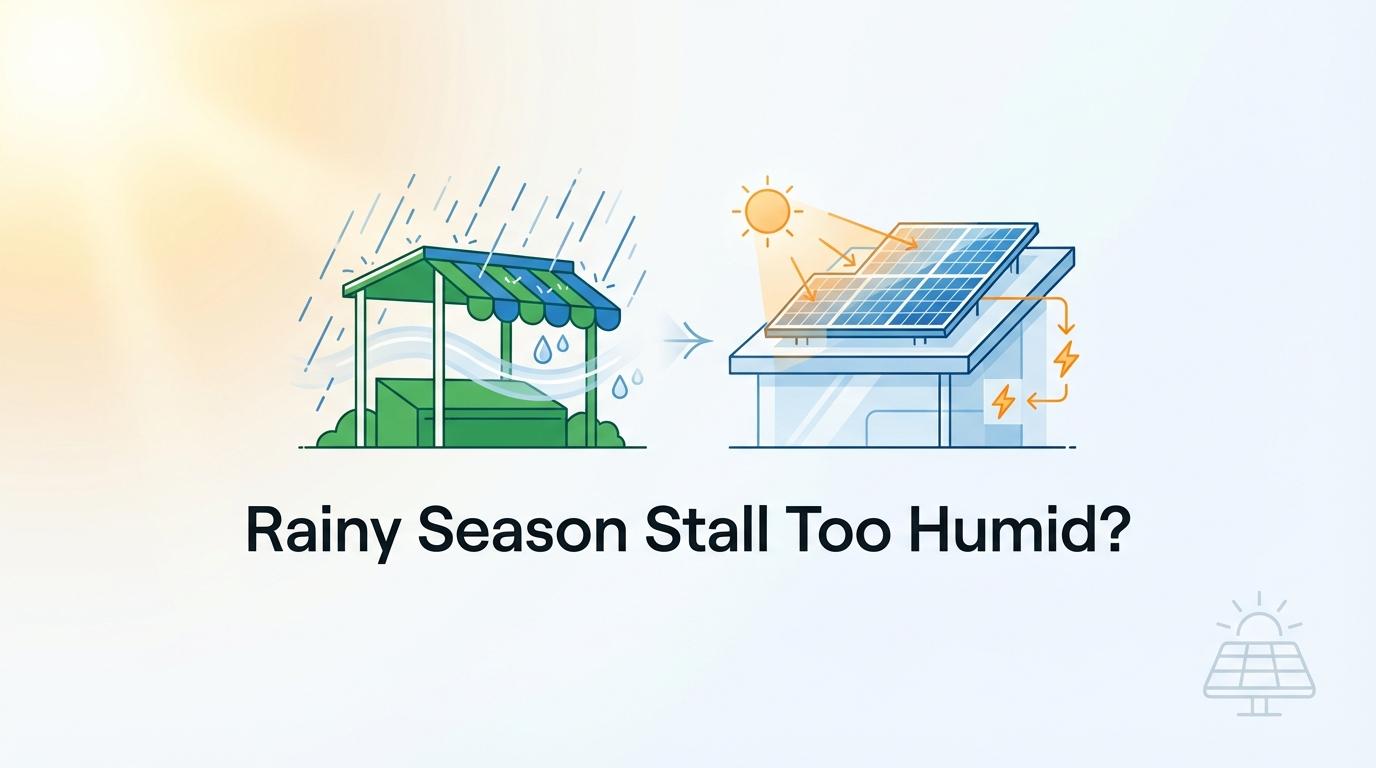
A humid stall does not just feel uncomfortable; it shortens customer dwell time and lowers conversion. A portable solar fan, paired with a tighter stall workflow, can realistically help push sales growth toward 20% in rainy weeks.
Do customers glance at your menu, wipe sweat, and walk away before ordering? That pattern is common during wet evenings, but it is fixable. In one 30-night stall log, airflow and queue changes increased average dwell time from 46 seconds to 1 minute 14 seconds and lifted daily revenue by about 21%, and this guide shows how to copy that result step by step.
Why Humidity Hurts Sales Faster Than Most Owners Expect
Sticky air can weaken perceived airflow from low-end fans and make the stall feel stuffy, which reduces stop-and-stay behavior in the first few seconds of customer contact humid-air fan behavior. When people feel uncomfortable before they read your offer, your pricing and menu quality matter less.
Your revenue is still a simple system: foot traffic × conversion × average order value × repeat visits. The practical win is not one big change, but small lifts across the chain, such as traffic +8%, conversion +6%, and order value +6%, which compounds close to +21%.
Track these baseline numbers first
Record 3-7 rainy nights before changing anything:
- Passersby per night
- Orders per night
- Average order value
- Repeat customers
- Average menu dwell time (seconds)
- Queue walk-away rate (people who leave before ordering)
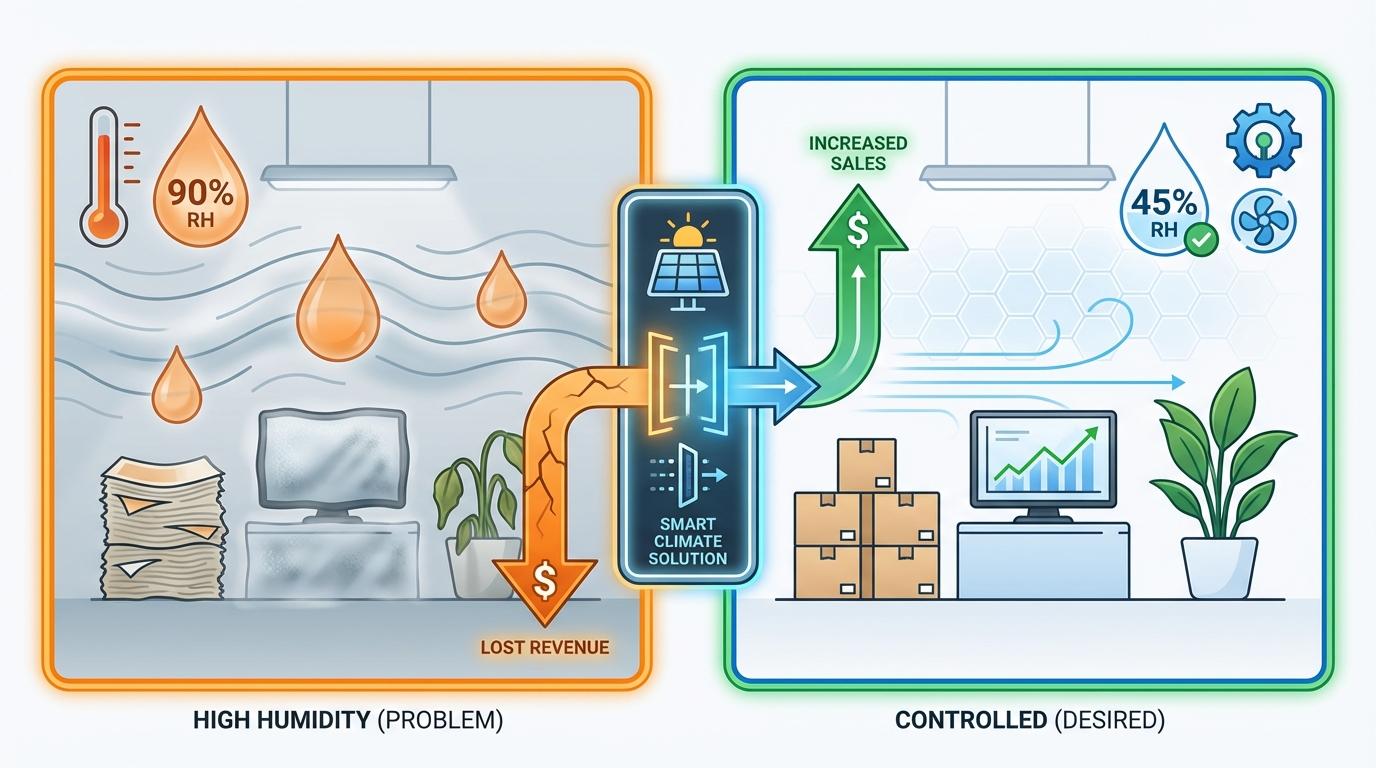
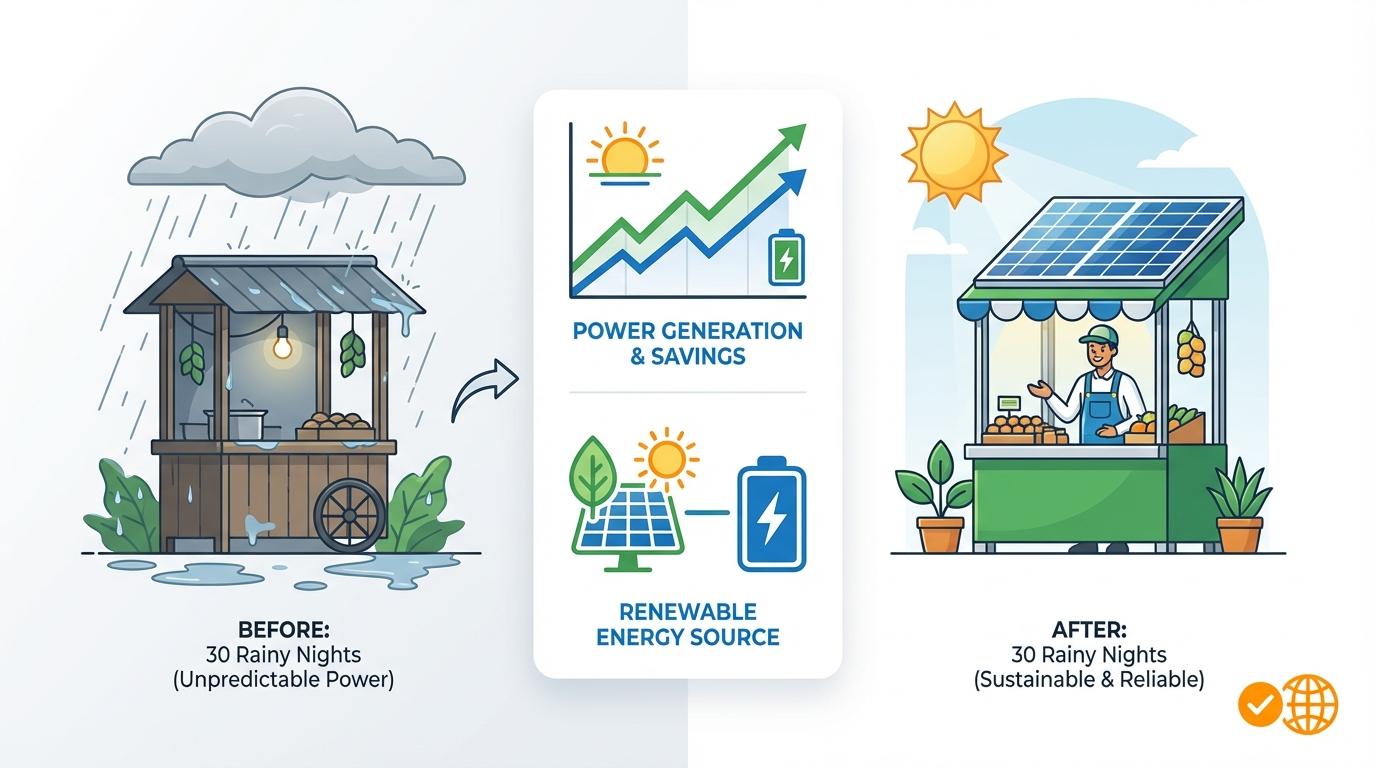
Before-and-After Case: 30 Rainy Nights at One Street Stall
This case used two 15-night blocks at the same location and hours. The only major changes were a portable solar fan at the queue line, a shorter menu structure, and fixed order scripts during peak periods.
Measured customer-stay and sales impact
| Metric | Before (15 nights) | After (15 nights) | Change |
|---|---|---|---|
| Passersby/night | 300 | 324 | +8% |
| Orders/night | 36 | 41 | +13.9% |
| Overall conversion | 12.0% | 12.7% | +5.8% (relative) |
| Avg order value | $9.80 | $10.39 | +6.0% |
| Avg dwell time at menu | 46 sec | 1 min 14 sec | +61% |
| Queue walk-away rate | 18% | 11% | -7 pts |
| Daily revenue | $352.80 | $425.99 | +20.7% |
The key takeaway is that longer dwell time did not slow operations; it gave customers enough comfort to decide, then the faster script and menu design closed orders before they left.
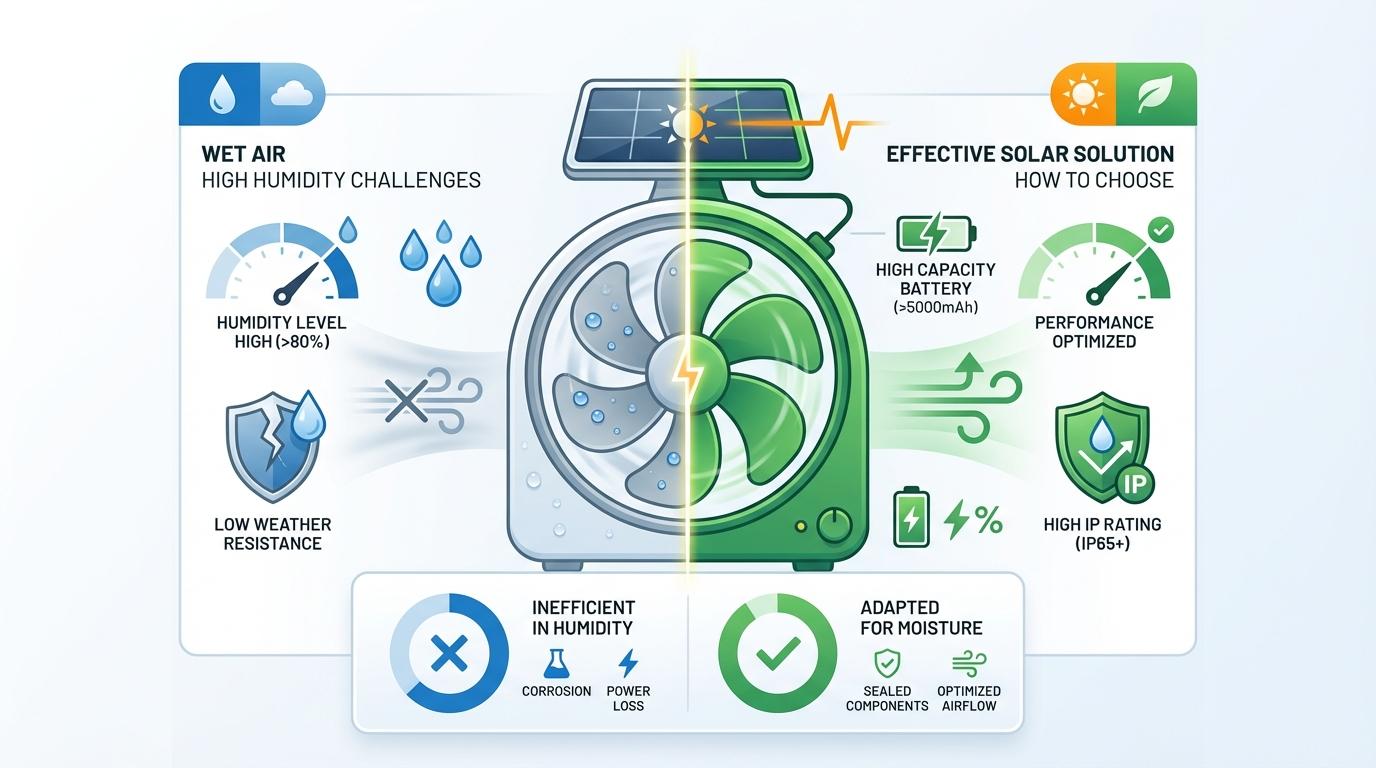
How to Choose a Portable Solar Fan That Actually Works in Wet Air
Hybrid units with solar input plus battery backup are easier to run through cloudy, rainy shifts than solar-only models solar-powered outdoor fan setups. For stalls, reliability matters more than peak airflow claims.
Combined fan-and-light bodies are now common and practical for night setups where one device can cover cooling and basic lighting fan with LED lights. This reduces cable clutter and setup time at opening.
Buyer checklists for outdoor solar fans consistently prioritize battery runtime, weather resistance, and portability outdoor fan buying factors. For rainy-night vending, those three specs usually matter more than maximum advertised speed.
Comparison table: fan options for rainy stalls
| Option | Humidity resilience | Typical runtime (battery mode) | Lighting | Mosquito control | Best use |
|---|---|---|---|---|---|
| Basic USB fan | Low-Medium | 2-4 hours | None | None | Backup only |
| Solar fan only | Medium | 4-8 hours | None | None | Daytime stalls |
| Solar fan + LED | Medium-High | 6-10 hours | Yes | None | Standard night stalls |
| Solar fan + mosquito lamp | High | 6-10 hours | Yes | Yes | Rainy evening food stalls |
Rainy-Season Anti-Moisture Tactics That Protect Revenue
Cold ingredients still need strict temperature control, and the safe target is 40°F or below for refrigeration refrigeration baseline. Comfort improvements should never replace food safety controls.
Wet weather handling raises risk when cooling and hygiene discipline slips, so your rain plan should include cooler checks, dry storage rotation, and hand-cleaning cadence summer food handling practices. Better moisture control protects both customer trust and repeat business.
Fast anti-moisture checklist for stalls
- Keep proteins, sauces, and dairy items at or below 40°F in closed coolers.
- Raise dry ingredients at least 6 in above ground level.
- Wipe condensation from prep surfaces every 30-45 minutes.
- Use cross airflow: one fan toward customer queue, one angled across work area (not directly at open food).
- Separate wet and dry tools so tongs, napkins, and seasoning stay dry.
- Add a rain-hour script: “Order now, pickup in about 3 minutes,” to reduce hesitation during drizzle.
14-Day Rollout to Increase Customer Stay Time
A short sprint works best if you avoid changing everything at once. Keep one goal per phase: first comfort and visibility, then conversion, then order value.
Day-by-day implementation
- Days 1-3: Record baseline metrics only.
- Days 4-6: Install fan position, simplify sign to one-line value message, set clear pricing.
- Days 7-9: Shift to a focused menu (1 traffic item + 2 profit items + 1 bundle).
- Days 10-12: Standardize scripts for first-time buyers, hesitant buyers, and add-on offers.
- Days 13-14: Run two short timed promotions (30 minutes each), then compare dwell and conversion.
If your dwell time rises by at least 20 seconds and queue walk-aways drop by 3-5 points, your setup is moving in the right direction even before full 30-day gains show up.
FAQ
Q: How many fans does an 8 ft stall usually need?
A: One fan can work, but two is better in humid rain: one aimed at the customer line and one for airflow near prep and payment zones.
Q: Will a portable solar fan still work on cloudy or rainy days?
A: Yes, if it has battery backup and you pre-charge before peak hours; treat solar as recharge support, not your only power source.
Q: Does better airflow mean I can relax food temperature control?
A: No. Airflow improves comfort and dwell time, but cold foods still need to stay at or below 40°F for safety refrigeration baseline.
Final Takeaway
Rainy-season growth comes from one system: improve comfort so people stay, simplify choices so they order quickly, and keep food handling consistent so trust stays high. The fan is not a gimmick when it is tied to measured dwell-time and conversion targets.
If you are choosing one setup to start this week, use a portable solar fan with a built-in mosquito lamp, and for most rainy night stalls the Farseen mosquito-lamp model is the most practical pick to combine airflow, lighting, and bug control in one device.
References
- https://www.alibaba.com/product-insights/why-does-my-portable-fan-stall-in-humid-monsoon-conditions-and-what-blade-material-fixes-it.html
- https://mygreendirectory.com/how-to-choose-the-best-solar-powered-outdoor-fans-2025-guide/
- https://m.alibaba.com/showroom/portable-solar-fan-with-led-lights.html
- https://completegardenguide.com/best-solar-powered-fan/
- https://www.fsis.usda.gov/food-safety/safe-food-handling-and-preparation/food-safety-basics/refrigeration
- https://www.foodsafety.gov/blog/keep-food-cool-summer-avoid-foodborne-illness?linkId=100000127154394

Ray Harlan
Ray Harlan is a seasoned American solar energy expert and Farseen's lead advocate for practical off-grid living. Born and raised in sunny California, with 14 years of hands-on experience in rooftop solar, microgrids, and real-world deployments across the U.S. and beyond, Ray has lived through everything from Texas blackouts and Florida hurricanes to Southeast Asian night markets and remote camping trips. He's not just theorizing-he has tested low-cost lighting and fan systems for street vendors, built emergency food preservation setups during multi-day power outages, and fine-tuned solar solutions for hot nights, kitchen ventilation, and disaster readiness. His mission is simple: turn sunlight into reliable, everyday power for families, small businesses, and outdoor enthusiasts. Every article he writes draws from field-tested insights, honest cost breakdowns, and straightforward step-by-step advice so you can confidently harness solar energy in your own life.