You can keep BBQ leftovers safe overnight at camp if you control two things: airflow in the tent and food temperature in the cooler. A simple solar-by-day, fan-and-light-by-night routine makes both easier.
Ever had great brisket at 7:00 PM and then worried it might be risky by breakfast? The most reliable camp workflow uses clear limits: keep perishables at 40°F or below, and limit warm exposure to 2 hours (or 1 hour above 90°F). You’ll get a practical setup you can run on a normal overnight trip without guessing.
Start With the Safety Numbers That Decide Everything
The 32-40°F cold-holding range is the key control point for overnight leftovers. If your cooler drifts above that for long stretches, quality drops fast and food-safety risk rises.
For cooked BBQ, the 2-hour rule shrinks to 1 hour when ambient temperature is above 90°F. That means dinner leftovers should be portioned and re-chilled quickly, not left on the picnic table while everyone hangs out.
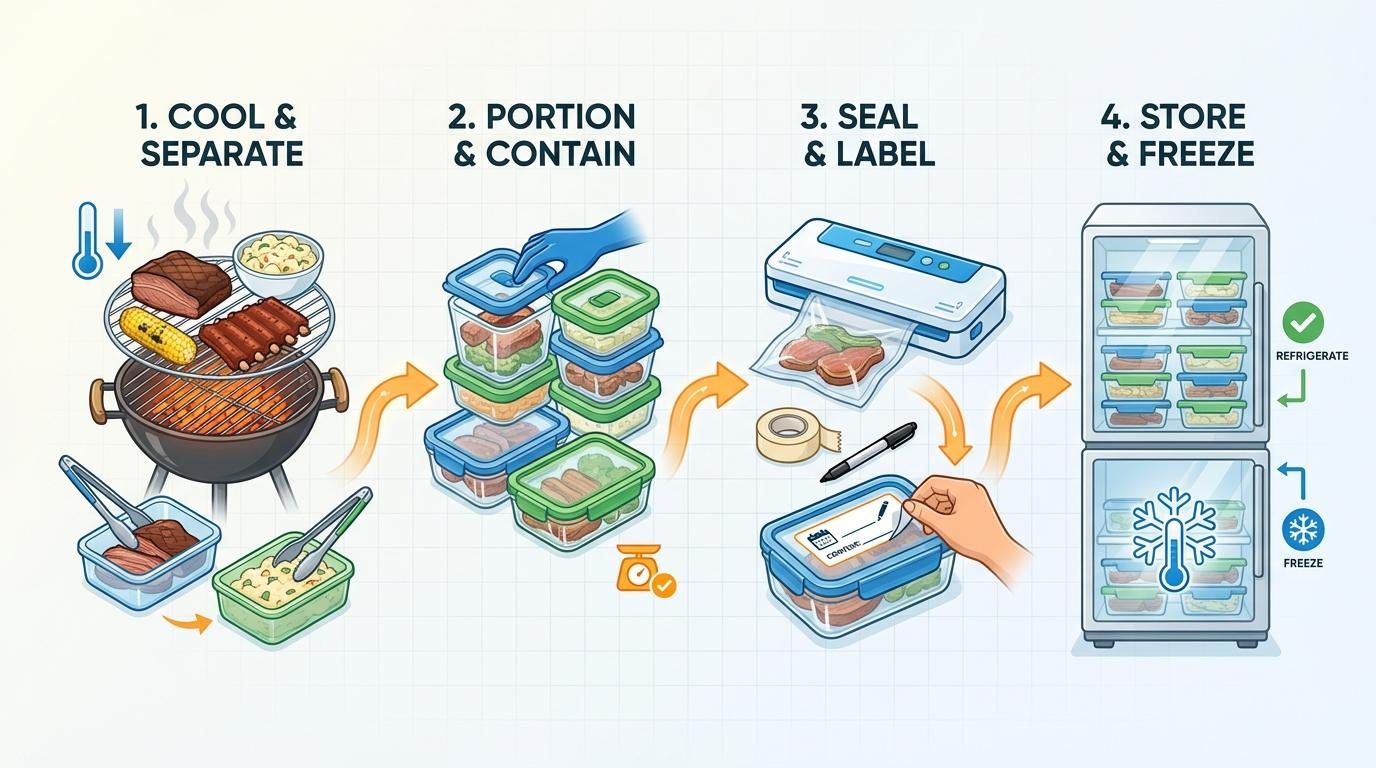
In practice, a clean timeline works best: serve, eat, portion leftovers into shallow containers, seal, and return to ice before full dark. Treat “just one more bite later” from a warm pan as a no-go.
Tent Cooling Setup That Actually Helps Overnight
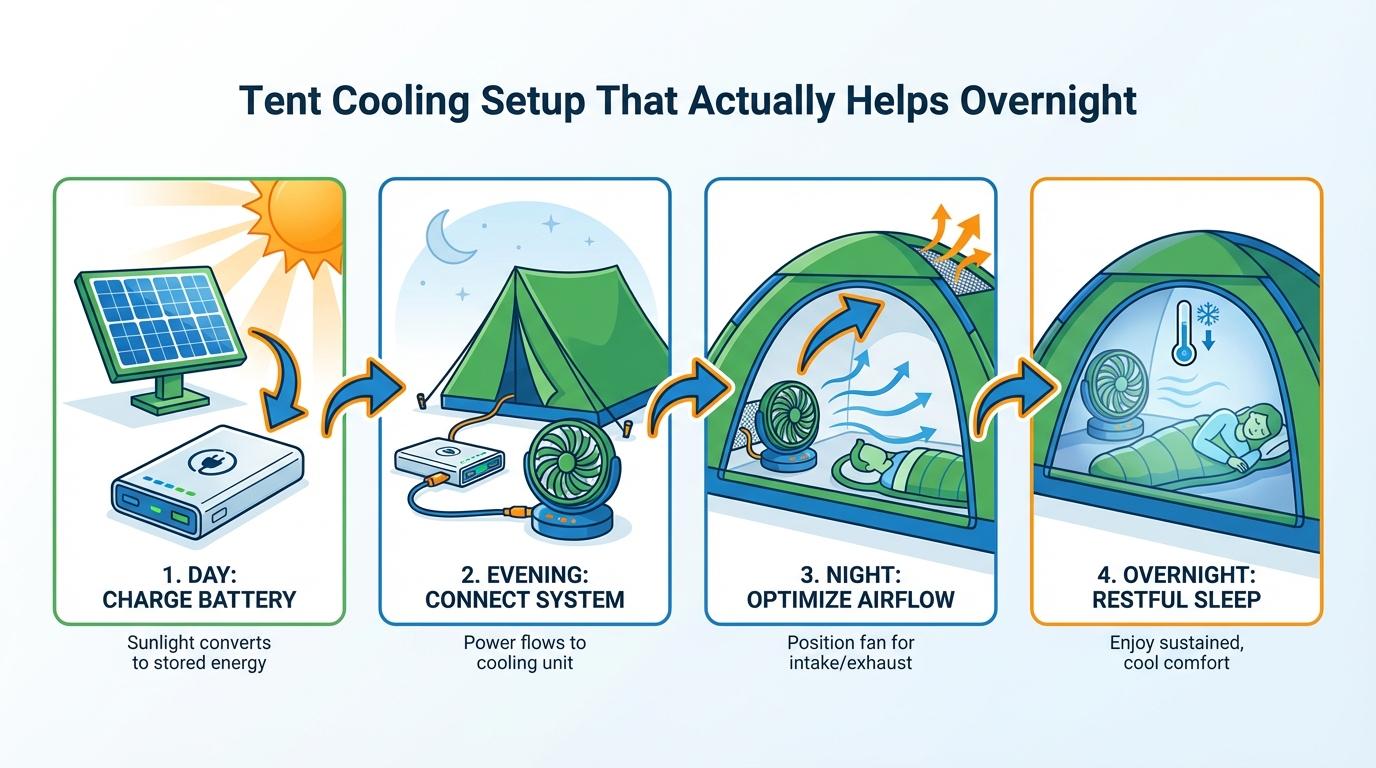
A cooler tent starts with placement and layering: choose shade, avoid heat-radiating rock or pavement, and create a second shade layer above the tent with an 8-16 in air gap. Keep low intake and high exhaust vents open so hot air can escape instead of pooling at roof level.
Fan direction matters more than fan speed. Put the fan at the low intake side pushing air in, and keep a high vent open on the opposite side to pull heat out. This crossflow setup beats face-level blasting and usually feels better after midnight.
Tent Fan Placement Diagram
      prevailing breeze ->
   [Tarp / shade layer]
        (8-16 in gap)

   +-----------------------+
   |   high exhaust vent   |  <-- warm air out
   |                       |
in |  [sleep area]         |
air|                       |
-> | fan @ low intake      |
   +----door/low vent------+
Use low-heat lighting modes at night and keep charging bricks outside the sleeping zone so you do not add extra heat inside the tent.
Step-by-Step Packing Checklist for BBQ Leftovers
A two-cooler setup is still the easiest win: one cooler for drinks (frequent opening), one for food (low opening frequency). This reduces temperature swings where leftovers are stored.
Packing Order (Do This in Sequence)
- Pre-chill coolers for 6-12 hours before departure.
- Load bottom layer with hard ice packs and frozen water bottles.
- Place raw proteins in leak-proof double bags on the lower food layer.
- Place cooked BBQ leftovers in shallow sealed containers on the upper layer.
- Add a top ice layer, then fill air gaps with a clean towel.
- Put the food cooler in shade, slightly off the ground, and open it only for planned pulls.
A leftover handling routine for campers works best when you label containers by meal and time, so you can pull once and close fast instead of rummaging.
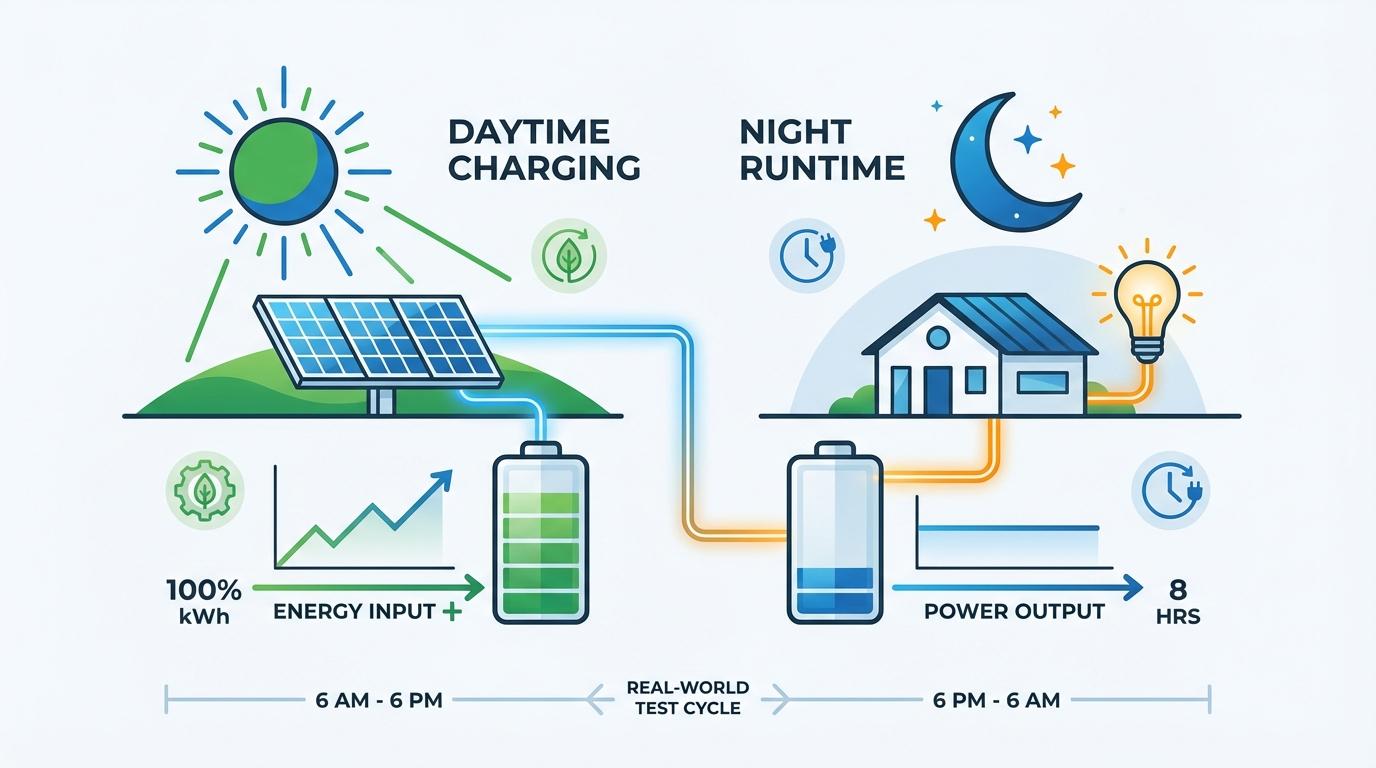
Daytime Charging, Night Runtime: Real-World Test Method
A stable off-grid setup comes from one repeatable cycle: charge during sun hours, run fan and light overnight, then log what remains at breakfast. You do not need fancy gear, but you do need one test before trip day.
Day-Charge / Night-Endurance Test
| Time | Action | Pass Target |
|---|---|---|
| 9:00 AM-3:00 PM | Solar panel charges power bank in direct sun | Bank reaches full or near-full |
| 6:30 PM | Run fan on high for pre-cooling (20-30 min) | Tent heat drops before sleep setup |
| 7:00 PM-10:30 PM | Fan on low + light on low mode | No battery swap needed |
| 10:30 PM-6:00 AM | Fan on low/intermittent + dim light only when needed | Airflow maintained through night |
| 6:00 AM | Check remaining battery and comfort notes | Setup repeats next night reliably |
If your test fails, adjust one variable at a time: reduce light brightness first, then shorten pre-cool time, then add daytime charging window.
Morning-After Leftovers: Reheat or Toss
The safest pattern is fast chill at night, full reheat in the morning, and no repeated warm-cool cycling. Reheating barbecued meats thoroughly protects both texture and food safety better than “just warming.”
A safe BBQ leftover workflow also means small portions and single reheat cycles. Reheat only what you will eat, and keep the rest cold.
Any slimy texture, off smell, or abnormal color is a discard signal. Do not rely on smell alone when the cooler had long warm periods.
FAQ
Q: Can I keep leftover brisket overnight with just one cooler?
A: Yes, but it is higher risk because drink access warms the same space. Two coolers are more stable.
Q: Is a fan alone enough to cool a hot tent?
A: Usually no. Shade layer + airflow path + fan placement is the effective combination.
Q: What is the biggest mistake with camp leftovers?
A: Letting cooked food sit out too long after dinner, then trying to “save it” later.
Practical Next Steps
- Pre-chill both coolers tonight and freeze your ice packs solid.
- Pack food by layers: ice bottom, raw low, cooked high, ice top.
- Set tent airflow with low intake fan and high exhaust vent.
- Run a one-night charge/endurance test before your trip.
- Follow strict morning triage: reheat once, or discard.
References

Ray Harlan
Ray Harlan is a seasoned American solar energy expert and Farseen's lead advocate for practical off-grid living. Born and raised in sunny California, with 14 years of hands-on experience in rooftop solar, microgrids, and real-world deployments across the U.S. and beyond, Ray has lived through everything from Texas blackouts and Florida hurricanes to Southeast Asian night markets and remote camping trips. He's not just theorizing-he has tested low-cost lighting and fan systems for street vendors, built emergency food preservation setups during multi-day power outages, and fine-tuned solar solutions for hot nights, kitchen ventilation, and disaster readiness. His mission is simple: turn sunlight into reliable, everyday power for families, small businesses, and outdoor enthusiasts. Every article he writes draws from field-tested insights, honest cost breakdowns, and straightforward step-by-step advice so you can confidently harness solar energy in your own life.