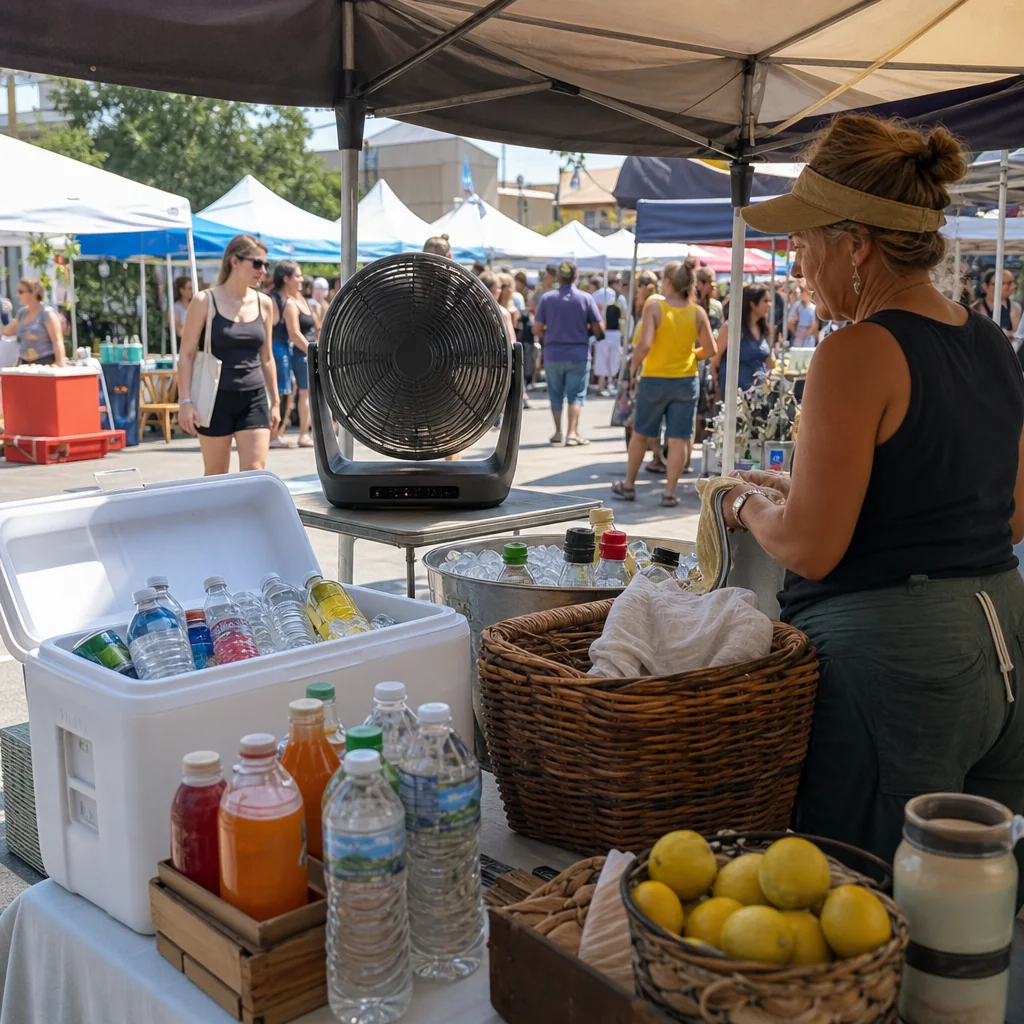
For most summer market booths, the best cooling plan is simple: block the sun first, move air second, and add powered cooling only when it fits the actual job. Vendors who layer those strategies stay safer, look more professional, and usually spend less than those chasing one oversized fix.
Does your booth turn into an oven by noon, with your shirt soaked before the lunch crowd arrives? The most reliable relief usually comes from a few low-tech changes used together, not from one expensive device. A practical setup can keep you cooler, protect products, and make long market days easier to manage.
Why Market Booths Get Hot So Fast
Outdoor booths heat up for two reasons at once: direct sun lands on the canopy, table, and products, while trapped air keeps that heat hanging around your workspace. That combination matters because extreme heat as a deadly U.S. weather hazard leaves small outdoor workspaces with very little buffer once the air goes still.
In practice, most vendors feel the problem before a thermometer explains it. The back of the booth gets stuffy, the table surface warms up, your cell phone overheats, and customers cut conversations short because the stall feels heavy and bright. That is why experienced sellers treat cooling as a booth-design issue, not just a comfort accessory. A fan helps, but a fan blowing hot air in full sun rarely fixes the root problem.
A useful definition here is passive cooling. In building science, it means reducing temperature without mechanical air conditioning. For a market vendor, that translates into shade, reflective surfaces, airflow, and layout choices that keep heat from building up in the first place.
Start With Shade, Because It Does the Most Work
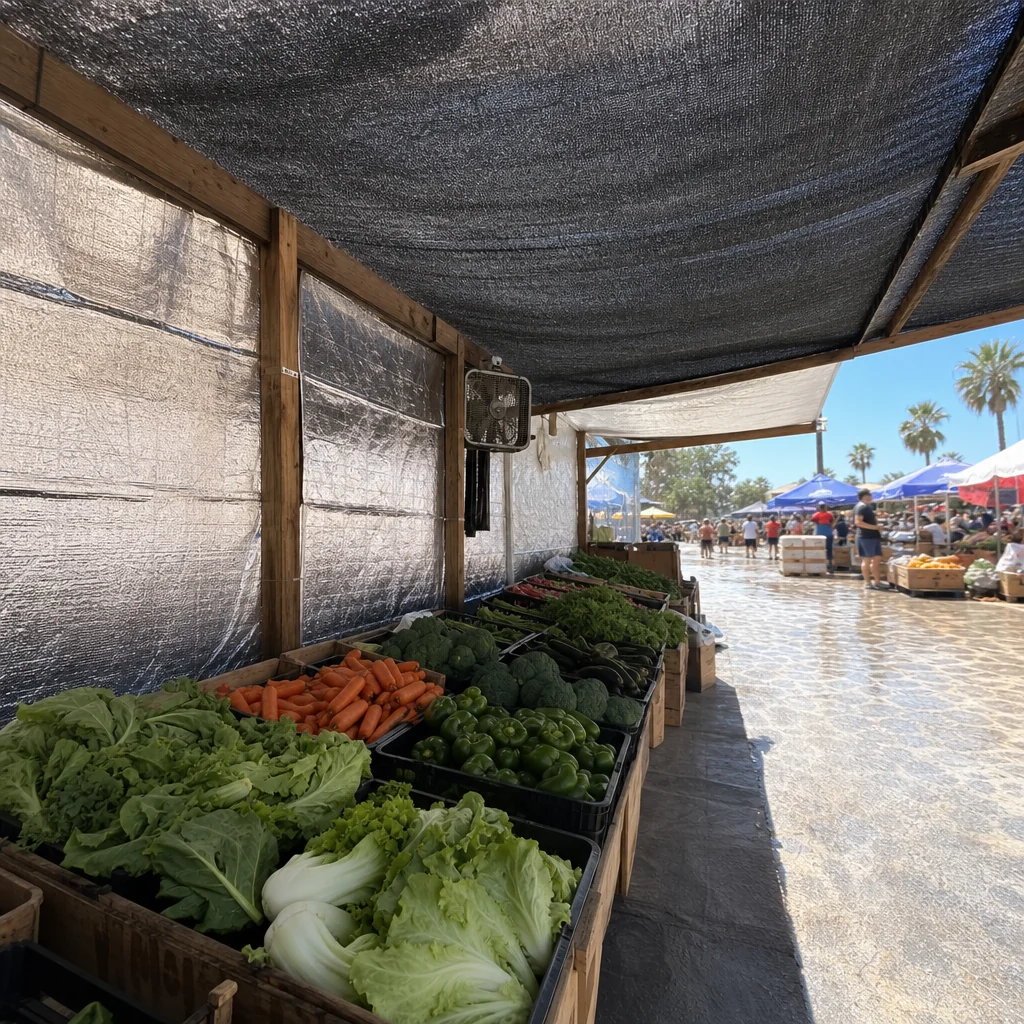
The fastest booth upgrade is better shade. A canopy is not just rain cover; it is your first cooling system. The same logic behind cool roofs that reflect more sunlight applies on a smaller scale: surfaces that reflect more sunlight absorb less heat, so white or light-colored canopy tops usually stay cooler than dark ones in direct sun.
This is where many vendors waste money. They buy larger fans, power stations, or misting gadgets while standing under a black pop-up tent that has been soaking up heat all morning. If your canopy is dark, your fan is working against a hotter ceiling above you. A light canopy, an added reflective top panel, or even a second sun-cloth layer on the west side can noticeably reduce heat load before you plug anything in.
Sidewall strategy matters too. Full walls can protect inventory, but they also trap heat. In hot markets, partial walls on the west and south exposures are usually better than closing off the entire booth. If the sun hits hard in late afternoon, hanging a removable shade cloth on the hottest side often works better than boxing yourself in. That gives you solar control without losing cross-breeze.
The most comfortable vendor layouts follow a simple pattern that also works in off-grid homes: shade the hottest side, leave an opening for airflow, and avoid placing your main work position where afternoon sun hits your shoulders and neck. Even moving your cashier position 2 to 3 ft deeper under cover can change how long you stay functional.
Air Movement Comes Next, Not First
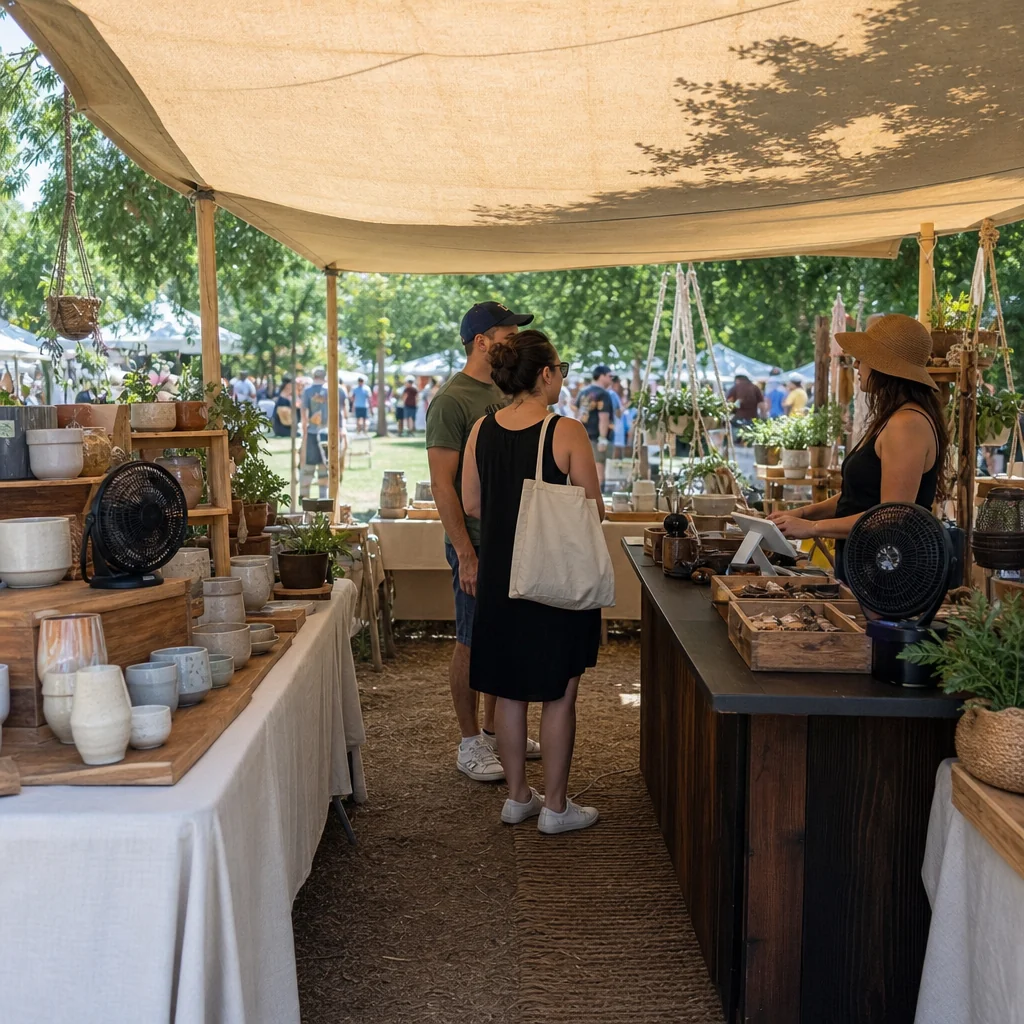
Once the sun is under control, airflow starts to matter. Small portable fans remain one of the best vendor tools because they are compact, cheap to run, and easy to aim at the person doing the work. Vendor setup advice often gets this part right: a clip-on or rechargeable fan is usually more useful than a large floor fan because it saves space and can target face, neck, and chest level, where relief is felt fastest.
The limitation is straightforward. Fans cool people better than products, and they work best when the air is not already trapped and overheated. That is why booth layout matters as much as fan size. Put one fan low to pull air across your body and another high to push hot air out from under the canopy, and you will usually get better results than by pointing both straight at your face.
Natural ventilation is the older version of the same idea. Passive-design sources consistently show that airflow works best when openings line up with local breezes rather than fight them. In a market booth, that means watching wind direction during setup instead of treating every stall the same. If the breeze usually comes from your left by 11:00 AM, leave that side more open and avoid stacking display racks there.
Hydration and Body Cooling Are Part of Booth Design
Heat stress is not only about air temperature. It is also about whether your body can keep up. Vendors often drink too little because they want to avoid extra restroom trips, then wonder why they feel foggy by early afternoon. Steady hydration and water-rich snacks are still some of the highest-value cooling tools available, especially during long market days.
A simple rule is to set up hydration so it is easier to drink than to forget. Keep cold water where your hand naturally lands, not buried behind stock bins. Fruit with high water content can help, but it should support water intake rather than replace it. Hats, light clothing, and a small cooling towel also do more than many people expect because they lower heat gain directly on the head and neck.
This also improves customer experience. A vendor who is cooler tends to speak more clearly, move more patiently, and stay engaged longer. That matters at markets where sales depend on conversation.
When Solar-Powered Cooling Makes Sense
Solar gear is useful, but it pays off only when matched to the job. For most single-stall vendors, the best use of small solar is not running a full air conditioner. It is covering low-draw equipment such as clip fans, LED lighting, phone charging, card readers, and maybe a compact cooler fan if you sell heat-sensitive goods.
That recommendation aligns with broader cooling research. Solar cooling works best when generation, storage, and the cooling load are matched carefully rather than oversized on guesswork. Reviews of solar cooling systems note that integrated design and storage improve performance, especially when cooling demand peaks during sunny hours, which is exactly what happens at summer markets. A small fan-and-power setup is usually an easy match; a compressor-based cooling setup is much harder.
The practical reason is energy demand. Off-grid system guides commonly estimate that a 15,000-BTU air conditioner may use around 1,000 watts and about 8 kWh over eight hours. That is far beyond what a casual solar generator and one folding panel can sustain through a full market day. If you need true refrigerated storage or active AC, you are planning a real power system, not just a convenience add-on.
| Cooling option | Best use at a market booth | Main upside | Main downside |
|---|---|---|---|
| Rechargeable clip fan | Personal cooling at the table | Cheap, light, easy to aim | Limited if the booth is in direct sun |
| Light canopy with side shade | Whole-booth heat reduction | Big comfort gain without power | Needs setup space and anchoring |
| Cooling towel and hat | Personal heat relief | Very low cost and immediate | Helps the person, not the booth air |
| Small solar + battery setup | Fans, lights, POS devices | Quiet off-grid operation | Limited for heavy cooling loads |
| Compressor AC or refrigerated cooling | Specialty food or heat-sensitive stock | Strong cooling when properly sized | Expensive, heavy, high power draw |
Smart Product and Layout Choices Reduce Heat Load
Cooling the vendor is only half the job if your products also suffer in the heat. Candles soften, chocolate blooms, cosmetics separate, electronics overheat, and printed materials curl. The best response is usually not a larger cooler. It is reducing the booth’s heat load so products do not start baking in the first place.
Use reflective table covers rather than dark, heavy fabrics when possible. Keep backup stock in opaque bins under tables, not in the sun behind you. If you have metal display fixtures, remember that they can turn into heat sinks by midday. Even a small gap between merchandise and the canopy wall can help air move and reduce hot spots.
This mirrors a principle used in thermal storage and passive building design: once a material absorbs heat, it releases that heat slowly. Dark bins, black tablecloths, and dense display surfaces may look polished, but they can keep your booth hot long after the sun angle changes. For summer markets, a setup that looks polished but soaks up heat is usually a losing trade.
A Practical Setup That Works for Most Vendors
A dependable summer booth setup is a light-colored 10 x 10-ft canopy, one removable west-side shade panel, one clip fan aimed at the vendor, one higher fan venting hot air outward, a large insulated water jug, a brimmed hat, and stock stored low and shaded. If power is unreliable, add a modest battery or solar generator sized for fans, lights, and point-of-sale equipment rather than for air-conditioning fantasies.
That approach is boring in the best way. It is cheaper than chasing oversized gadgets, easier to transport, and much closer to the passive-first logic used in resilient off-grid living. It also scales well. If you later add solar, you are supporting an already efficient booth instead of trying to brute-force a bad setup.
A cool booth is rarely about one miracle product. It is usually the result of blocking heat early, letting air move where it matters, and sizing any powered gear to the real job instead of the marketing label.

Jordan Lee
Jordan Lee is part of the Farseen editorial team.