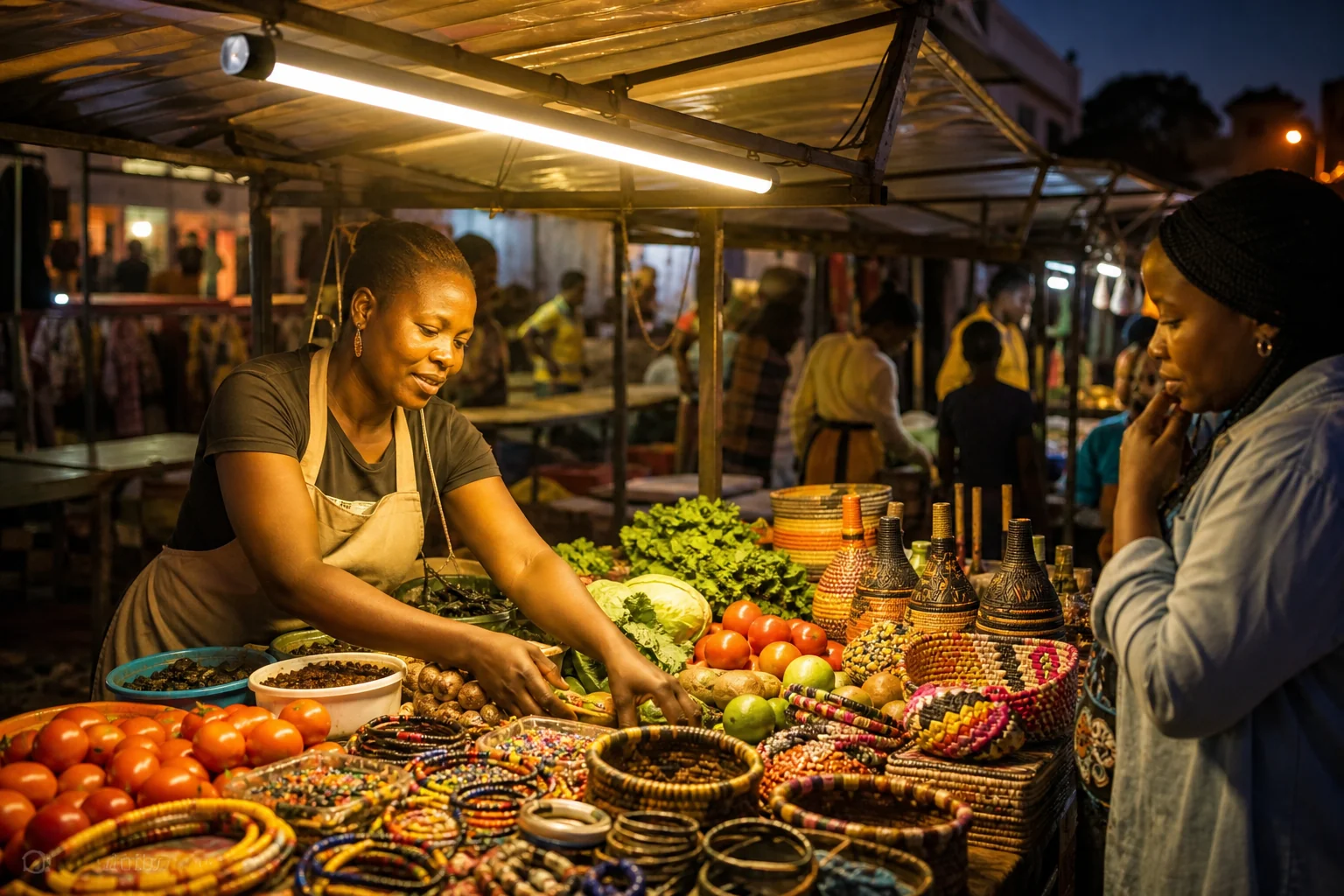
Magnetic LED tube lights work best when you need fast, movable task lighting on metal frames, canopy poles, van doors, trailers, or camp kitchens. Choose one by brightness, runtime, charging method, weather resistance, and whether the magnets fit your setup.
Is your stall still open after sunset while your produce, tools, or handmade goods sit in a dim patch under the canopy? Field-tested camping-light reviews show why this matters: compact LED systems can range from soft 50-lumen tent lighting to 1,600-lumen strip lighting for serious task work, so the right tube can make your table easier to shop, cook from, or pack down safely. Here is how to pick a magnetic LED tube light that works in the real world without wasting battery, money, or daylight.
What Is a Magnetic LED Tube Light?
A magnetic LED tube light is a slim, bar-shaped light with LEDs inside a protective housing and magnets built into the back, end caps, or mounting clips. The tube shape spreads light across a longer area than a small lantern, while the magnets let you attach it quickly to steel canopy frames, food-truck panels, van interiors, tool carts, trailer walls, or metal camp furniture.
For off-grid and temporary setups, the appeal is simple: no wiring, no clamp to adjust, and no holes drilled into rented equipment. Modern portable lighting usually combines efficient LEDs, rechargeable batteries, and sometimes solar or USB charging; solar camping lights commonly use a solar panel, LED light source, and rechargeable battery for nighttime use. A magnetic tube is not always solar by itself, but it fits the same low-power, portable-lighting logic.
Why They Work Well for Market Stalls
Fast Setup on Metal Frames
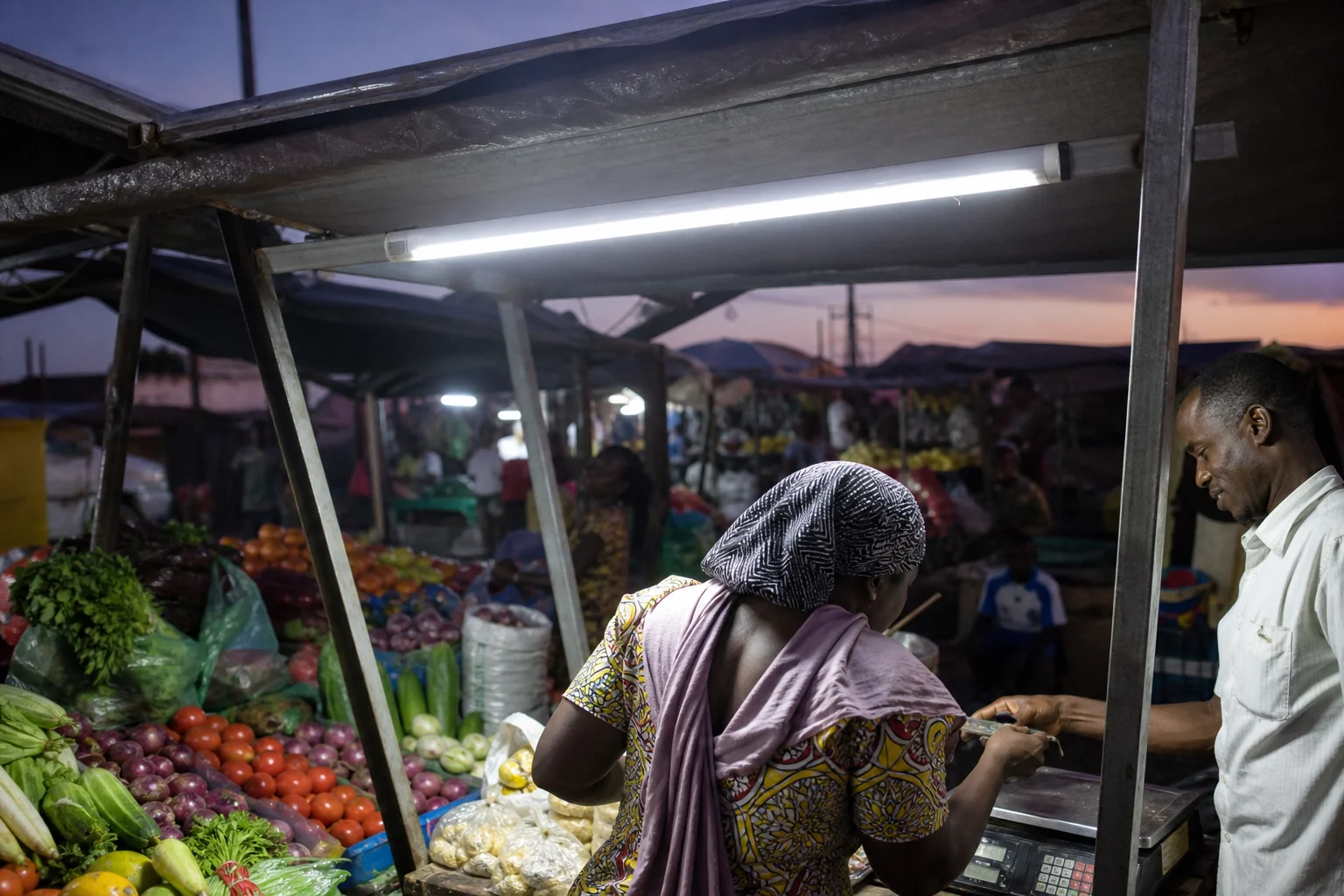
At a farmers market, night market, flea market, or craft fair, time matters. A magnetic tube can snap onto a steel canopy leg or crossbar while you unload bins, and it can be moved as the sun shifts or customer traffic changes. That is a major advantage over string lights, which look welcoming but may take longer to route, untangle, and rewind.
The most useful placement is usually above the front edge of the table, angled down toward the products rather than outward into shoppers’ eyes. For a 10-by-10-ft stall, one tube across the front can improve visibility for browsing, while a second lower-output light behind the table helps with checkout, cash handling, or card reader use. If your frame is aluminum, plastic, or powder-coated in a way that weakens magnetic grip, plan on magnetic plates, straps, or clips instead of assuming the light will hold.
Better Task Light Than Decorative String Lights
String lights are pleasant, but they are usually ambient lighting first. Camping-light testing describes string lights as useful for tents, vans, picnic tables, and general camp atmosphere, while a brighter LED strip can be better for cooking or task lighting; one strip produces 1,600 lumens across about 4 ft and needs an external power source via USB. That comparison is directly relevant to stalls: jewelry, baked goods, tools, seedlings, labels, and price tags need clean task light, not just atmosphere.
A practical rule is to use warmer, softer light where mood matters and brighter, more neutral light where inspection matters. A bakery stall can benefit from warm light that makes bread and pastries look natural. A knife, repair, plant, or parts stall needs brighter, more color-neutral lighting so customers can see details without guessing.
Why They Work Well for Camping
Useful Around Vehicles, Trailers, and Camp Kitchens
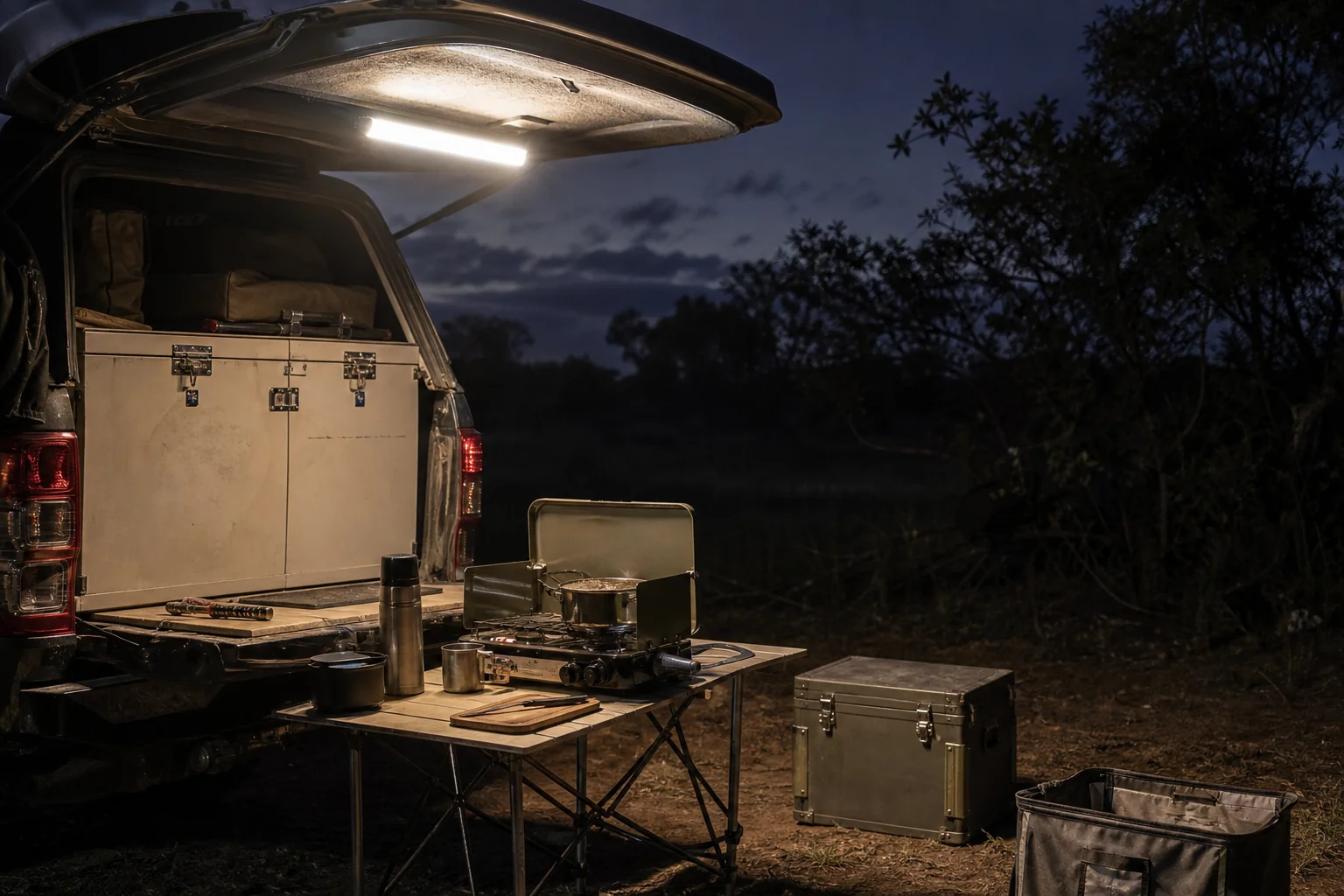
Magnetic LED tubes are especially handy for car camping, van camping, overlanding, and RV use because metal attachment points are everywhere. A tube can mount under a raised hatch, inside a trailer, along a tailgate kitchen, on a steel awning bracket, or near a tool drawer. Unlike a lantern, it does not occupy table space, and unlike a headlamp, it lights the shared work area.
For camp cooking, aim the tube across the prep surface from the side or above. This reduces harsh shadows from your hands and keeps bugs less concentrated directly over the food than a central lantern might. If you are lighting a tent interior, use a low mode or diffuser; bright tube lights can feel harsh in a small nylon space.
Solar Helps, But USB Backup Is More Reliable
Solar is excellent when the trip gives you clear daytime exposure, especially in open desert or beach camps. The limitation is charge time. A 2026 camping string light guide reports that one 44-ft solar string light can run up to 40 hours on low or 8 hours on high, but solar charging takes about 16 hours, so keeping a cable available is still recommended. The same lesson applies to magnetic tube lights: solar is a bonus, not a guarantee, unless you have enough panel area, sun, and time.
For shaded forest camps, winter trips, stormy weekends, or late market evenings, dual charging is the safer choice. The broader off-grid solar sector keeps emphasizing hybrid resilience because off-grid solar products provide electricity without a centralized grid, yet investment and infrastructure gaps remain large; 660 million people could still lack electricity by 2030 under the current trajectory. On a small scale, the lesson is the same: independence works best when you manage storage and backup power deliberately.
Brightness, Runtime, and Battery Size
Lumens measure total light output, while runtime tells you how long that output lasts. The mistake is shopping by lumens alone. A very bright tube may look impressive during setup, but if it dies halfway through a Saturday market or a campsite dinner, it is the wrong tool.
For a small checkout area, a modest tube in the 100-to-300-lumen range may be enough if it is close to the work surface. For a full table, food prep counter, or trailer workspace, higher output is useful, but adjustable modes matter so you can run bright only when needed. Camping-light guidance commonly treats 50 to 150 lumens as enough for tent use or close tasks, while 200-plus lumens is more suitable for a picnic table or larger shared area. Portable outdoor lighting should be judged by brightness and runtime together because high modes drain batteries faster.
Here is a practical comparison for off-grid setups.
| Use case | Best light character | Practical buying focus |
|---|---|---|
| Market checkout table | Even, glare-controlled task light | Medium brightness, long runtime, USB-C charging |
| Produce or craft display | Wide beam with good color rendering | Adjustable brightness and warm-to-neutral color |
| Camp kitchen | Brighter tube or strip-style output | Weather resistance, strong mounting, power-bank compatibility |
| Tent interior | Soft diffused low mode | Low glare, light weight, secure hanging option |
| Van or trailer work area | Directional bar light | Magnetic strength, durable housing, replaceable charging cable |
Magnetic Mounting: Convenient, Not Universal
Magnets are the headline feature, but they are not magic. They need ferrous metal, enough surface contact, and a light housing that does not twist loose when bumped. Thin canopy poles, rounded rails, painted surfaces, and vehicle vibration can all reduce holding power.
Before relying on one for a market stall, test it at home on the actual frame. Attach the tube, tap the pole, shake the table lightly, and check whether the beam stays aimed. For camping, test it on your hatch, roof rack, trailer wall, or steel awning hardware before the trip. If the tube has a safety loop or lanyard, use it over food prep areas, sleeping spaces, and customer-facing displays.
A good magnetic tube should also offer a backup mount. Rubber straps, adhesive metal plates, screw holes, or clip brackets matter because many modern canopies and camp setups use aluminum. If a product only works magnetically, it may be less versatile than it looks.
Weather Resistance and Durability
Outdoor lighting gets exposed to dust, drizzle, condensation, smoky cooking areas, and rough packing. IP ratings help, though they do not tell the whole story. IPX4 generally means splash resistance, while stronger ratings such as IP65, IP67, or IP68 indicate better protection against dust and water depending on the exact rating.
The outdoor solar lighting market is moving toward LEDs because they use less power, last longer, and pair well with controls and batteries; solar street lighting systems commonly combine photovoltaic panels, batteries, LED luminaires, and controllers for outdoor use. A portable tube is smaller, but the same engineering priorities apply: efficient LEDs, protected electronics, and a battery that can handle repeated charging.
For market use, prioritize impact resistance and easy cleaning. For camping, prioritize sealed charge ports, strain relief on cables, and a housing that will not crack in a packed gear bin. If the light gets wet, dry it before storage and leave the port cover open only when it is in a clean, dry place.
Solar, USB, or Replaceable Batteries?
Rechargeable USB-C is the best default for most people. It lets you top off the light from a wall outlet before leaving, then recharge from a vehicle, power station, or power bank. Solar is valuable when the tube includes a panel or pairs well with a portable solar charger, but small built-in panels can be slow. Replaceable batteries still have a place in emergency kits because alkaline cells are easy to store and buy, but they create more waste and recurring cost.
Market research on solar camping lights points in the same direction: LED products dominate the category, and recommended extended-trip features include larger lithium-ion batteries, multiple charging modes, durable construction, and long runtime. The solar camping light market was valued at $1.2 billion in 2025 and is projected to reach $2.3 billion by 2034, reflecting demand for cleaner, rechargeable outdoor lighting. That growth does not mean every product is good; it means buyers should be pickier about battery capacity, ports, and real runtime claims.
Pros and Cons
The main advantage of a magnetic LED tube light is speed. It gives you hands-free lighting in seconds, works well on steel structures, and spreads light more evenly than a small point-source lantern. It is also easy to reposition, which matters when a market shifts from daylight to dusk or a camp kitchen changes from prep to cleanup.
The downside is dependence on metal mounting points. A magnetic tube can disappoint on aluminum canopies, plastic tables, fiberglass RV panels, or fabric shelters unless it includes secondary mounting hardware. It can also create glare if mounted at eye level, and high-output models can drain quickly unless they have usable low and medium modes.
Environmentally, the strongest argument is not that the light is green by default. It is that efficient LEDs and rechargeable batteries can reduce disposable battery use when the product is durable and used for years. Garden and outdoor solar-light testing also shows why maintenance matters: solar-light batteries often need replacement after several years, and cleaning panels helps preserve performance.
Buying Advice for Real Setups
For a weekly market stall, choose a tube with USB-C charging, adjustable brightness, a diffuser, a runtime that exceeds your full selling window, and a backup mounting method. If your market runs from 4:00 PM to 9:00 PM, do not buy a light that only claims five hours on low unless low is bright enough for selling. You want margin for setup, teardown, cold weather, and battery aging.
For camping, match the light to how you travel. Backpackers usually do better with a lighter lantern or inflatable solar light. Car campers, van owners, and overlanders get more value from a magnetic tube because vehicles and trailers provide mounting points. If you already carry a power station, a USB-powered tube can be excellent. If you camp away from vehicle power for several nights, pick a rechargeable model that can also sip power from a solar panel during the day.
The cleanest off-grid lighting kit is often mixed rather than built around a single product. Use a magnetic tube for the work surface, a lantern for walking or tent use, and a small headlamp for personal tasks. That way, no one light has to do everything poorly.
FAQ
Are magnetic LED tube lights safe inside tents?
They can be safe if they run cool, use low-voltage rechargeable power, and are secured so they cannot fall. Avoid using very bright, harsh tubes in small tents, and never use fuel-powered lanterns inside enclosed spaces.
How many lumens do I need for a market stall?
For a small checkout area, moderate output close to the table is usually enough. For a full product display, use adjustable lighting and place it where it spreads across the table without shining into customers’ eyes. Runtime at the chosen brightness matters more than the maximum lumen number.
Is solar charging enough for weekend camping?
Sometimes, but not always. Clear sun and long exposure can work well, while clouds, shade, winter days, and small panels slow charging. A USB backup from a power bank, vehicle, or power station makes the setup far more dependable.
Final Guidance
A magnetic LED tube light is a practical off-grid tool when you treat the magnet as a mounting option, not the whole plan. For market stalls and camping, the best model is the one that gives you enough usable light for the full evening, charges from more than one source, survives outdoor handling, and mounts securely where you actually need the beam.

Jordan Lee
Jordan Lee is part of the Farseen editorial team.