The Domino Effect: How Shading Impacts Solar Charging Efficiency
Understanding the Series String Bottleneck: Why One Shaded Cell Affects the Entire Array
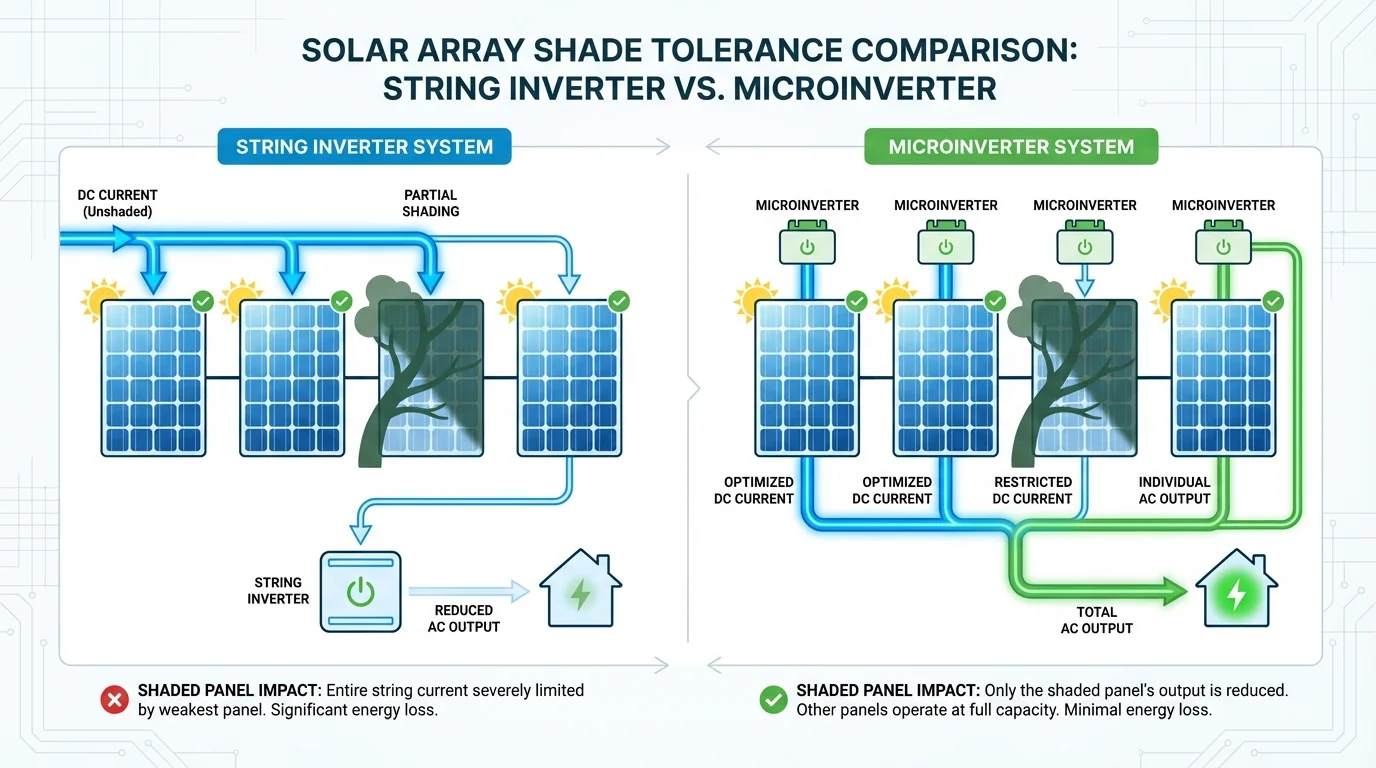
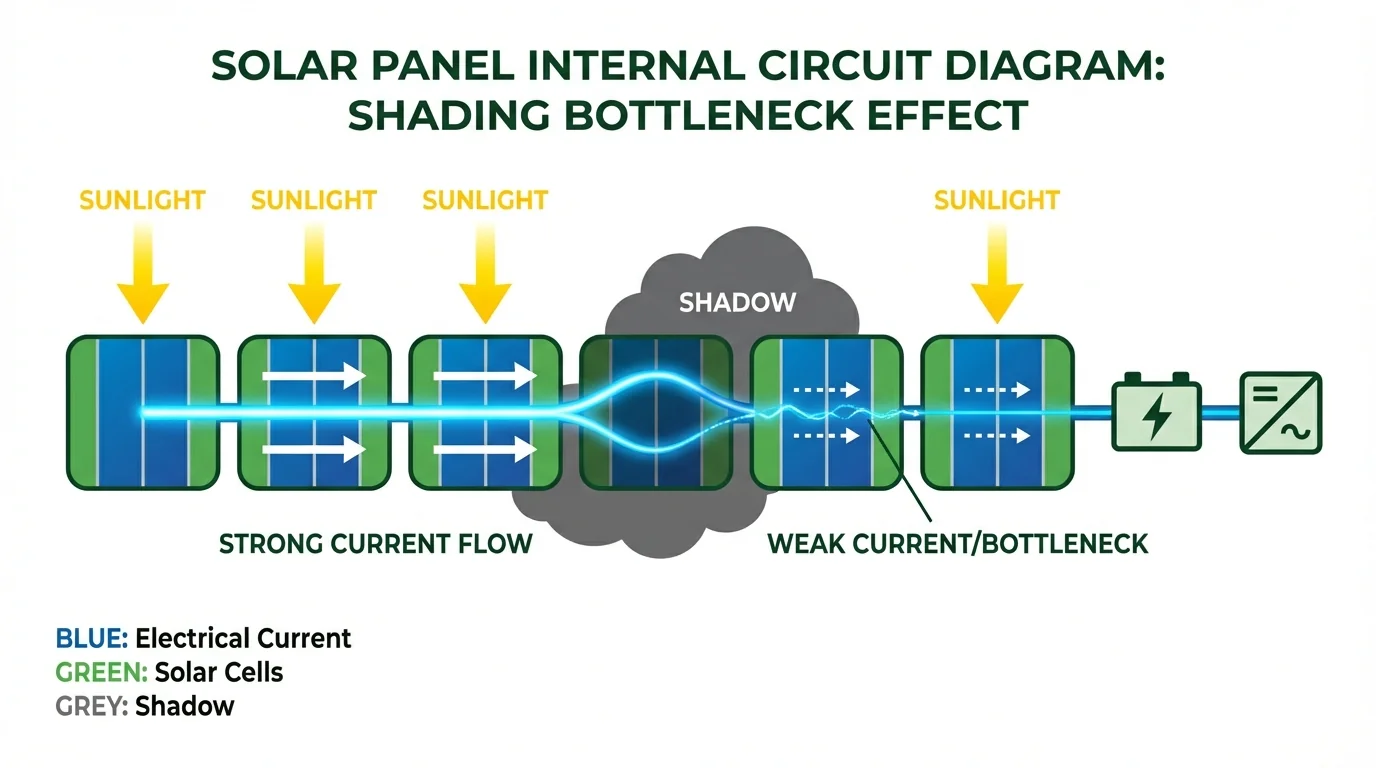
The impact of shading on a photovoltaic (PV) array is rarely proportional to the physical area covered. Intuitively, one might expect that shading 1% of a panel would result in a 1% drop in power. However, the electrical architecture of solar modules dictates a much more dramatic outcome. Because solar cells are typically wired in a series string to achieve the necessary operating voltage, they function much like links in a chain or water flowing through a single hose. As soon as one cell is shaded, the entire string's electrical current is restricted to the output of that single shaded cell.
This structural bottleneck occurs because a shaded cell produces significantly less photon current than its fully illuminated neighbors. When the unshaded cells continue generating high current, they effectively force that energy through the obstructed cell. Instead of contributing to the system's power generation, the shaded cell becomes reverse-biased and begins to act as an electrical load, consuming the electricity produced by the rest of the array. This phenomenon, known as electrical mismatch loss, is a primary reason why partial shading can reduce the annual electricity production of even large, optimized PV parks by 3% to 6%.
Beyond the immediate loss of energy, this bottleneck creates significant physical risks. The energy absorbed by a reverse-biased cell is converted directly into heat, leading to severe thermal stress. Reliability testing indicates that localized hot-spots on these shaded cells can reach extreme temperatures ranging from 130 °C to 150 °C. If sustained, these temperatures can cause irreversible damage, including cell cracks, delamination of module materials, and a permanent loss of electrical insulation, transforming a fleeting shadow into a long-term equipment failure.
Common Obstructions: From Overhanging Branches to Neighboring Rooflines
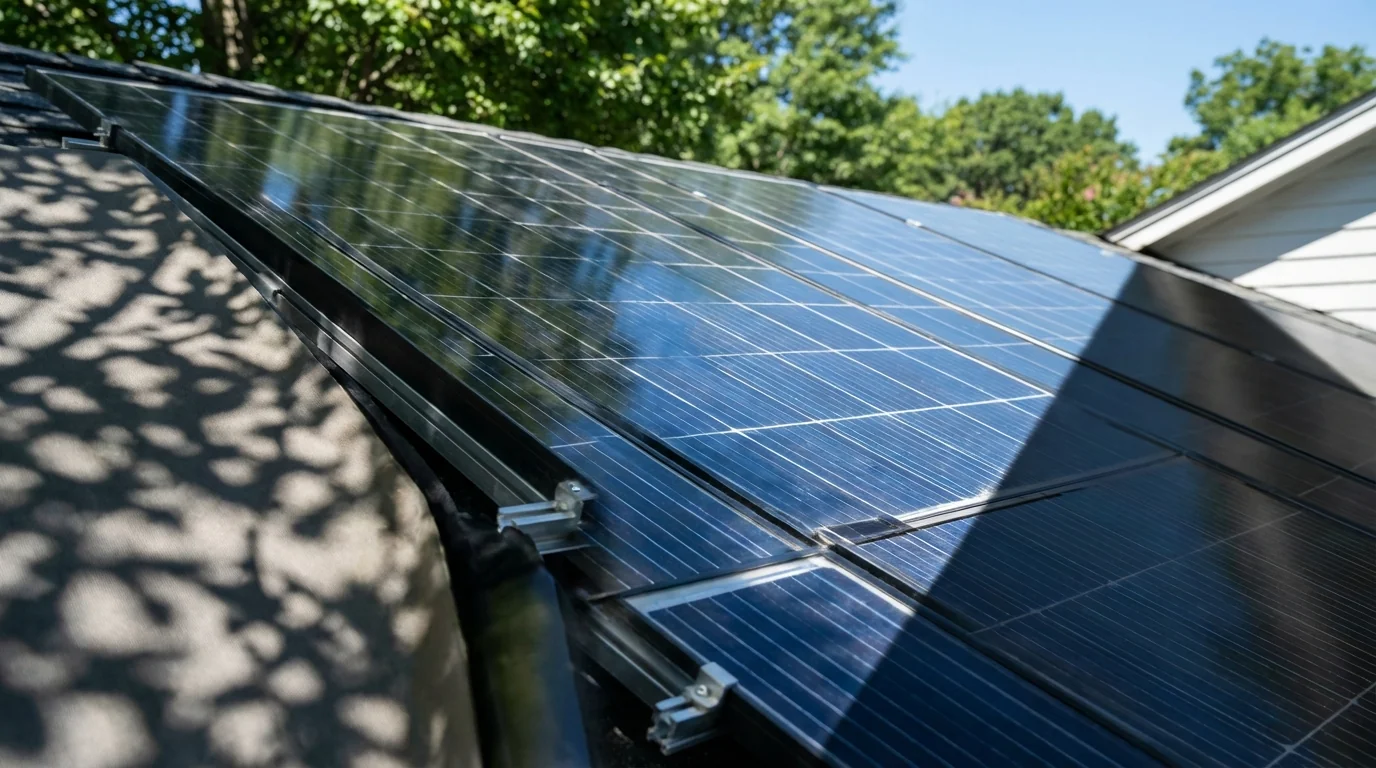
When evaluating solar potential, obstructions generally fall into two categories: soft shading and hard shading. Soft shading, typically caused by diffuse obstructions like tree canopies, allows some light to pass through but can still reduce annual energy production by 20% to 30% due to seasonal variations. In contrast, hard shading from solid structures like chimneys, neighboring buildings, or utility poles completely blocks direct sunlight, resulting in more severe localized power drops and the high-temperature hot-spots discussed previously.
The physical dimensions and proximity of these obstructions dictate the exact percentage of energy lost. Because structure profiles are constant and not subject to seasonal variances, their impact is persistent and highly predictable. For example, research indicates that a solid wall measuring 4 meters in height located just 2 meters from a solar collector can result in shading losses of 7% to 8%. In a standard residential scenario, a 20-foot tall structure, such as a barn or neighboring roofline, located 20 feet south and 20 feet west can cast 240 hours of shade, causing a 3.1% annual loss.
Vegetation introduces a more dynamic variable. Deciduous trees and changing sun angles create dramatic seasonal shading differences as leaves grow and fall. A 50-foot tall tree located 55 feet east and 50 feet south of an array can cast approximately 170 hours of shade annually, reducing generation by about 2.6%. While these percentages may seem modest, the output reduction scales aggressively with the surface area obscured. Light shading covering less than 20% of a panel typically results in a 15% to 25% output reduction, whereas heavy shading covering more than 40% of the panel can plummet energy output by 40% to 95%.
Strategic spatial planning is the most effective mitigation tool. By accurately measuring the height and distance of these obstructions, designers can often bypass the heaviest shading zones entirely. For instance, shifting a planned solar array just 20 feet to the north and 20 feet to the east can reduce a nearby building's shading impact by 85% and a tree's impact by 10%, transforming a potentially compromised installation into a high-performing energy asset.
Mitigation Technologies: The Role of Bypass Diodes and Microinverters
To counteract the severe electrical and thermal penalties of partial shading, solar architecture relies on specific hardware interventions, primarily bypass diodes and advanced inverter topologies. At the module level, bypass diodes serve as the first line of defense. Without bypass diodes, operating a shaded module at the same current as a fully illuminated module could create a destructive reverse-bias voltage of several hundred volts. When a substring enters reverse bias, the bypass diode activates and clamps the voltage to a safe threshold, typically around 0.5V, effectively mitigating power loss and preventing the formation of dangerous hot spots.
However, this protection introduces its own complexities. Activating bypass diodes creates multiple power peaks in the system's characteristic curve, requiring highly robust Maximum Power Point Tracking (MPPT) algorithms to accurately find the true optimal power output. This makes the choice of inverter technology critical to the system's overall resilience. Traditional string inverters offer high peak conversion efficiencies of 97% to 98% under uniform sunlight. However, because they manage a series circuit, the current of the whole string drops to the level of the shaded component, potentially neutralizing the output of unshaded panels.
Microinverters resolve this bottleneck by performing MPPT at the individual component level. These devices boast tracking efficiencies of up to 99%, ensuring that unshaded panels continue to operate at maximum capacity regardless of their neighbors' status. The performance delta is highly quantifiable: in controlled bottom-shading tests, microinverters outperformed string inverters by 8.5%. Yet, the choice is not always a universal preference for one over the other. In certain side-shading tests resulting in a 15% system loss, a modern string inverter actually outperformed a microinverter setup by 3.5% in sunny conditions, suggesting that modern MPPT software can sometimes bridge the gap for less complex obstructions.
For most residential scenarios with persistent obstructions, the architectural shift to microinverters delivers superior annual yields. In a simulated 6 kW residential system with partial shading, a string inverter generated 8,000 kWh annually, whereas a microinverter system generated 8,600 kWh—an approximate 7.5% increase in total energy yield. By localizing the shading penalty, these technologies allow the system to thrive in environments that would otherwise be electrically compromised.
Ensuring Reliable Backup: Pairing Your Setup with a Farseen Energy Storage System
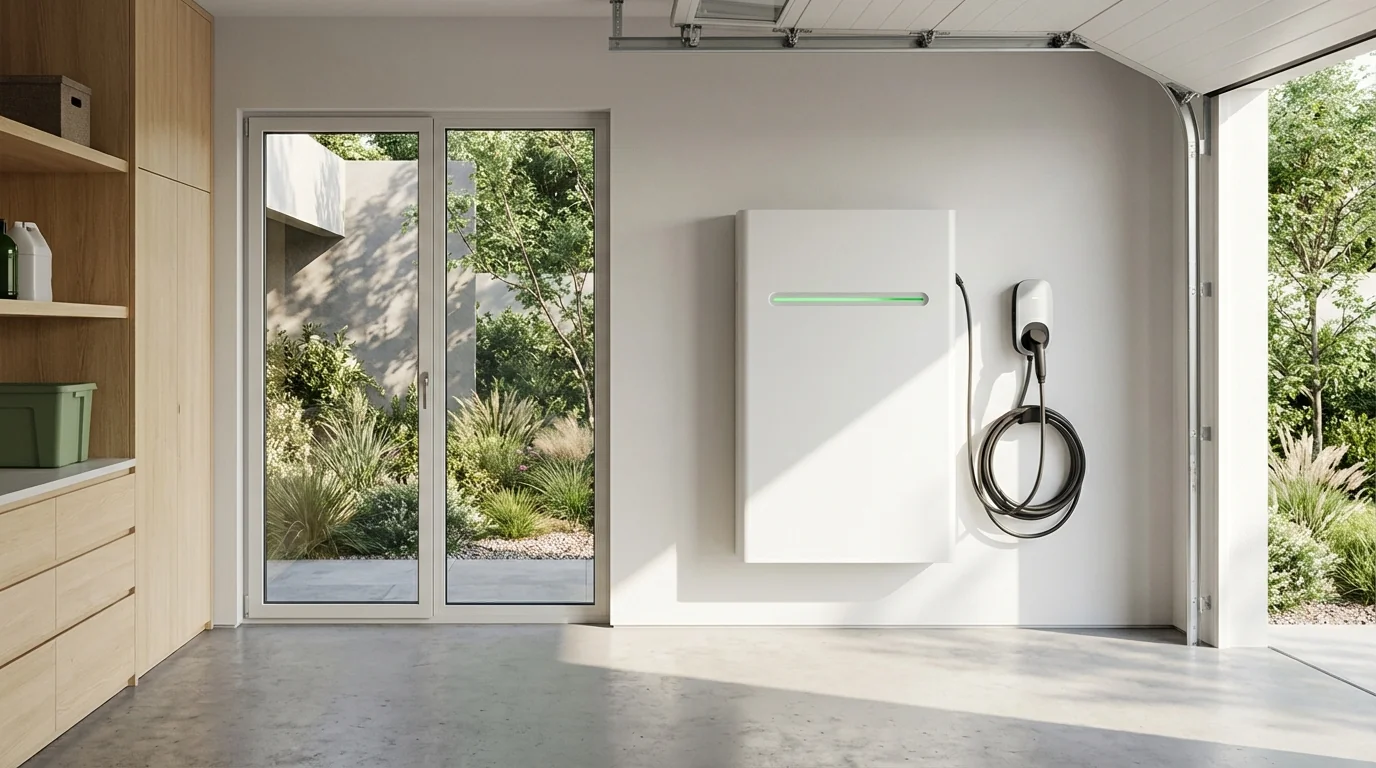
Even with advanced microinverters mitigating the immediate electrical bottlenecks of partial shading, physical obstructions will inevitably reduce your total daily energy yield. To compensate for these generation gaps, pairing a solar array with a robust Battery Energy Storage System (BESS) ensures that surplus power generated during peak, unshaded hours is captured for later use. When evaluating a BESS, several critical performance metrics dictate its ability to smooth out the intermittent generation caused by shifting shadows.
The foundation of a capable storage system lies in its Usable Energy, which factors in the manufacturer's recommended Depth of Discharge (DoD). Modern lithium-ion systems, such as those utilizing Lithium Iron Phosphate (LFP) chemistries, consistently deliver a DoD between 80% and 90%. This high threshold ensures that the vast majority of the stored capacity is accessible without accelerating battery degradation. Furthermore, these configurations boast a highly efficient round-trip efficiency ranging from 85% to 95%, meaning minimal power is lost as heat during the chemical conversion processes of charging and discharging.
The speed at which a battery can deploy this energy is equally vital. When a hard shadow suddenly cuts your solar output, the system’s response is defined by its C-rate. A BESS operating at a 0.5C rate will discharge its total usable capacity over the course of 2 hours. Selecting an appropriate C-rate ensures that the transition from solar generation to battery backup is seamless, keeping appliances running without interruption when the array is temporarily compromised.
Finally, operational stability is dependent on environmental management. High-end storage modules are often engineered with an IP66 protection level against dust and water and a C4 anti-corrosion grade to resist external wear. Internally, integrated liquid-cooling systems are critical to maintain the temperature difference between individual battery cells below 3°C. By strictly controlling these thermal variances, the system preserves its service life—which typically concludes when charging capacity falls below 80% of its original nominal rating—transforming a shading-prone installation into a resilient, long-term energy asset.
Key Takeaways
Managing solar shading effectively requires a balance between understanding the physical limitations of your installation site and the technical capabilities of modern hardware. Based on the operational data and technological comparisons explored, the following core takeaways define a resilient solar strategy:
- The Disproportionate Cost of Inaction: Because standard solar panels are wired in series, partial shading does not result in a simple 1-to-1 energy loss; it creates a system-wide bottleneck. Without module-level mitigation, string inverters can drop to just 78.2% efficiency in partial shading conditions (https://solartechonline.com/blog/power-optimizer-vs-microinverter-comparison/). Furthermore, shaded cells act as electrical loads rather than generators, creating hot spots that can reach extreme temperatures of 130–150 °C (https://www.epj-pv.org/articles/epjpv/full\_html/2024/01/pv230068/pv230068.html), which poses a serious risk of permanent module damage and accelerated degradation.
- Quantifiable Mitigation Gains: Deploying Module-Level Power Electronics (MLPE), such as microinverters or power optimizers, allows each panel to operate independently. In shaded environments, microinverters maintain an impressive 93.5% efficiency (https://solartechonline.com/blog/power-optimizer-vs-microinverter-comparison/), delivering a 15% to 25% production improvement over traditional string inverters (https://solartechonline.com/blog/power-optimizer-vs-microinverter-comparison/).
- Rational Investment and ROI: While advanced hardware requires a higher initial capital investment—adding a premium of $0.30 to $0.50 per watt for power optimizers and $0.50 to $0.80 per watt for microinverters (https://solartechonline.com/blog/power-optimizer-vs-microinverter-comparison/)—the performance boost is substantial for sites with complex rooflines or vegetation. This increased daily energy harvest generally translates to a financial payback period of just 3 to 7 years (https://solartechonline.com/blog/power-optimizer-vs-microinverter-comparison/), making it a sound long-term investment.
- Proven Long-Term Reliability: Concerns regarding the reliability of roof-mounted electronics are largely offset by current industry data. Despite the distributed architecture, microinverters experience a remarkably low failure rate of 1 in 1,500 units, while power optimizers see a failure rate of 1 in 1,300 (https://www.solarinsure.com/microinverters-vs-optimizers).
Ultimately, the decision to invest in these technologies hinges on a site-specific shading analysis. However, for most obstructed roofs, combining accurate spatial planning with MLPE technology and a robust energy storage system transforms a potentially compromised installation into a high-performing energy asset.

Ray Harlan
Ray Harlan is a seasoned American solar energy expert and Farseen's lead advocate for practical off-grid living. Born and raised in sunny California, with 14 years of hands-on experience in rooftop solar, microgrids, and real-world deployments across the U.S. and beyond, Ray has lived through everything from Texas blackouts and Florida hurricanes to Southeast Asian night markets and remote camping trips. He's not just theorizing-he has tested low-cost lighting and fan systems for street vendors, built emergency food preservation setups during multi-day power outages, and fine-tuned solar solutions for hot nights, kitchen ventilation, and disaster readiness. His mission is simple: turn sunlight into reliable, everyday power for families, small businesses, and outdoor enthusiasts. Every article he writes draws from field-tested insights, honest cost breakdowns, and straightforward step-by-step advice so you can confidently harness solar energy in your own life.