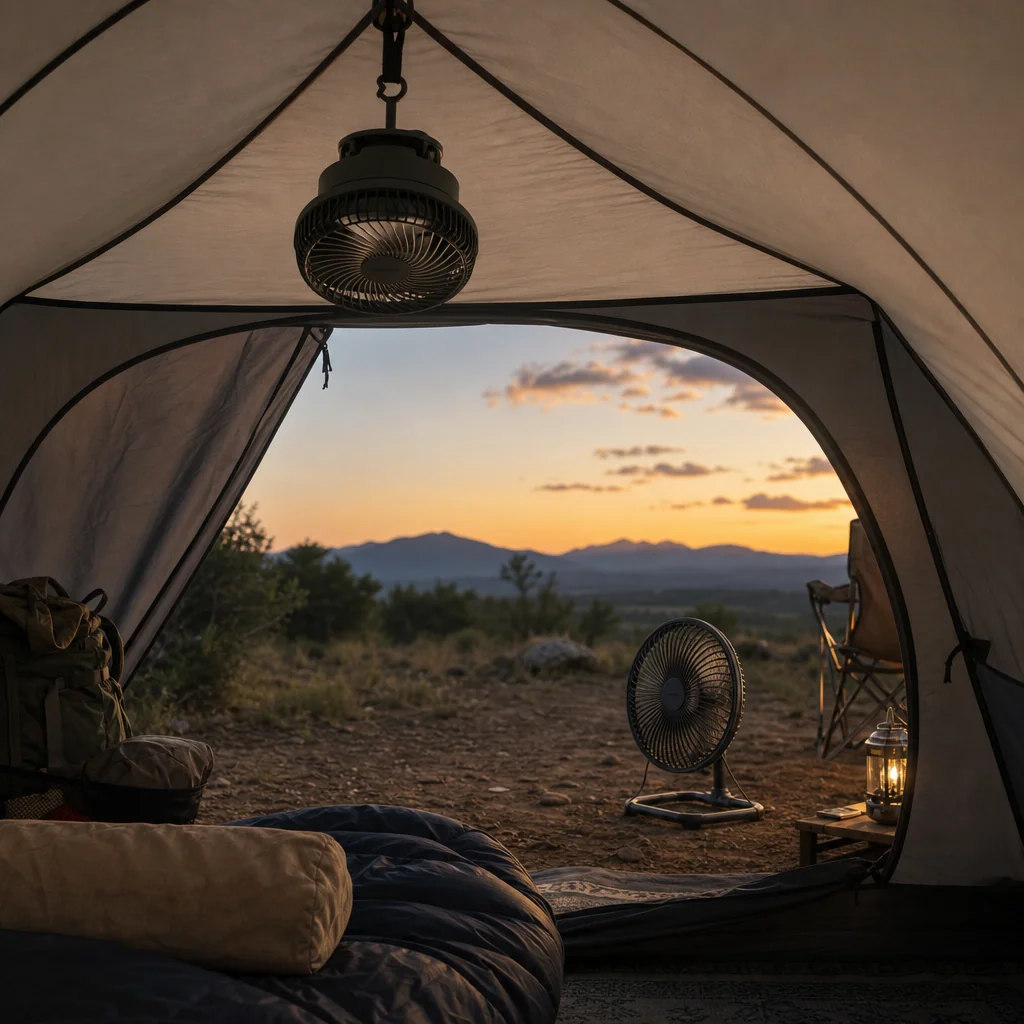
A hanging fan is usually the better choice for sleeping comfort in most tents, while a stand fan works better in larger shelters and mixed day-to-night camp setups. The right pick depends on airflow placement, tent size, runtime, and how you power it off-grid.
Ever wake up at 2:00 AM with still, sticky air pressing down from the tent ceiling while your sleeping bag feels fine but your face does not? Field-tested camping gear coverage consistently shows that airflow placement and battery practicality matter more than raw size alone, and the right fan style can be the difference between a restless night and a usable tent setup.
The Short Answer: Choose by Where the Air Needs to Go
A hanging fan is usually the smarter pick inside a tent because hot air collects high, and a ceiling-mounted or hook-mounted fan can push that trapped heat downward across your face and torso. That matters most in small dome tents, backpacking tents, and family tents where floor space is already crowded by sleeping pads, duffels, and kids’ gear.
A stand fan earns its place when your tent is tall enough to benefit from adjustable height, when more than two people need wider airflow, or when the fan will do double duty outside the tent during meals, card games, or buggy evenings. Reviews of portable power stations also reinforce a simple reality: once you start powering bigger airflow devices for longer periods, total system weight goes up fast, so portability and placement have to be planned together.
What Each Fan Type Really Means in Camp Use
Hanging fan
A hanging fan is a portable fan with a hook, loop, or hanging handle that lets you suspend it from a tent gear loft, center loop, or ridgeline. In real camp use, its biggest advantage is that it gets off the floor and out of your way. It also tends to work best for sleeping comfort because the air comes from above or slightly overhead instead of blasting your legs or gear pile.
The tradeoff is that not every tent has a strong enough center loop, and not every hanging fan has enough tilt control to aim airflow exactly where you want it. If the fan hangs too high and only stirs the tent roof, the cooling effect drops quickly.
Stand fan
A stand fan, in camping terms, is any portable fan that sits on the floor, a camp table, or an adjustable pedestal base. Some newer cordless models can switch between tabletop, pedestal, and hanging use, which is practical because campsites rarely stay in one mode all day.
The downside is obvious the first time you crawl around it in the dark. Stand fans take up room, collect dust, and can be annoying in low-profile tents where every square foot matters.
When a Hanging Fan Is the Better Tent Choice
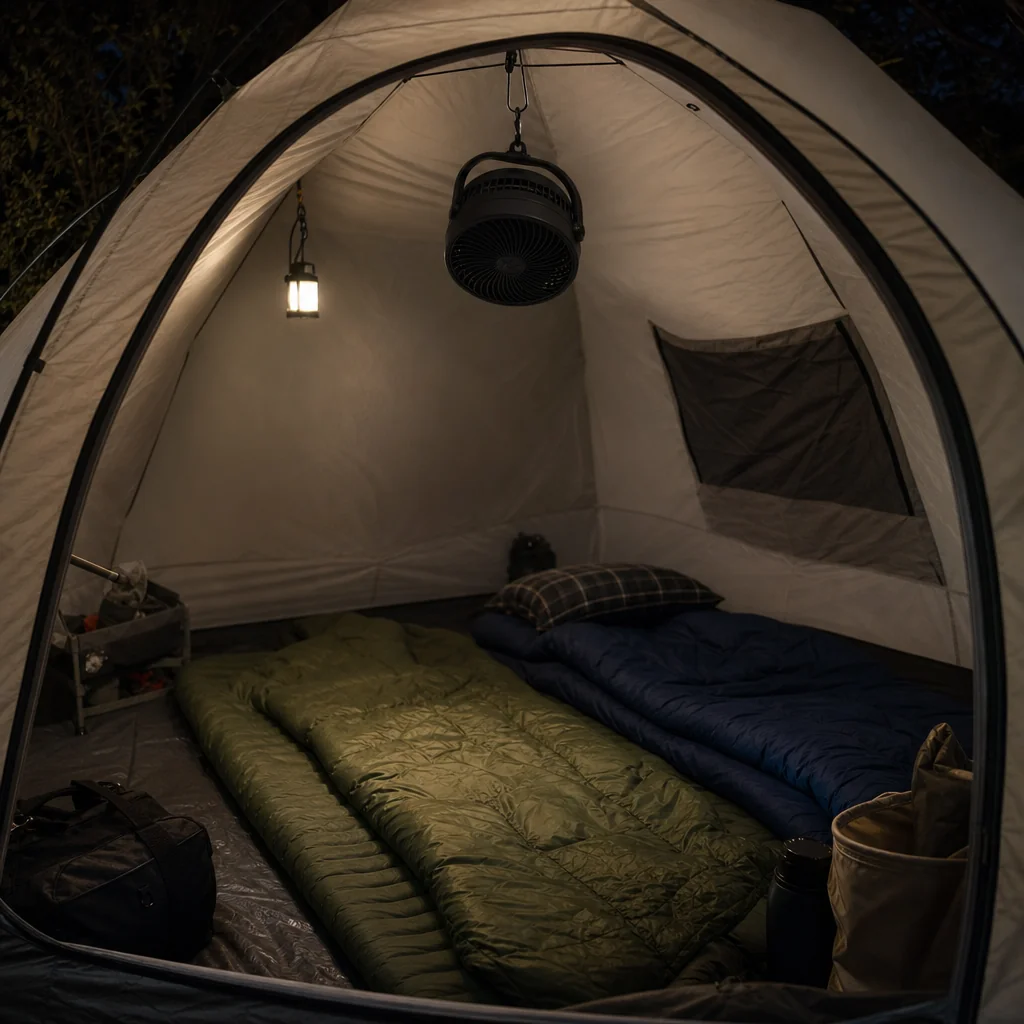
If you sleep on pads close to the floor, a hanging fan usually gives the most noticeable comfort improvement. Warm air builds near the tent roof, especially after sunset when the ground is still radiating heat and the tent fabric is holding it. Pulling that air down and across sleepers works better than pushing from ankle height.
This is also the better choice for small or medium tents where floor clutter is already the enemy. Many rechargeable camping fans are designed around hanging use because portability and compact mounting matter more than maximum airflow in tighter shelters rechargeable solar fans. In practice, a two-person tent with two sleeping pads, one duffel, and a lantern has very little spare floor area; removing even one object from the center walkway makes nighttime movement easier.
A hanging fan is also better if you camp in humid weather and want lower-speed airflow overnight. High fan speeds can dry your eyes, flatten tent walls, and waste battery. A gently angled overhead breeze usually feels more natural for sleeping.
When a Stand Fan Wins
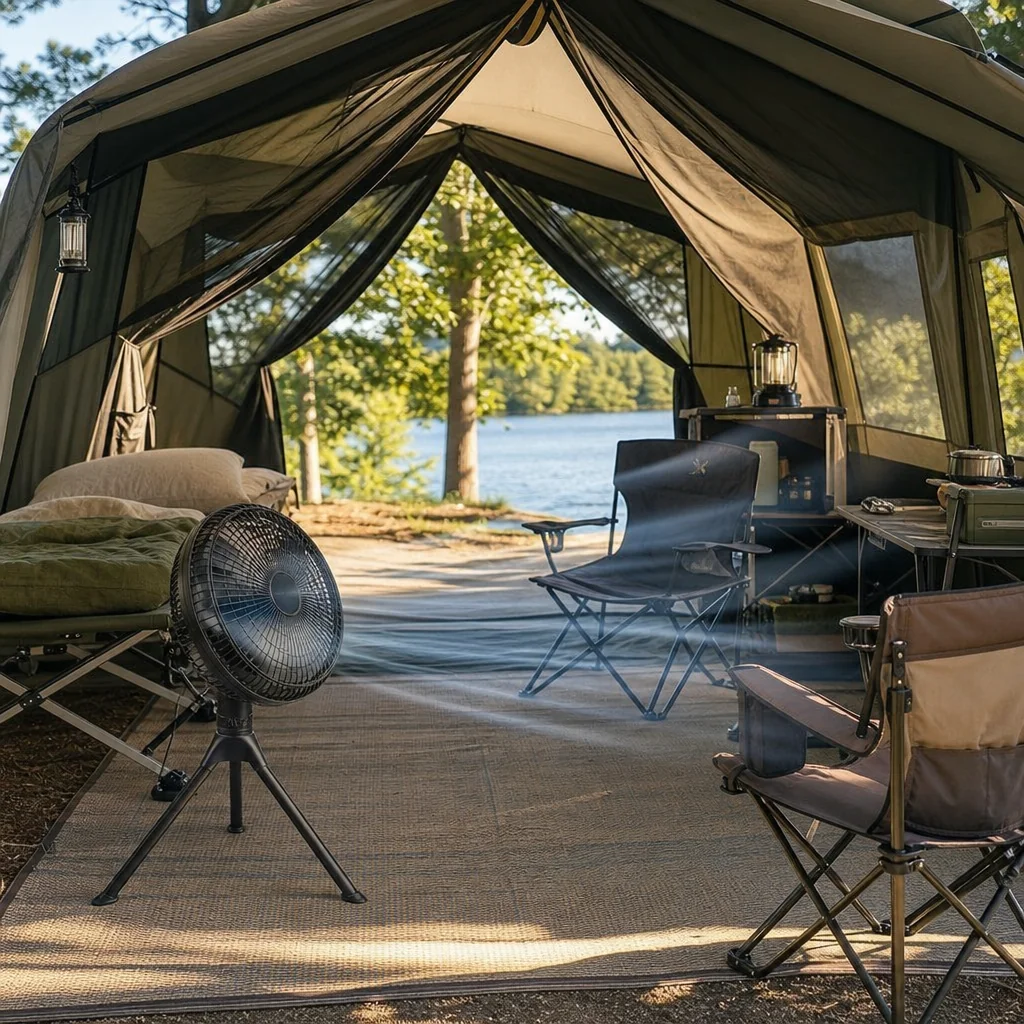
A stand fan is the better call when the tent is large, tall, or used more like a room than a sleeping shell. Cabin tents, screen tents, and cot-based setups benefit from wider directional control. If one camper sleeps hot and another does not, being able to pivot the fan matters more than ceiling placement.
It is also the stronger option for daytime camp life. A stand fan can move from tent to picnic table to tailgate bench without needing hooks or tent loops. If the unit has oscillation, it can cool multiple people during meals or while changing clothes in a larger shelter. Reviews of portable fans and off-grid power setups repeatedly point to portability plus flexible placement as the combination that actually gets used, rather than just admired on a spec sheet.
There is another practical case for a stand fan: taller sleepers on cots. If your head is 18 to 24 in above the ground, a floor fan with tilt may line up with your body better than a small hanging fan stuck at the tent peak.
Battery Life, Noise, and Power Matter More Than Marketing
The biggest buying mistake is chasing the largest battery or the loudest airflow claim without matching it to your trip. Portable fan guides and camping tests point to the same pattern: smaller electronics-only outings can get by with much lighter power gear, while longer trips or higher-draw cooling setups push you into heavier batteries quickly. For a weekend car-camping trip, that usually means a fan with enough battery for one night on medium, plus a simple recharge plan during breakfast or while driving.
A rough example makes the tradeoff easier to picture. If a power station around 288 Wh can run a fan for about 4 hours in testing, and a 768 Wh class unit can run one for about 7.5 hours, overnight runtime is possible, but it comes with weight. Once a power station gets past about 25 lb, carrying convenience becomes a real campsite factor, not a minor spec detail.
Noise is just as important. A fan that sounds fine at dinner can feel unbearable at 1:00 AM in a nylon tent. Lower-speed overnight use is usually the sweet spot, especially if your main goal is keeping air moving across your face rather than cooling the whole tent.
Solar Charging Helps, but Battery Backup Is the Real Off-Grid Advantage
For camping, the most useful solar fan is usually not a fan that works only in direct sun. The more practical choice is a rechargeable fan that can charge by solar, USB, or wall power and then run later, because actual tent use often peaks after sunset, not at noon rechargeable solar fans. That same timing issue shows up across camp life more broadly: people imagine using fans in the bright afternoon, but comfort needs often peak in the evening.
If your off-grid setup includes a portable power station, that is generally fine for campsite use, but one boundary is worth keeping clear. A portable power station that works well for camp recharging is not automatically the right answer for permanent rooftop solar integration at home; code and safety requirements for fixed systems are much stricter rooftop solar integration. For camping, keep it simple: charge safely, use battery-backed fans, and avoid assuming campsite gear translates directly into home electrical infrastructure.
Which One Should You Buy?
| Camping scenario | Better choice | Why |
|---|---|---|
| Small 2-person tent, sleeping on pads | Hanging fan | Better overnight airflow, no floor clutter |
| Large family or cabin tent | Stand fan | Wider reach and better directional control |
| Cot setup or tall shelter | Stand fan | Airflow lines up better with sleeper height |
| Hot, humid nights with limited battery | Hanging fan | Lower-speed overhead airflow often feels better longer |
| Fan used inside the tent and around camp | Stand fan or convertible model | More flexible all day |
| Solar-focused off-grid weekend | Hanging or stand with battery backup | Stored power matters more than direct-solar-only use |
Final Call
If you mostly want better sleep inside a normal camping tent, start with a hanging fan. If you want one fan to cool a larger shelter, a cot setup, and the picnic table afterward, choose a stand fan or a convertible model that can do both.
The best tent fan is not the one with the biggest battery or the flashiest extras. It is the one that puts airflow where your body needs it, runs quietly long enough to matter, and fits the way you actually camp.

Jordan Lee
Jordan Lee is part of the Farseen editorial team.