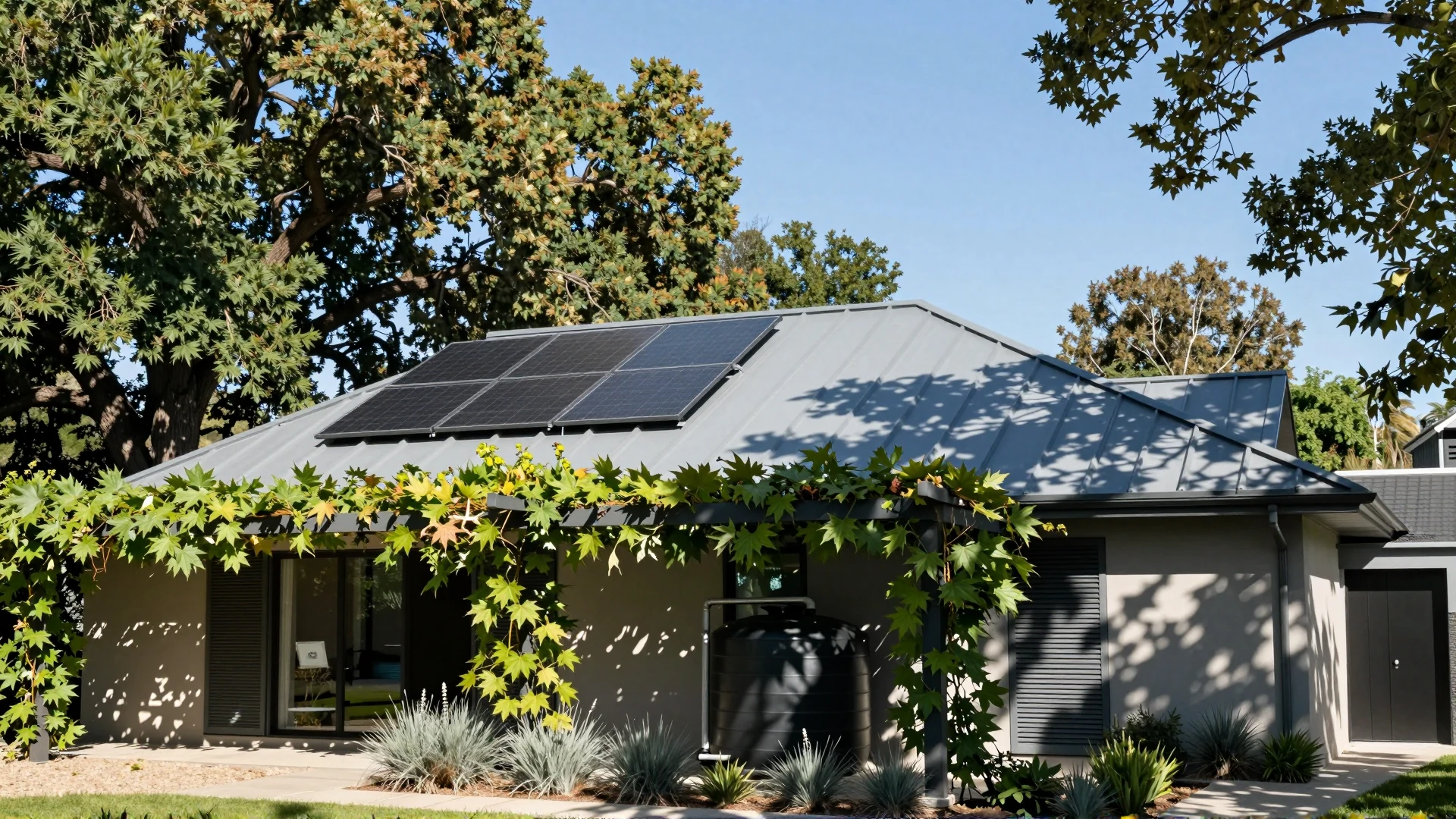
Pick the Right “Cool” Metal Finish
Metal can be a top performer in heat when it’s coated correctly. High‑reflectance and high‑emittance finishes push sunlight away and dump any absorbed heat quickly, keeping roof surfaces dramatically cooler. Field data cited by roofing pros shows dark roofs can reach ~190 F while cool roofs in the same sun run closer to ~120 F, cutting cooling needs by roughly 10–30% depending on the assembly and climate (1866 STAY DRY; DOE Energy Saver).
Look for measured solar reflectance and thermal emittance ratings via the Cool Roof Rating Council and ENERGY STAR. Painted metal often lands around 0.65–0.85 reflectance and 0.70–0.90 emittance (1866 STAY DRY). Note the nuance from DOE Energy Saver: unpainted metal can reflect well but typically has low emittance, so it runs hotter than comparable painted metal. “Cool color” pigments let mid‑tone panels reflect invisible IR; you can keep aesthetics and still block heat.
Insulate Smart, Not Just Thick
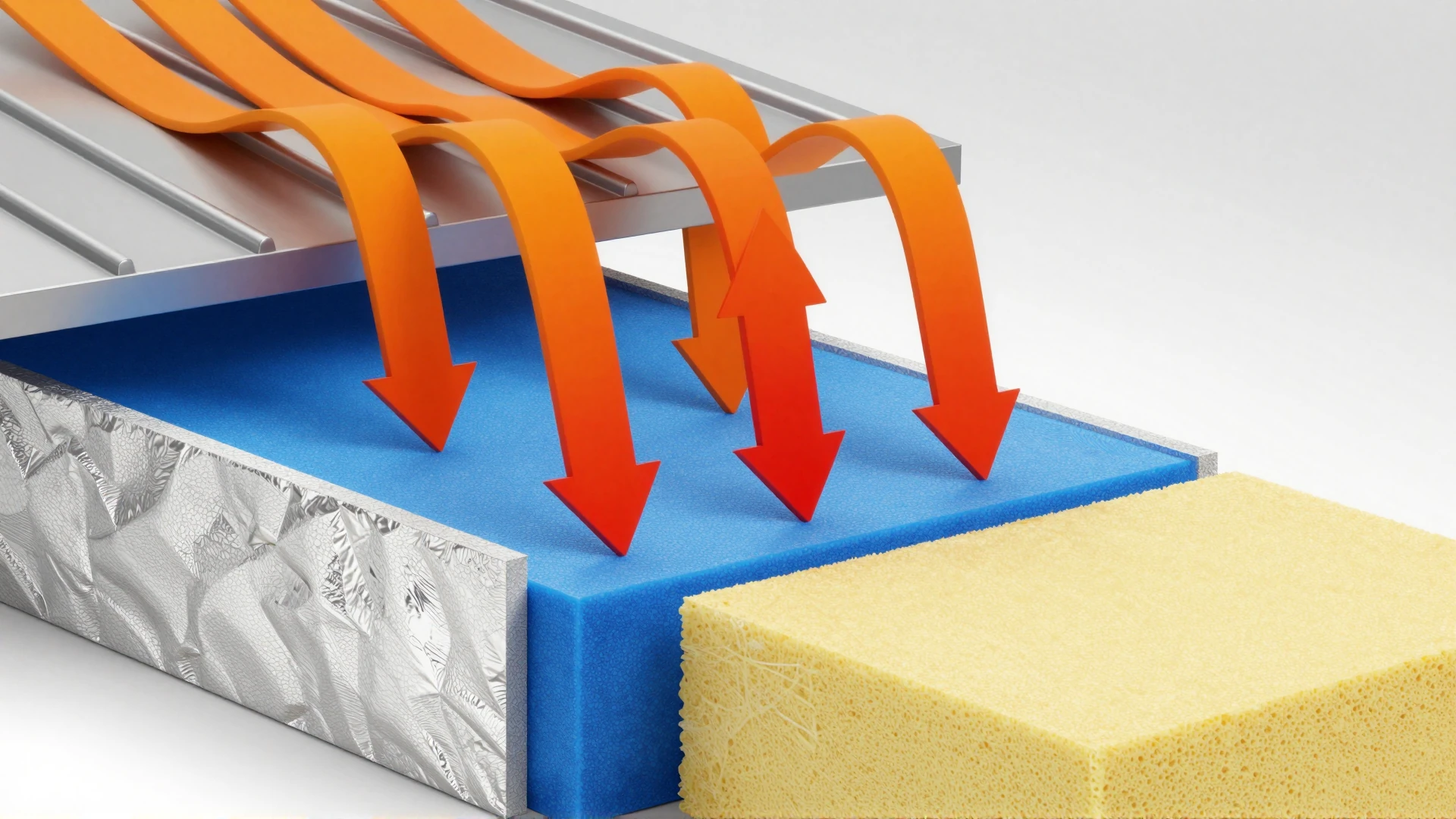
Insulation slows conductive heat from a sun‑hot roof and quiets rain and hail. The right choice depends on your structure, budget, and climate zone (McElroy Metal). Match the R‑value target to code and comfort, and plan for ventilation and vapor control so assemblies dry safely.
| Option | Typical R/in | Pros | Where it shines |
|---|---|---|---|
| Fiberglass batts | 2.2–2.7 | Lowest cost, flexible sizing | Attics/rafter bays with good air/vapor detailing |
| Rigid foam board | 4.0–6.5 | High R in thin profile, moisture‑resistant | Above/below deck layers in re‑roof/new builds |
| Spray foam | 6.0–7.0 | Air seal + insulation in one; gap‑filling | Retrofits, complex geometry; closed‑cell adds vapor control |
| Radiant barrier | n/a (reflects) | Slashes radiant heat gain | Underside of roof deck with an air gap; pairs with other insulation |
Fiberglass is cost‑effective but loses performance if wet. Rigid foam excels in continuous layers and needs ventilation and vapor strategy. Spray foam is pro‑install, great for hard‑to‑reach spaces; closed‑cell adds moisture control. Radiant barriers don’t add R‑value; they reflect radiant energy—the dominant heat path under a hot roof (McElroy Metal; DOE Energy Saver).
Ventilate and Block Radiant Heat
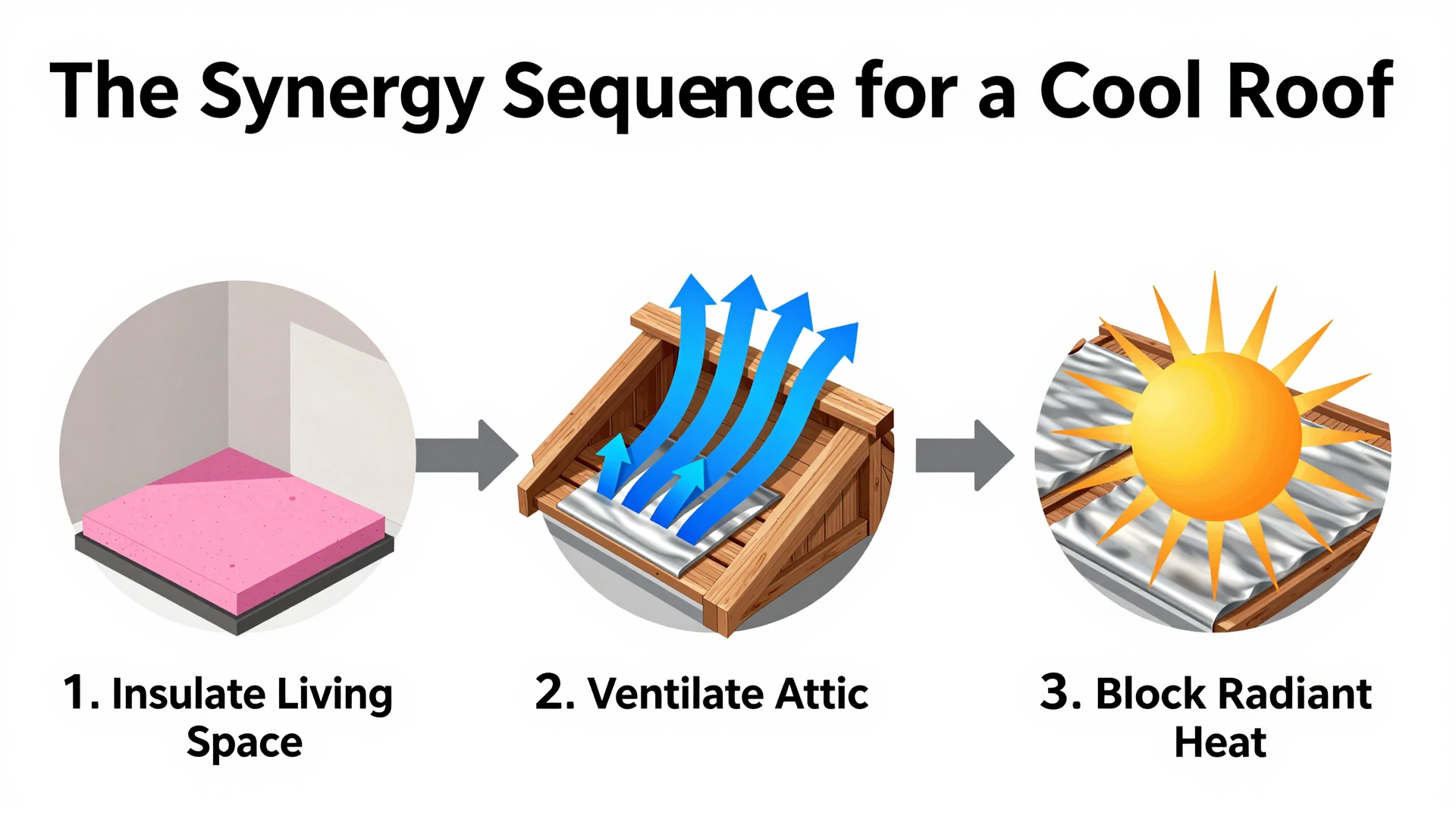
A ridge‑and‑soffit path lets hot air escape and pulls cooler air through the attic. Paired with proper insulation and a radiant barrier on the underside of the deck, attic temperatures can drop on the order of 30 F or more in tough sun (1866 STAY DRY). In non‑air‑conditioned homes, EPA’s Heat Island Program reports cool surfaces can lower max indoor temps by ~2.2–5.9 F; in AC homes, better roof reflectance trims peak cooling demand by 11–27%.
Sequence your strategy: first protect living spaces with ceiling/attic insulation; then ensure clear intake and exhaust paths; then add a radiant barrier to block deck‑to‑attic radiation. Avoid creating moisture traps; assemblies must dry to somewhere. Details such as baffles at eaves, continuous air barriers, and correct fan placement matter for safe drying and real performance (DIY StackExchange; McElroy Metal).
Color, Coatings, Shade, and Solar
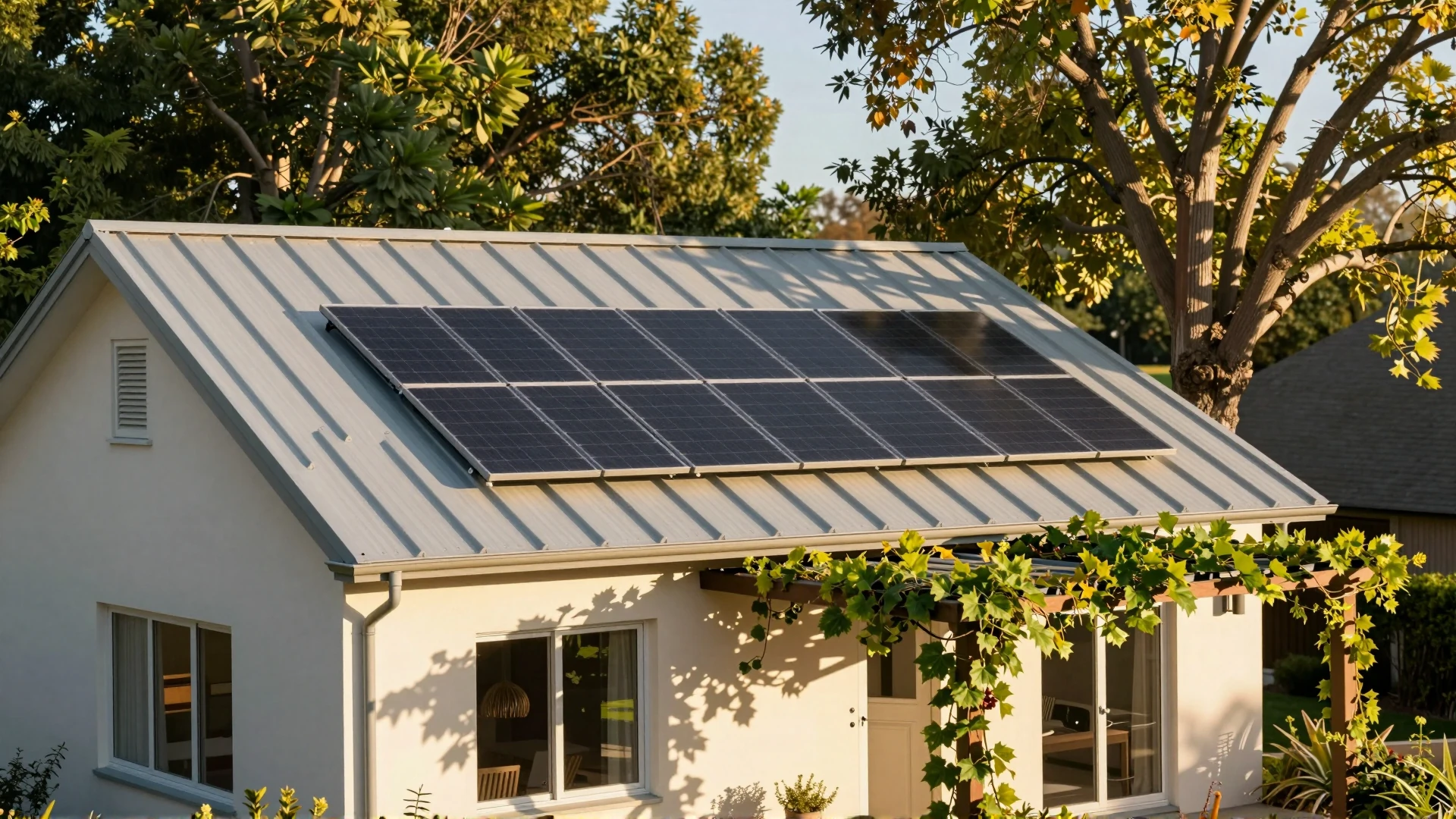
Color still counts. Light roofs can run 50–60 F cooler than dark roofs in full sun, and “cool color” tech lets darker hues reflect IR (1866 STAY DRY). If you’re not re‑roofing, cool roof coatings—especially on metal—can cut surface temperatures by up to about 50 F in hot sun while extending roof life when the substrate is sound (Sea Con; DOE Energy Saver). Keep the surface clean; dust and algae reduce reflectance (DOE Energy Saver).
Shade the envelope. Deciduous trees or pergolas that block high summer sun can lower roof and wall loads; plant trees 8–10 ft from foundations as a practical rule (GreenMetal). Photovoltaic panels double as shade screens over roof surfaces and provide clean power; leave an air gap for convective cooling beneath modules (Tesson Roofing). On hot slopes, PV often boosts comfort and power yield simultaneously.
Off‑Grid Cooling Gear That Works
Air movement is your friend. Outdoor‑rated ceiling fans and high‑efficiency DC fans reduce perceived temperature by about 4–8 F through evaporative and convective cooling (Sunjoy). A solar attic fan can assist stack effect in sunny climates, and portable battery power stations keep fans moving after sunset without grid draw—handy for cabins, shops, and outage‑prone areas.
Practical kit pairings I use in off‑grid and semi‑off‑grid homes:
- Roof/attic: cool‑coated metal + radiant barrier + ridge/soffit vents
- Daytime: solar attic fan and a small PV array charging a portable power station
- Occupied rooms: DC ceiling or pedestal fans powered from the battery; add solar task lighting to cut internal heat from bulbs
Add window films or exterior shades on sun‑struck glazing, and use programmable or smart plugs to stage fans when attic temps spike. These are low‑load devices that pair beautifully with modest PV and storage.
Installation, Codes, and Maintenance
Details make or break performance. Correct flashing, sealed penetrations, and high‑temperature underlayment protect metal assemblies; sloppy installs erase material advantages (Eagle Watch Roofing). In cold climates, balance the summer gains from cool roofs with potential winter heating penalties; insulation levels and air sealing determine the trade‑off (DOE Energy Saver; EPA Heat Island Program).
Shop with data: compare initial and aged reflectance/emittance via CRRC’s directory and look for durable factory‑baked finishes (Drexel Metals; DOE Energy Saver). Ask insurers about discounts for durable, impact‑resistant roofs and scan local rebates for cool roofs and weatherization; DOE and utility programs can offset costs (1866 STAY DRY). Maintain by clearing debris, checking fasteners and sealants, and refreshing coatings as needed to keep reflectance high.
What Most Guides Miss
Unpainted bare metal can be reflective yet a poor heat emitter; painted cool‑color finishes typically run cooler in the same sun (DOE Energy Saver). SRI—not color alone—predicts surface temperature; choose measured reflectance and emittance over aesthetics, then use “cool color” pigments to get both.
As a final note, emerging “adaptive” coatings from Berkeley Lab show promise for year‑round savings by changing thermal behavior with weather—watch this space for retrofit‑friendly options in the next few years.

Olivia Martin
Olivia Martin is part of the Farseen editorial team.