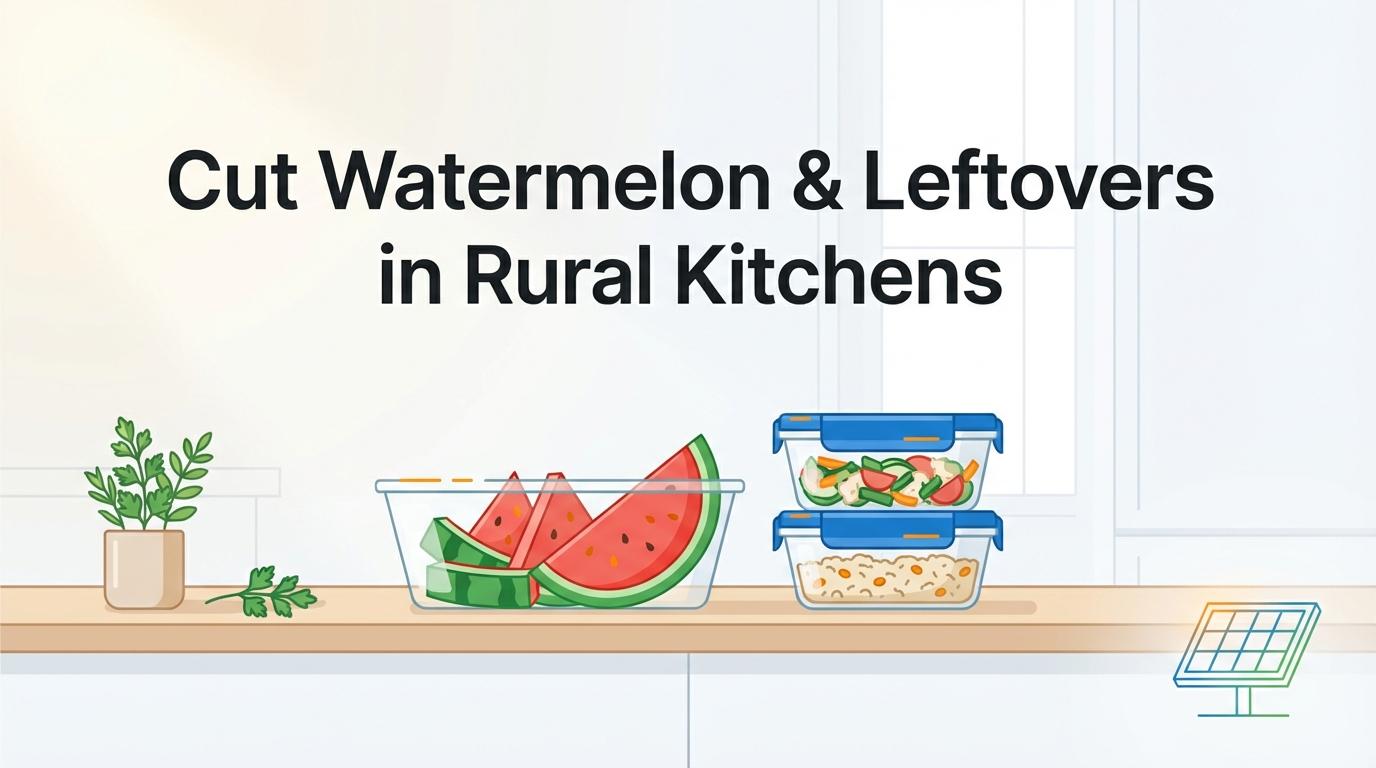
In a no-fridge rural kitchen, the safest routine is simple: cut less at one time, move humid air out fast, and dry every wet surface before night.
Do your watermelon slices turn watery by evening while leftovers smell sour by morning? In field-style kitchen routines, households that fixed airflow and post-cooking dry-down for two weeks reported fewer mold odors and less food waste. You’ll get a practical setup, a fan + LED inspection flow, a rainy-season daily checklist, and one real African user case you can copy.
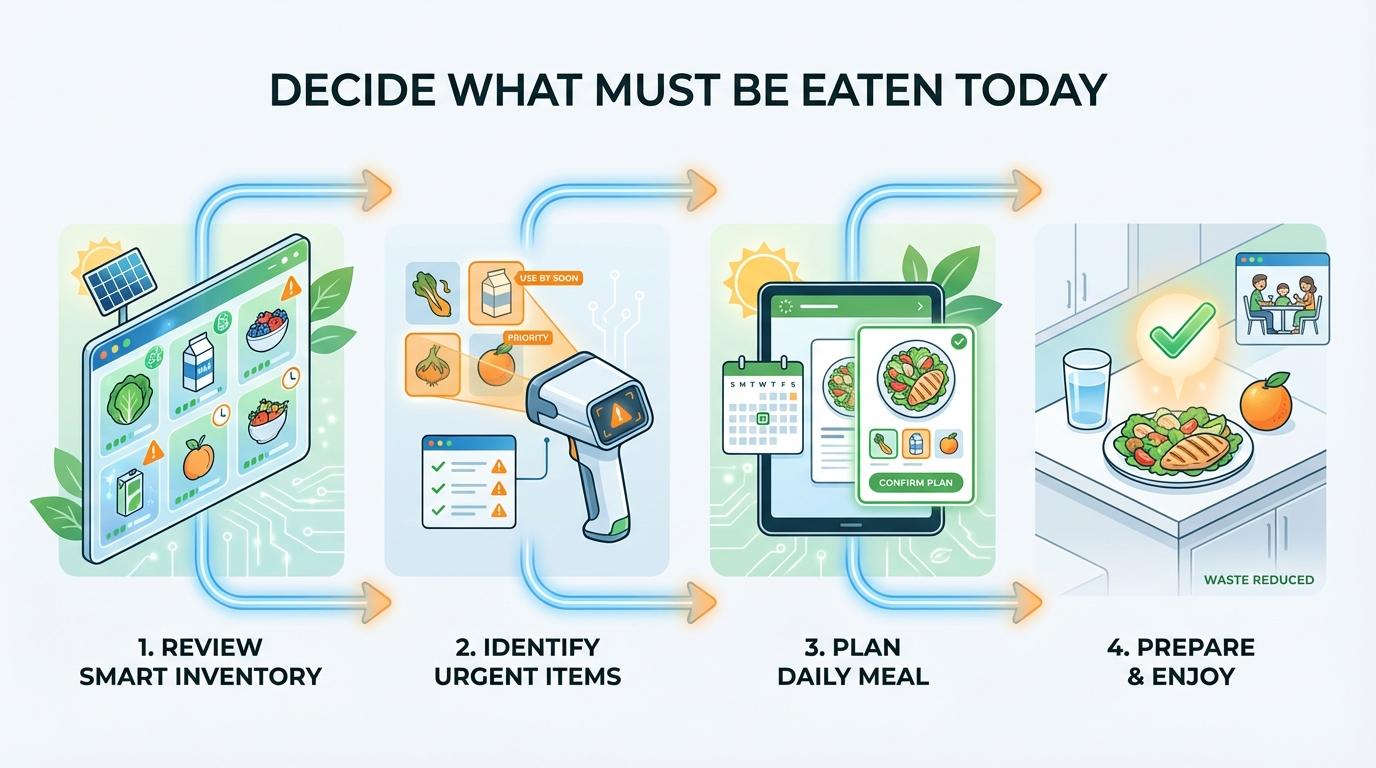
Decide What Must Be Eaten Today
Why cut fruit and leftovers fail first
Foodborne risk rises quickly in warm kitchens, and FDA foodborne guidance explains why time and temperature control matters for ready-to-eat food. In plain terms: sliced fruit and cooked leftovers are higher risk than dry goods, so they need fast turnover, not long holding.
Watermelon-specific handling rules
Whole melon quality holds best when post-harvest handling avoids heat stress and uses about 50°F to 60°F storage conditions when cooling is available. Once you cut it, your safety margin shrinks, so portion only what the household will finish in one sitting.
Typical kitchen handling guidance keeps cut watermelon below 40°F and limits room-temperature holding to about 1–2 hours. In no-fridge homes, that means “cut late, eat soon, do not save.”
Build the Solar-Fan Ventilation Hack on a Rural Budget
Minimum hardware that works
The highest-return upgrade is a low-in/high-out airflow path: one low inlet near the door and one high outlet above the cook area. This pulls steam and heat out instead of trapping it in wall corners and cabinet backs.
A practical off-grid reference is the solar vent kit package that includes a 140W panel, 12V battery, controller, and temperature sensor. You do not need that exact brand, but you do need those same functions.
Placement and operating target
Set the exhaust point high, keep dry-food storage at least 8 in off the floor and about 2–4 in from walls, and run the fan during cooking plus 20–30 minutes after. The target is steady airflow and kitchen humidity around 50%–65%, not just “a fan somewhere.”
Fan + LED Inspection Flow
Why LED checks help
A simple LED status light speeds up daily checks because one glance tells you whether the airflow routine is actually running. Field user notes on home solar systems show that built-in LED lighting can be blocked by hanging items, so mount the status LED where it stays visible from the doorway.
90-second pre-cook check
- LED green: fan power on, inlet path clear, outlet louver not stuck.
- Hand test at outlet: feel steady outward flow.
- Hygrometer check: if above 65% RH, start fan 10 minutes before cooking.
- If LED amber/red: clean fan guard, remove cloths blocking inlet, recheck in 3 minutes.
20-minute post-cook check
Run fan 20–30 minutes after the last pot comes off heat. Wipe stove wall, sink edge, and floor wet spots before shutdown. If RH stays above 70%, run one extra 15-minute cycle and delay food storage.
Rainy-Season Daily Operation Checklist
Why short cycles beat long-open windows
Rainy months bring moisture rebound at dawn and night, so short, controlled venting works better than leaving windows open for hours. The goal is to exhaust indoor steam without pulling in long periods of damp outdoor air.
Daily checklist (rainy season)
- 7:00 AM: keep major windows mostly closed; wipe overnight condensation.
- 10:30 AM: open cross-vent for 10 minutes; run fan if RH is above 65%.
- During cooking: fan ON from ignition to finish.
- After cooking: keep fan ON 25 minutes; wipe all visible water film.
- 3:00 PM: second 10-minute cross-vent cycle.
- 8:30 PM: final dry check of sink zone, board rack, and floor corners.
Real African User Case: Northern Ghana
Household snapshot
In Tamale, Ghana, Amina’s family (5 people) runs a no-fridge kitchen about 10 ft by 8 ft with one low door opening and one small high vent. Their main losses were cut watermelon for market-day meals and evening leftovers during the rainy stretch from June 3, 2025 to June 24, 2025.
What changed in 21 days
They added one high exhaust fan powered by a small panel-and-battery setup, then followed fixed fan timing: ON during cooking + 25 minutes after, plus two short daytime vent cycles. Evening RH readings dropped from roughly 78%–82% to 58%–64%, and weekly discarded cut-watermelon portions fell from about 4 bowls to 1 bowl.
What made the difference
The key was routine, not expensive gear: fixed timing, wipe-dry discipline, and strict “cut what you serve now” for watermelon. They kept only low-risk items overnight and stopped saving warm leftovers for the next day.
FAQ
Q: Can I use this method without a solar panel?
A: Yes. Use the same airflow layout and timing with grid power first, then switch to solar later.
Q: How long can cut watermelon stay out in a hot kitchen?
A: Treat 1–2 hours as the limit; in hotter kitchens, target the low end and serve immediately.
Q: If leftovers are reheated hard, are they always safe?
A: No. Reheating does not reliably undo all risk from long warm holding; when in doubt, discard.
Practical Next Steps
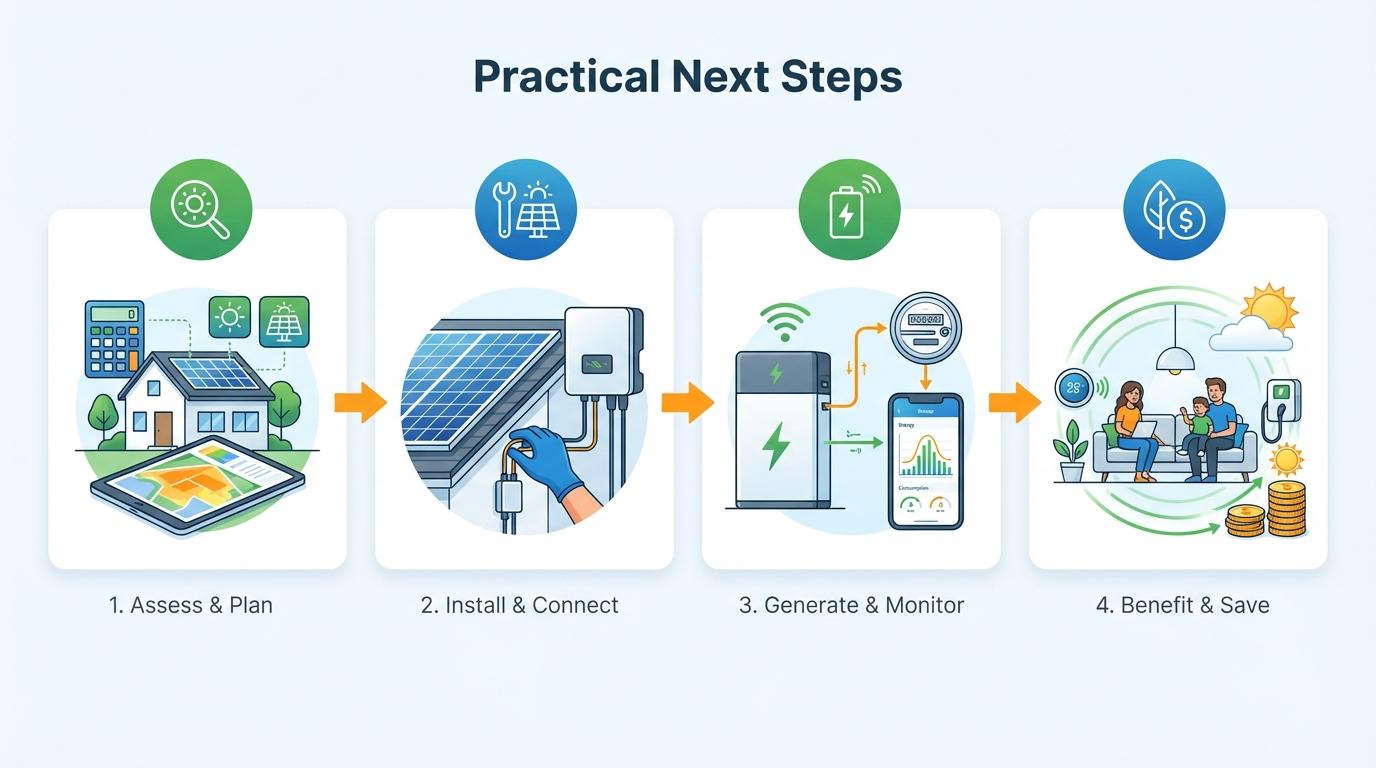
Start with behavior before hardware: fixed fan timing, strict dry-down, and faster food turnover. Then add solar power if electricity is unstable.
- Map one low inlet and one high outlet today.
- Set fan runtime: cook period + 25 minutes.
- Add a visible LED status point near the door.
- Enforce “cut-to-serve” for watermelon.
- Run the rainy-season checklist for 14 days and track discard counts.
References

Ray Harlan
Ray Harlan is a seasoned American solar energy expert and Farseen's lead advocate for practical off-grid living. Born and raised in sunny California, with 14 years of hands-on experience in rooftop solar, microgrids, and real-world deployments across the U.S. and beyond, Ray has lived through everything from Texas blackouts and Florida hurricanes to Southeast Asian night markets and remote camping trips. He's not just theorizing-he has tested low-cost lighting and fan systems for street vendors, built emergency food preservation setups during multi-day power outages, and fine-tuned solar solutions for hot nights, kitchen ventilation, and disaster readiness. His mission is simple: turn sunlight into reliable, everyday power for families, small businesses, and outdoor enthusiasts. Every article he writes draws from field-tested insights, honest cost breakdowns, and straightforward step-by-step advice so you can confidently harness solar energy in your own life.