Yes, a solar fan can keep working in low-sun weather if you combine battery buffering, correct battery chemistry, disciplined troubleshooting, and regular cleaning.
Does your fan run fine at noon, then stop when clouds roll in around 3:00 PM? That pattern usually means a weak-light power gap, not a total system failure. The steps below give you a practical routine to keep airflow steady and avoid the common mistakes that turn a small issue into a costly repair.
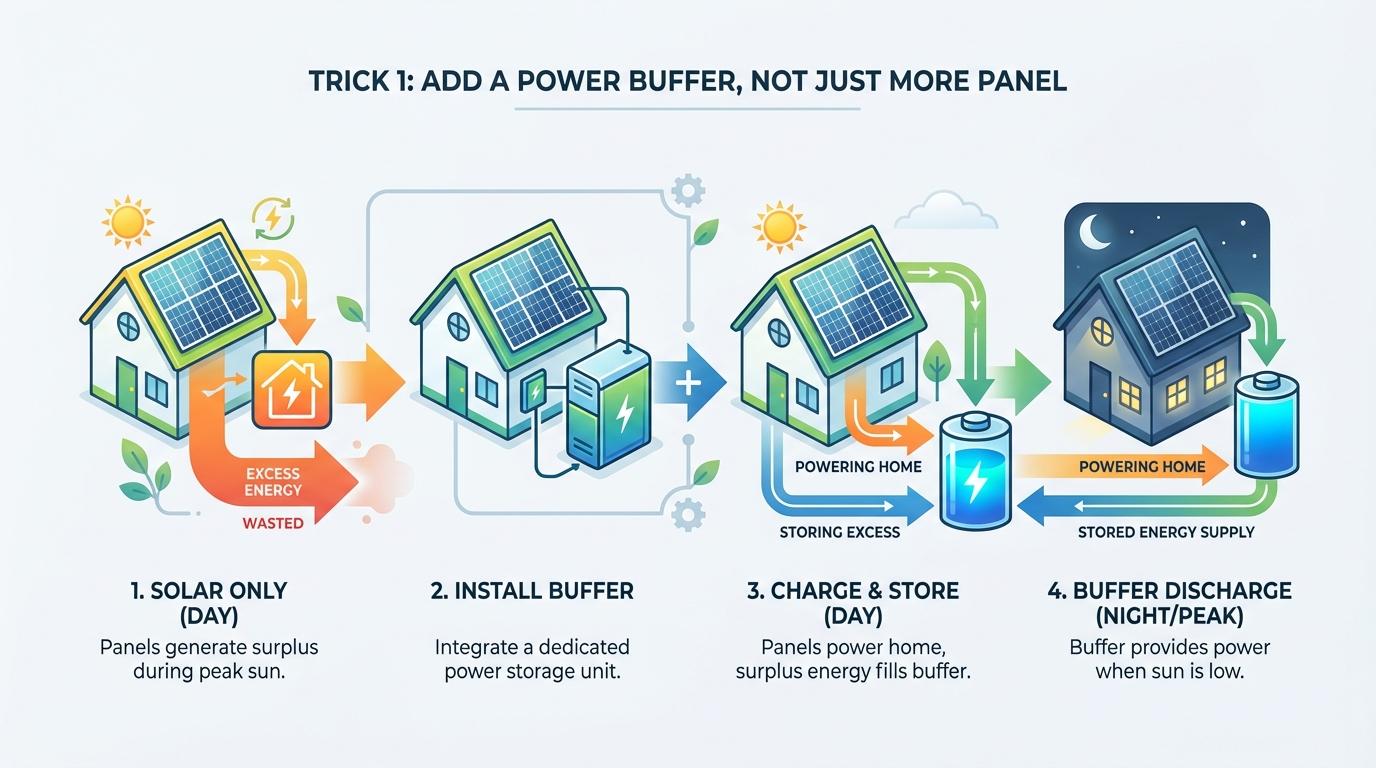
Trick 1: Add a Power Buffer, Not Just More Panel
In poor weather, solar output drops on cloudy days, so a fan wired directly to the panel can slow down or stop before evening. This is why many “works in sun, fails in rain” complaints happen even when the motor itself is fine.
A buffered solar attic fan setup uses a charge controller and battery between panel and fan. That setup smooths short dips in sunlight and reduces stop-start cycling, which is hard on motors and electronics.
Quick Sizing Example
If your fan draws about 20 W and you want about 6 hours of low-sun support, target roughly 120 Wh of usable storage. In practice, a 12 V battery in the 20-30 Ah range is a common starting point for a single fan, then tune fan speed so high mode is used mostly during brighter midday windows.
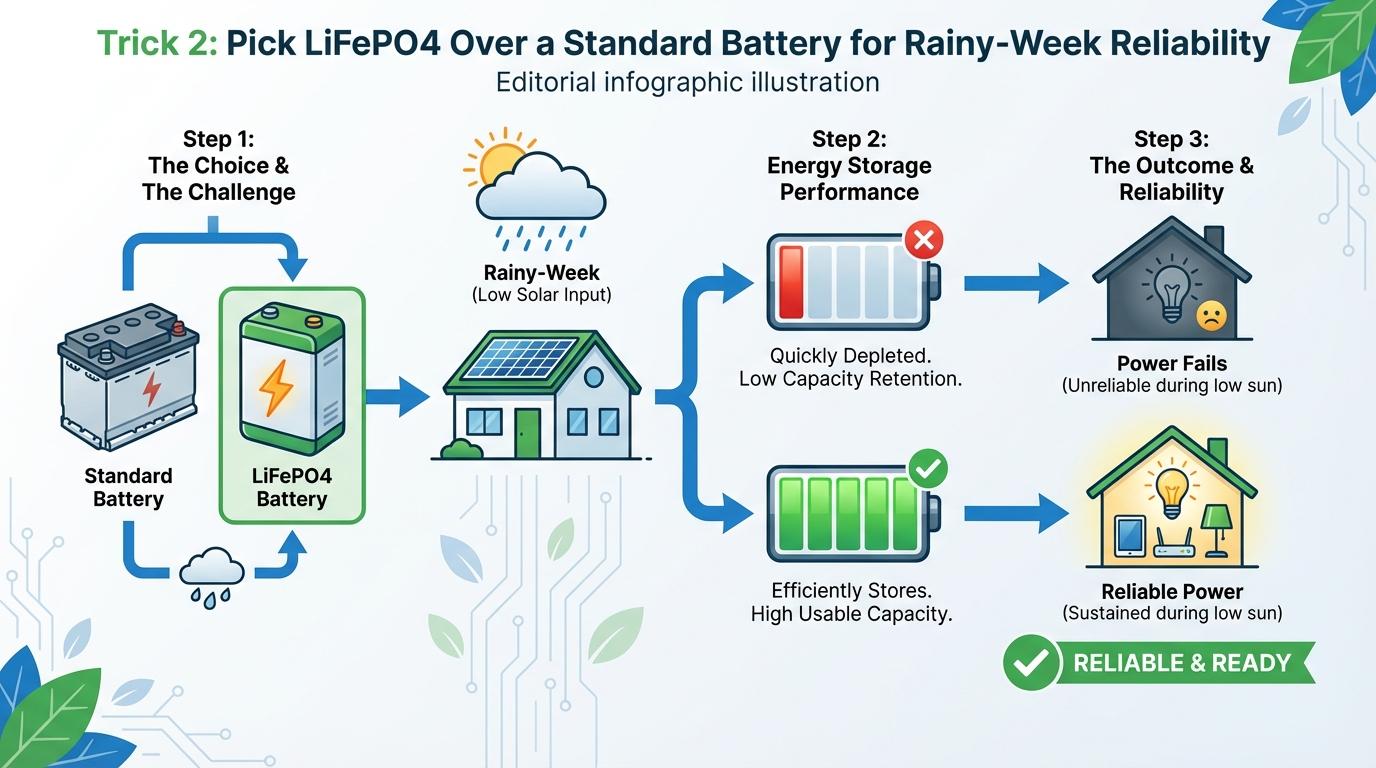
Trick 2: Pick LiFePO4 Over a Standard Battery for Rainy-Week Reliability
For steady operation, all-day performance design depends heavily on battery chemistry, not just battery size. In frequent charge/discharge use, LiFePO4 usually handles deeper cycling with less capacity loss over time.
LiFePO4 vs Standard Battery (Lifespan and Use)
| Parameter | LiFePO4 | Standard Sealed Lead-Acid (AGM/SLA) |
|---|---|---|
| Typical cycle life (to ~80% capacity) | 2,000-4,000 cycles | 300-500 cycles |
| Typical usable capacity per cycle | 80%-90% | ~50% |
| Round-trip efficiency | 95%-98% | 80%-85% |
| Approx. weight in 12 V 20 Ah class | 5-7 lb | 12-15 lb |
| Better for cloudy/rainy duty | Daily deep cycling | Light, occasional cycling |
During extended overcast periods, a cloudy-weather output strategy works best when you run lower speed in morning/evening and reserve higher speed for brighter hours. That operating style pairs especially well with LiFePO4.
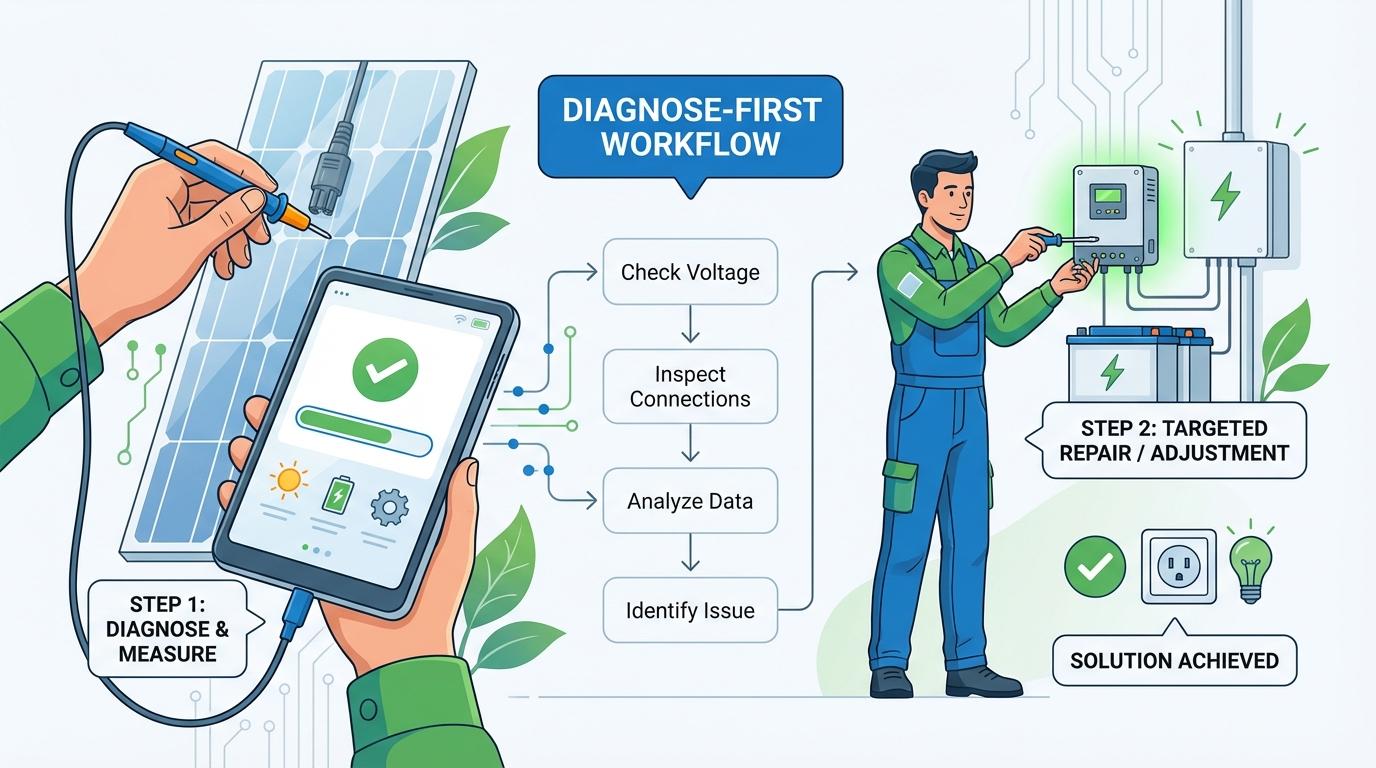
Trick 3: Use a Diagnose-First Workflow Before Replacing Any Part
A diagnose-before-replace workflow prevents the three failures that show up most in fan repairs: unsafe powered work, blind part swapping, and fixing symptoms without finding the root cause. This is where many users lose money.
Most repeat failures happen after repeated restarts, random wire unplugging, or immediate disassembly. A safer method is to stop operation, document symptoms, check simple external causes first, and only then test internal components one variable at a time.
Safe No-Guess Sequence
- Power off completely and disconnect the source.
- Wait 3-5 minutes before touching wiring or terminals.
- Check external basics first: plug, switch, fuse, controller status, and loose connectors.
- Change one thing at a time, then retest.
- Measure before replacing parts whenever possible.
- After a fix, run a 15-30 minute stability test and recheck within 24 hours.
Trick 4: Clean the Panel and Fan So Weak Sunlight Still Counts
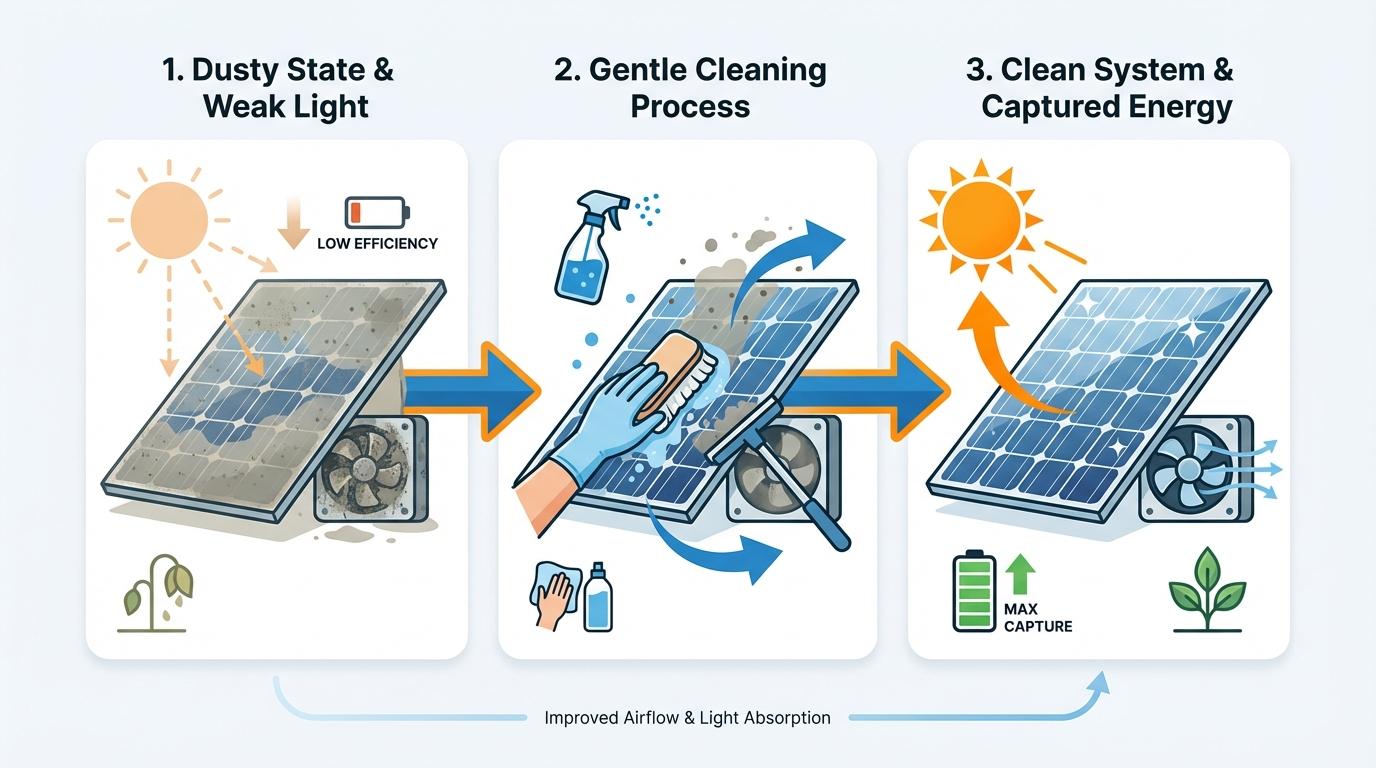
Regular solar fan cleaning and maintenance can recover meaningful performance when sunlight is limited. Dirt on the panel, clogged fan guards, and dirty vents reduce charging and airflow at the same time.
Use non-abrasive cleaning methods: soft brush, microfiber cloth, and electronics-safe cleaner for terminals. Avoid aggressive spraying and avoid cleaning while the system is energized.
Cleaning Step Diagram
Power OFF
   ->
Disconnect panel/battery input
   ->
Wait 3-5 minutes
   ->
Dry brush panel + fan guard
   ->
Wipe panel with damp microfiber
   ->
Clean terminals (electronics-safe cleaner)
   ->
Check wire tightness + corrosion
   ->
Reconnect power
   ->
15-30 minute test run
A practical rainy-season cadence is simple: visual check every 2 weeks, surface clean monthly, and deeper inspection every 3 months. After storms, inspect for leaves, standing water, and loose cable strain relief before restarting.
Cloudy-Day Endurance Checklist
Most cloudy-day fan operation improves when you treat battery reserve as a daily budget, not emergency-only backup.
- Start each morning with low speed; shift to high speed near peak sunlight.
- Use a timer so high mode runs mainly from late morning to mid-afternoon.
- Keep vents and intake paths clear to reduce motor load.
- Stop repeated restart attempts if the fan stalls; diagnose first.
- Log daily runtime for one week to spot weather vs hardware patterns.
- If runtime drops suddenly after rain, clean and retest before buying parts.
A common real-world pattern: once users move high-speed runtime to brighter hours and keep panel surfaces clean, evening airflow becomes much more stable without changing the motor.
FAQ
Q: Can a solar fan run all night?
A: Only if your battery storage is sized for overnight load. Panel-only systems usually stop after sunset.
Q: Should I replace the motor first when the fan stops on rainy days?
A: No. Start with power path checks (panel output, controller, battery state, fuse, connectors), then test motor last.
Q: How often should I deep-clean the system?
A: Every 3 months is a practical baseline, with extra checks after heavy rain, pollen events, or windblown debris.
Key Takeaways
Cloudy-day reliability is mostly a system design and maintenance issue, not a mystery failure. If you apply these four tricks in order, you reduce avoidable downtime: add buffer storage, choose LiFePO4 for cycling, troubleshoot safely before replacing parts, and keep the panel/fan path clean so weak sunlight can still do useful work.

Ray Harlan
Ray Harlan is a seasoned American solar energy expert and Farseen's lead advocate for practical off-grid living. Born and raised in sunny California, with 14 years of hands-on experience in rooftop solar, microgrids, and real-world deployments across the U.S. and beyond, Ray has lived through everything from Texas blackouts and Florida hurricanes to Southeast Asian night markets and remote camping trips. He's not just theorizing-he has tested low-cost lighting and fan systems for street vendors, built emergency food preservation setups during multi-day power outages, and fine-tuned solar solutions for hot nights, kitchen ventilation, and disaster readiness. His mission is simple: turn sunlight into reliable, everyday power for families, small businesses, and outdoor enthusiasts. Every article he writes draws from field-tested insights, honest cost breakdowns, and straightforward step-by-step advice so you can confidently harness solar energy in your own life.