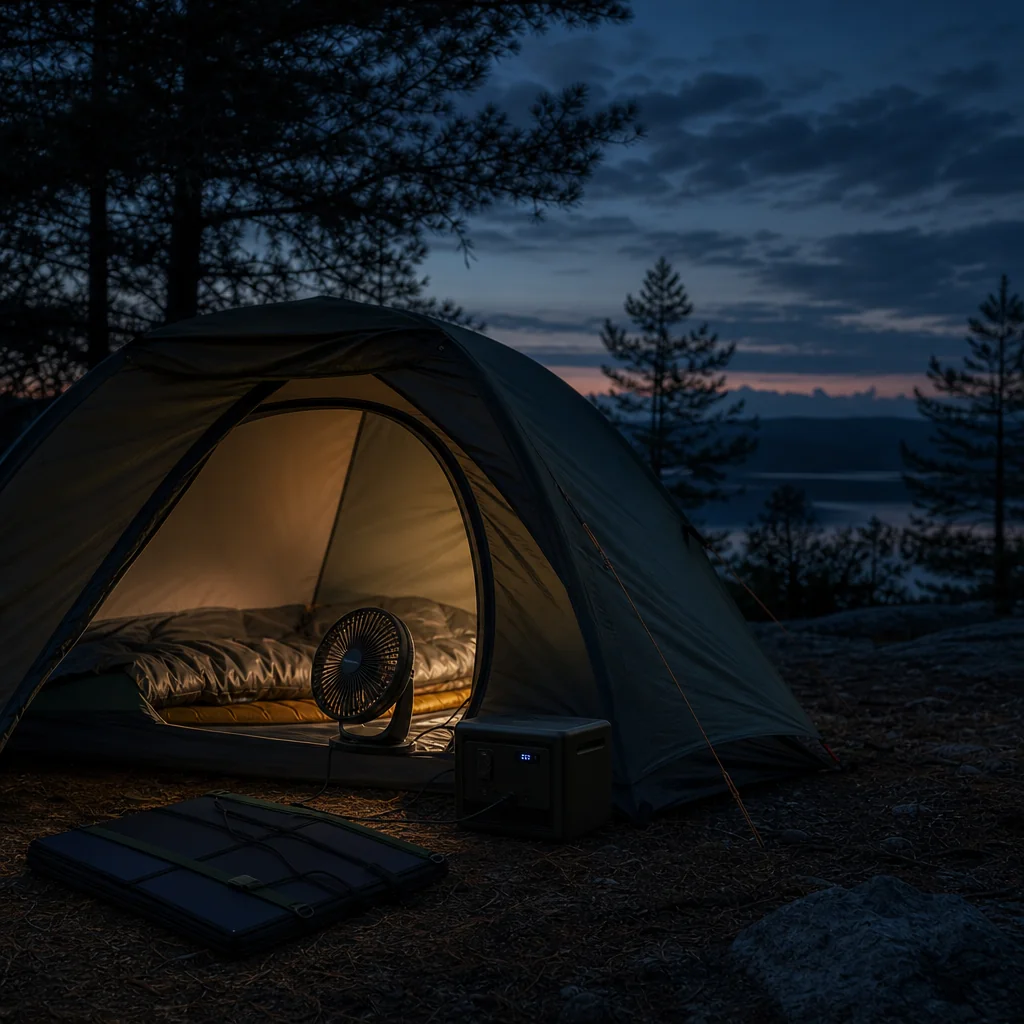
A solar camping fan can run all night if its battery stores enough energy for your actual overnight use. Low-speed operation is usually realistic, while high-speed operation often requires a much larger battery than people expect.
Yes, a solar camping fan can run all night if it has enough stored battery energy or is connected to a battery pack sized for its actual watt draw. In practice, low-speed overnight use is realistic; high-speed use is where many setups fall short.
Ever wake up in a hot tent at 2:00 AM because the breeze died when the battery did? Real camping results are much better when you size the fan by watt-hours instead of relying on marketing claims. Some measured examples show a low-speed draw of just 1.2W, which is dramatically different from running a fan at full speed. A simple runtime estimate can help you choose the right fan type and avoid buying more solar gear than you need.
The Short Answer Depends on One Thing
The real question is not whether a fan is “solar,” but whether it has enough stored energy to last from bedtime to sunrise. That matters because daily power planning in watt-hours is the standard off-grid way to predict whether a device will make it through the night. A fan that runs directly from a panel may work well in afternoon sun, but it usually cannot help you at midnight unless that daytime solar input was stored in a battery first.
That is why the best answer for campers is usually a battery-backed fan, not a direct-solar-only fan. Solar-powered fan models with battery backup are the ones that keep working after sunset or during cloudy weather, while direct-sun fans are better treated as daytime comfort tools.
How to Tell if Your Fan Will Last Until Morning
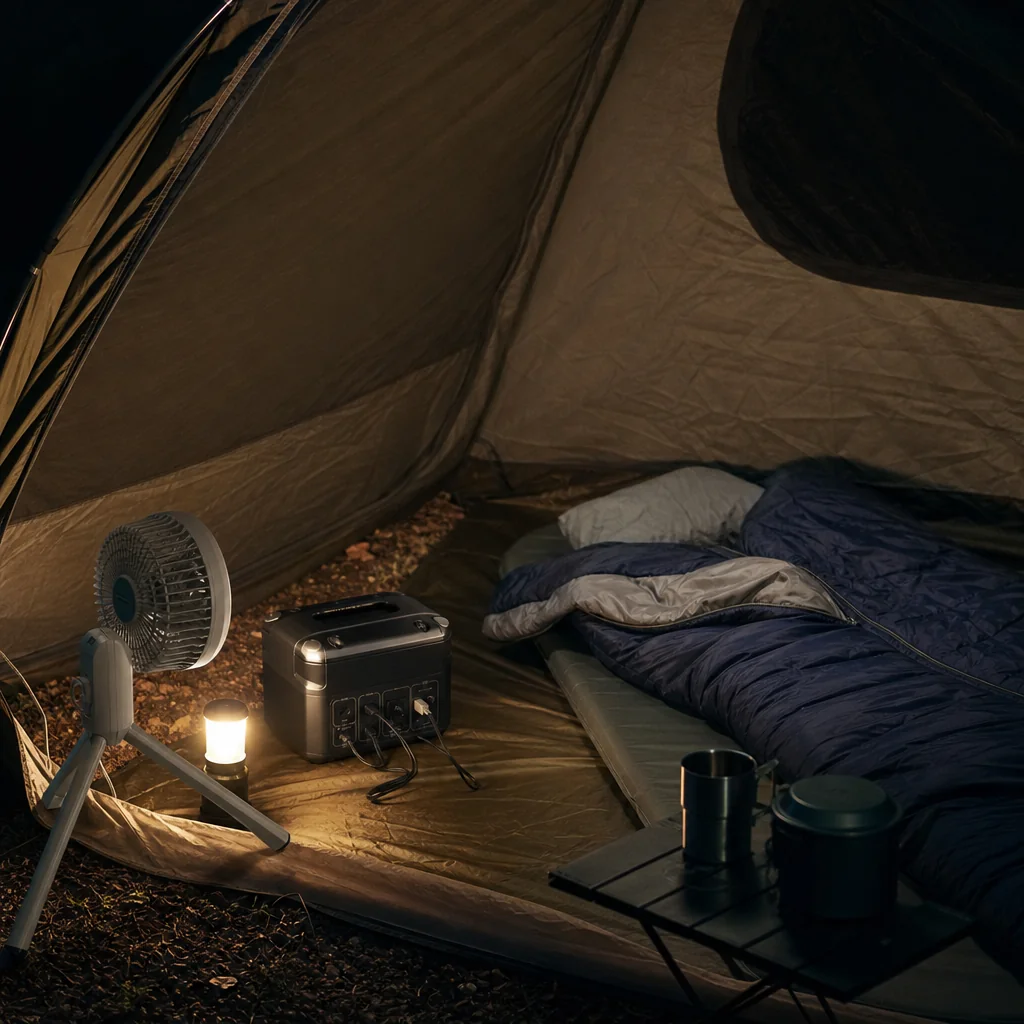
Runtime gets simple once you use watt-hours. Off-grid solar sizing guidance treats watts as the fan’s live power draw and watt-hours as the battery energy available to run it over time. If your fan uses 10W and your battery stores 100Wh, the rough runtime is about 10 hours before normal system losses.
That sounds abstract until you apply a real example. A measured camping fan power test listed power draw at 12V as 1.2W on low, 2.4W on medium-low, 6.0W on medium, and 10.0W on high. For a typical eight-hour sleep window, that means the same battery can feel generous on low and limited on high.
| Fan setting | Power draw | Approx. energy for 8 hours |
|---|---|---|
| Low | 1.2W | 9.6Wh |
| Medium-low | 2.4W | 19.2Wh |
| Medium | 6.0W | 48Wh |
| High | 10.0W | 80Wh |
In real campsite terms, that means a small battery pack can easily cover a low-speed breeze all night, while strong airflow may require a much larger pack than most people expect. This is the same right-sizing lesson seen across camper van electrical systems: oversized assumptions waste money, but undersized storage leaves you uncomfortable when you need power most.
Why “Solar” Does Not Guarantee Nighttime Use
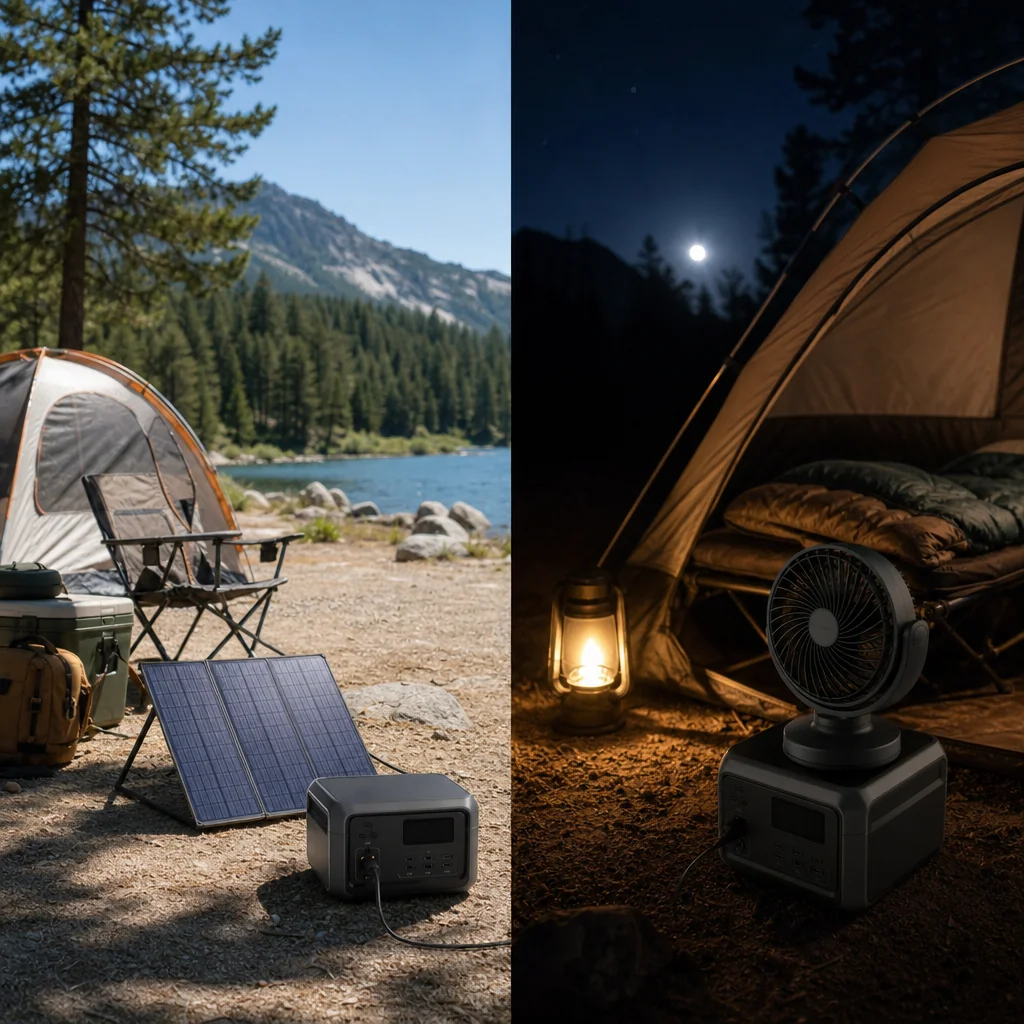
Many shoppers read “solar fan” and assume the panel itself is the reason the fan can run overnight. That is not how these products work. Solar fan overviews consistently separate daytime solar collection from battery-backed nighttime operation, and that distinction matters more than panel size or packaging language.
The practical split is simple. A direct-solar fan is fine for an afternoon picnic table, greenhouse, or sunny tent at noon. A rechargeable fan with solar support is the better choice for sleeping, power outages, or humid nights when airflow matters most after dark. That same pattern shows up in broader off-grid setups, where battery storage is treated as the core reliability component, not the panel alone.
A Simple Camping Scenario
Picture a summer tent trip where you want one fan running from 10:30 PM to 6:30 AM. If you keep the fan near low speed, the measured example suggests you may need only about 10Wh for the night. Even with normal conversion losses and some margin, that is still a very manageable target for a small battery pack.
Now compare that with a stronger comfort setup. A fan running closer to 10W for the same eight hours needs about 80Wh before losses, and more if the battery is older or the controller is inefficient. That is where people get caught out. A product may say “12 to 60 hours,” but seller-listed runtime ranges can vary wildly by speed setting, and those claims should be treated as best-case unless the manufacturer explains the battery size, charging time, and test conditions.
What Size Solar Setup Makes Sense for Campers
For most campers, the solar panel’s job is to refill the battery during the day rather than run the fan live all night. That means a modest panel can be enough if your overnight load is small and you get decent sun the next day. Portable off-grid sizing guidance uses about six good sun hours as a baseline for daily recharge planning, which is a practical rule for campers deciding whether a compact panel is just a backup or truly enough for repeated overnight use.
If you want more resilience, a small portable power station can be the cleaner solution. Battery systems paired with solar input are useful because they let you bank daytime energy for night use, cloudy weather, and other small loads like cell phones or lights. For a camping fan, that flexibility often matters more than chasing a larger panel.
Pros, Limits, and the Best Use Case
The main upside is that solar-powered fans are portable, quiet, and useful in off-grid settings where outlets are unavailable or inconvenient. They also fit the goal well: less grid dependence, low operating cost after purchase, and no need to idle a gas generator just to get airflow in a tent.
The tradeoff is that they are usually personal cooling devices, not substitutes for air conditioning or a large box fan. That broader off-grid principle shows up again in system design advice for small solar setups: cooling loads rise quickly, so staying comfortable all night is easiest when you choose an efficient fan, use a lower speed, and keep expectations aligned with the size of the system.
So, Can It Run All Night?
Yes. For many campers, the answer is more often yes than no, as long as the fan has battery storage and you run it at a realistic speed. The safest bet is a rechargeable fan with solar support, sized from actual watt draw rather than vague runtime promises. If your goal is comfortable off-grid sleep, aim for efficient airflow, enough battery for an eight-hour window, and a daytime charging plan that can repeat the cycle the next day.

Jordan Lee
Jordan Lee is part of the Farseen editorial team.