A fast post-storm routine can keep your family cooler and lower both electrical and foodborne illness risks in the first 72 hours. Focus on safety first, then runtime, then food decisions.
You open the fridge, the power is still out, and every room feels sticky and hot. In real outage drills, a simple 10-minute device-and-food check prevents the two most common mistakes: plugging damaged gear back in and keeping unsafe leftovers too long. This guide gives you a practical sequence you can follow immediately.
Start With a 10-Minute Safety Triage
A post-storm setup should begin with electrical hazard screening before you plug in any fan, charger, or light. If you see standing water near outlets, scorch marks, or a burning smell, stop and isolate that area.
Storm recovery also requires post-storm electrical caution around extension cords, wet power strips, and damaged outdoor fixtures. Treat any wet connector as unsafe until fully dried and inspected, and never run cords through puddles or under soaked rugs.
Fast danger scan
- Check outlets, power strips, and extension cords for moisture, discoloration, or melted plastic.
- Confirm your solar fan body and charging cable are dry before charging.
- Keep battery packs and fan controllers off wet floors.
- Ventilate first, then charge devices in a dry zone.
- Prioritize cooling for older adults, children, and anyone with dizziness or nausea.
Quick Checks for Solar Lights and Emergency Fans
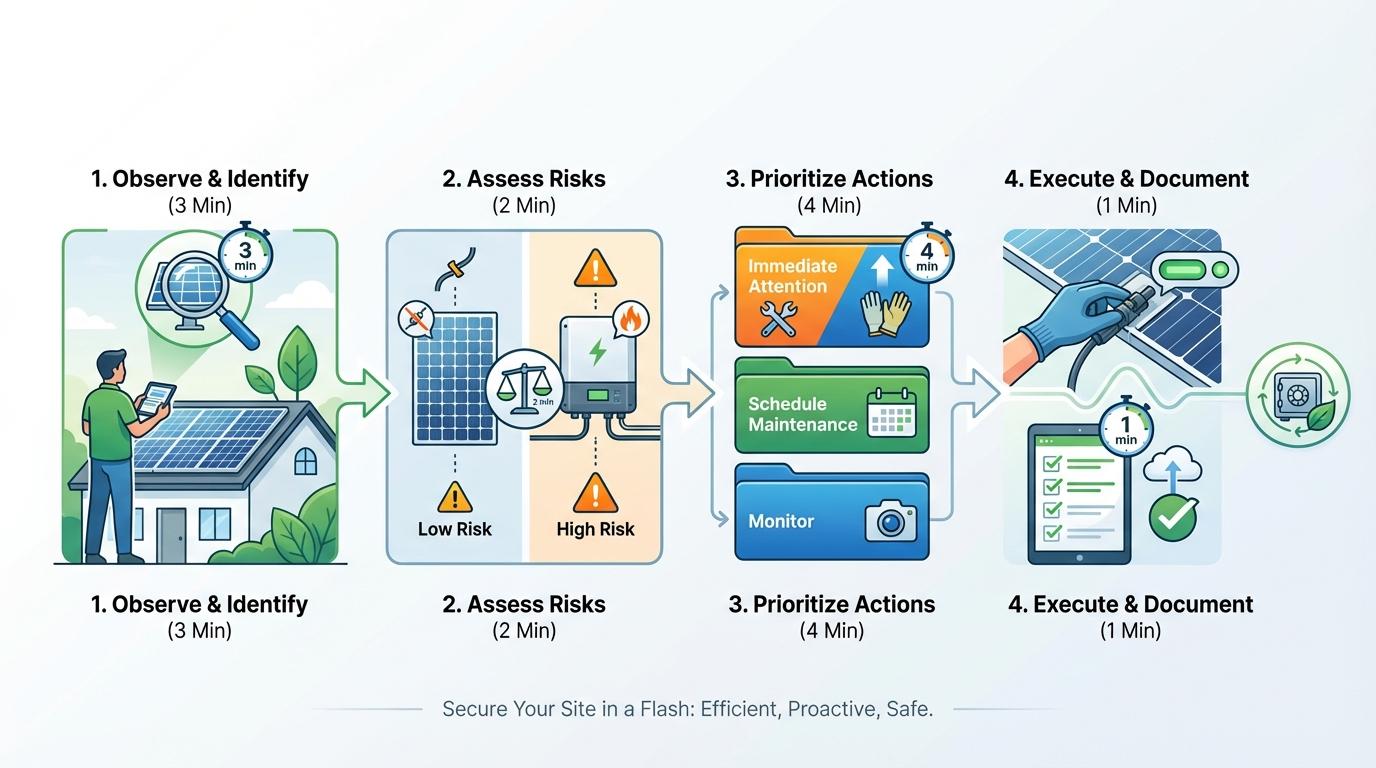
Reliable emergency airflow depends on clean charging surfaces, and solar panel cleanliness directly affects charging speed. Wipe dust, salt film, and storm residue before your first recharge cycle.
Portable fan reliability improves when you follow manufacturer-style checks for runtime mode and charging behavior, and device operation basics are worth reviewing before an outage season. In practice, the best-performing setups use dual input (solar + USB-C), low-speed overnight use, and daytime recharge windows.
5-minute device check
| Item | Pass Criteria | If It Fails |
|---|---|---|
| Battery charge | Holds charge from full to morning on low | Replace battery unit or add backup power bank |
| Fan speeds | At least 3 speeds work without stalling | Clean intake, retest, then replace if unstable |
| Charging input | Solar and USB-C both charge | Keep USB-C as primary fallback |
| Physical condition | No cracked housing, loose blades, or bent port | Remove from emergency use |
| Weight and carry | Easy to move, ideally under 2.2 lb for go-bags | Reassign to home backup, not evacuation bag |
72-Hour Survival Checklist (Power, Airflow, Hydration)
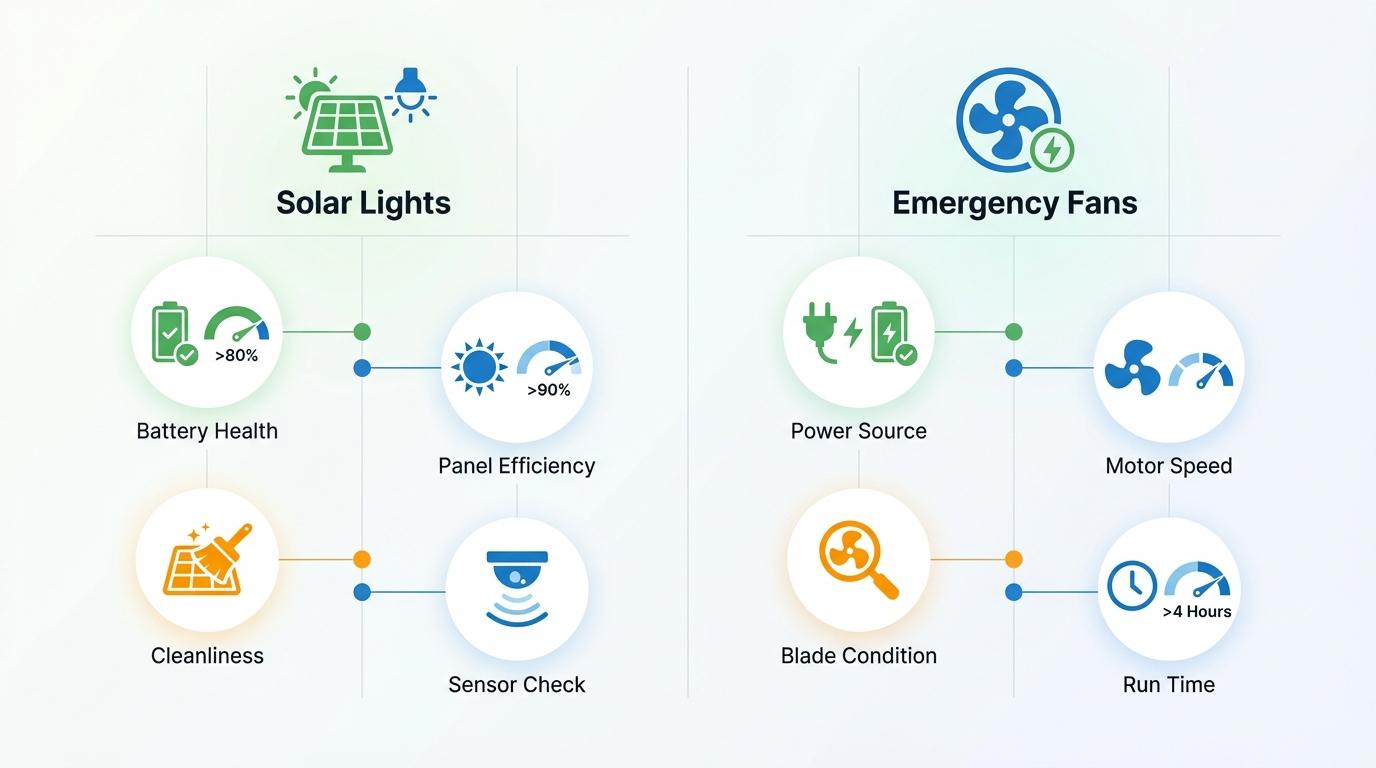
Hurricane heat exposure can escalate quickly, and post-disaster heat strain patterns support prioritizing ventilation, hydration, and reduced exertion. Your fan is a support tool, not a replacement for fluid intake and shade.
A practical household setup for 3-4 people is two fans: one near sleeping space and one near a shared room, with rotation at night. In drills, this split-layout strategy keeps airflow continuous and avoids draining one device on high speed too early.
72-hour checklist
- 0-6 hours: Confirm device safety, start daylight charging, and cool the highest-risk person first.
- 6-24 hours: Run low/medium fan mode, keep one backup cable dry and accessible, and track battery level every 8-12 hours.
- 24-48 hours: Clean panel surface again, rotate fan placement to sleeping areas at night, and avoid high-speed continuous use.
- 48-72 hours: Reassess battery performance, reduce daytime activity, and keep one full-charge device reserved for overnight.
Food Safety Checklist After Outage or Floodwater Exposure
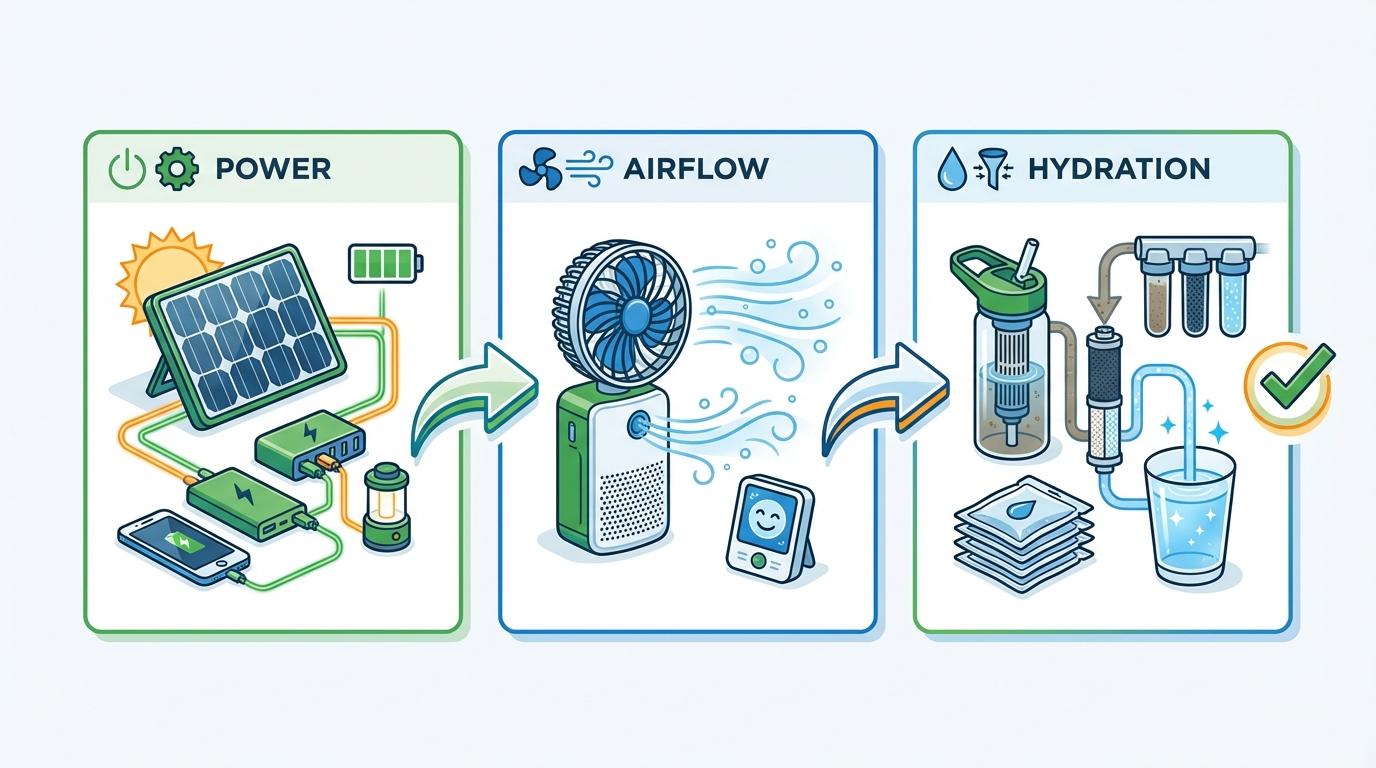
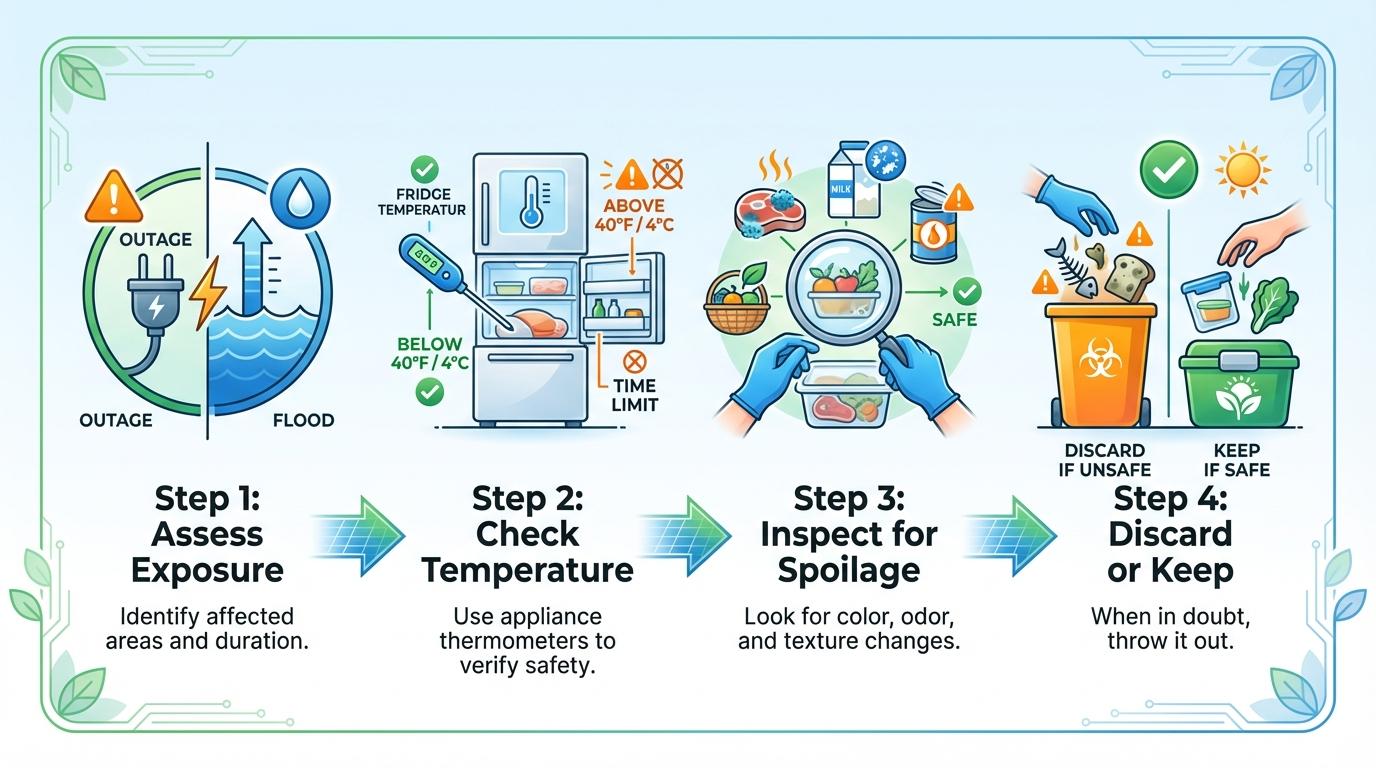
After power loss, emergency food safety rules are clear: perishable food held above 40°F for more than 2 hours should be discarded. A full freezer is generally safe for about 48 hours if unopened, and a half-full freezer about 24 hours.
Storm prep is safer when you build a hurricane-season food safety plan before the next outage. Keep a fridge thermometer, label high-risk items, and separate “use now” foods from “discard if warm” foods.
Food safety checklist
- Discard meat, poultry, seafood, eggs, soft cheese, and leftovers if they were above 40°F for over 2 hours.
- Discard any food that touched floodwater, including canned goods with damaged seals.
- Keep refrigerator and freezer doors closed as much as possible.
- Use shelf-stable foods first after the 24-hour mark.
- When in doubt, throw it out.
Farseen Emergency Bundle Recommendation
A neutral, practical Farseen-style bundle works best when it targets runtime, charging redundancy, and easy setup rather than maximum fan speed. For most homes, 8,000-20,000 mAh battery capacity and low-speed runtime of at least 8 hours are the right baseline.
For a single person, use one 6-8 in solar fan, one foldable 10-20 W panel, two USB-C cables, one compact LED light, and one small backup power bank. For families, use two fans in separate zones plus one shared panel and one reserve light so airflow and lighting do not compete for the same battery.
Suggested bundle formats
| Bundle | Core Components | Best Use |
|---|---|---|
| Solo 72-hour | 1 fan, 1 foldable panel, 2 cables, 1 light, 1 power bank | Apartment or vehicle-ready kit |
| Family 72-hour | 2 fans, 1-2 panels, 3 cables, 2 lights, 1 larger power bank | 3-4 person home outage support |
| Heat-risk household | 3 fans (one backup), 2 panels, hydration supplies, thermometer | Home with seniors, children, or chronic illness |
FAQ
Q: Can a solar fan replace a regular household fan during a long outage?
A: Not fully. It is a backup airflow device meant for low-power, targeted cooling and safer overnight ventilation.
Q: What fan spec matters most after a hurricane?
A: Dual charging (solar + USB-C) and low-speed runtime of at least 8 hours matter more than peak wind speed.
Q: How often should I test my emergency fan and light kit?
A: Run a monthly function test, do a deeper charge/discharge check every 3 months, and do one full outage simulation before hurricane season.
Practical Next Steps
Run this 6-step action checklist today:
- Inspect all fan/light cables and ports for moisture or corrosion.
- Fully charge each device and log expected low-speed runtime.
- Clean solar panel surfaces and test midday charging for 30-60 minutes.
- Set up a two-zone airflow plan for night use.
- Apply the food safety checklist to current fridge/freezer contents.
- Pack and label your 72-hour kit with test date and next check date.
References

Ray Harlan
Ray Harlan is a seasoned American solar energy expert and Farseen's lead advocate for practical off-grid living. Born and raised in sunny California, with 14 years of hands-on experience in rooftop solar, microgrids, and real-world deployments across the U.S. and beyond, Ray has lived through everything from Texas blackouts and Florida hurricanes to Southeast Asian night markets and remote camping trips. He's not just theorizing-he has tested low-cost lighting and fan systems for street vendors, built emergency food preservation setups during multi-day power outages, and fine-tuned solar solutions for hot nights, kitchen ventilation, and disaster readiness. His mission is simple: turn sunlight into reliable, everyday power for families, small businesses, and outdoor enthusiasts. Every article he writes draws from field-tested insights, honest cost breakdowns, and straightforward step-by-step advice so you can confidently harness solar energy in your own life.